For most Hyderabad homes, uPVC windows are the better choice when insulation, noise reduction and lowest lifetime cost matter most, while aluminium windows win for large openings, slim frames and a premium modern look. The right pick in the aluminium vs uPVC windows debate depends on your priorities - budget, view size, climate control and design - not on one material being universally superior. Both are excellent, corrosion-free systems that comfortably outlast old wood and steel frames.
The confusion is understandable. uPVC is marketed as the energy-efficient, maintenance-free option, while aluminium is positioned as the strong, architectural, big-glass option. In reality the gap has narrowed: modern thermal-break aluminium insulates far better than the old sliding sections most people remember, and premium uPVC now spans larger sizes than before. This guide breaks down the real differences - cost per square foot in Indian rupees, insulation, strength, lifespan, maintenance and looks - with specific guidance for Hyderabad, Secunderabad and the wider Telangana and Andhra Pradesh climate.
At Hakimi Aluminium and Glass, we fabricate and install both systems every week, so we have no reason to push one over the other. Our advice below is the same we give homeowners on site: match the window to the room, the orientation and the budget, and you will be happy for 20-plus years.
Quick Verdict: Which Should You Choose?
Choose aluminium if you want large openings, slim sightlines, minimal frames around big glass, and a premium contemporary look - especially for balcony sliding doors, corner windows and full-height living-room glazing. Choose uPVC if your priority is the best thermal and acoustic insulation at a lower price, with genuinely zero maintenance.
A simple rule of thumb we use in Hyderabad:
- Large spans, doors and a designer look → aluminium (ideally thermal-break)
- Bedrooms, west-facing rooms, roadside noise and tight budgets → uPVC
- Mixed requirements → use both across the same home
Many of our clients split the project: aluminium windows for big living-room and balcony openings, and uPVC windows for bedrooms where quiet sleep and lower AC bills matter most. If you are unsure, you can get a free quote and we will spec each room individually rather than applying one material everywhere.
Cost Comparison: Price Per Sq Ft in INR
Cost is where the two diverge most clearly. uPVC generally starts lower and stays predictable, while aluminium spans a much wider range because it scales from basic domestic sections up to imported thermal-break systems.
- uPVC windows: roughly ₹350–1,200 per sq ft, depending on profile (2, 3 or 5 chamber), glass and hardware brand.
- Standard aluminium windows: roughly ₹450–900 per sq ft for domestic sliding and openable sections.
- System / thermal-break aluminium windows: roughly ₹900–2,250 per sq ft, with premium European systems and large DGU glass at the top.
To put that in context, a mid-range 4 ft x 4 ft (16 sq ft) window in good uPVC with double glazing lands around ₹9,000–16,000, while the same opening in premium thermal-break aluminium can reach ₹20,000–35,000. Glass is a major swing factor for both: moving from single 5 mm glass to a double-glazed sealed unit (DGU) adds meaningfully to the price but transforms heat and noise performance.
For a budget-conscious project that prioritises energy efficiency, uPVC usually wins on value. For big spans, doors and a high-design finish, aluminium justifies its premium. Do not judge on frame price alone - ask for a like-for-like quote including the same glass spec, mesh, and locking hardware, because a cheap quote often hides thinner profiles or single glazing.
Insulation: Heat and Noise Performance
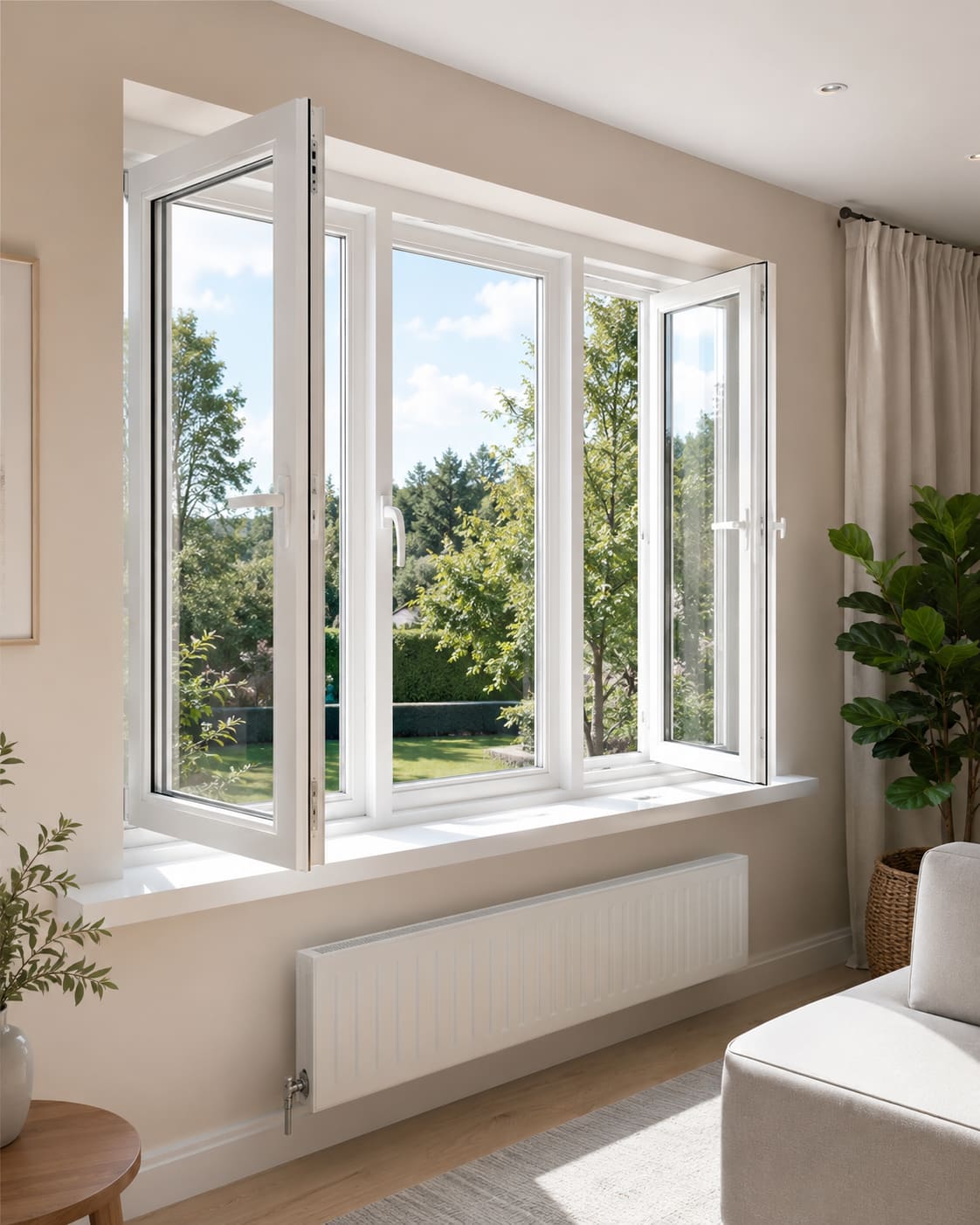
uPVC leads on raw insulation. Its frames are hollow multi-chamber sections, and trapped air is an excellent insulator, so uPVC naturally resists heat transfer and dampens sound. Combined with a DGU, uPVC keeps interiors noticeably cooler and quieter - a real advantage in Hyderabad summers when surface temperatures on a west wall can soar.
Aluminium, being a metal, conducts heat readily in its basic form. This is why old aluminium sliders feel hot to the touch and can undermine air conditioning. The solution is thermal-break aluminium, which inserts an insulating polyamide barrier between the inner and outer faces of the frame. This dramatically cuts heat transfer and closes most of the gap with uPVC, making thermal-break aluminium genuinely suitable for air-conditioned homes.
For acoustics - a growing concern near arterial roads in Hyderabad, Secunderabad and along the ORR - the glass matters more than the frame. A DGU with laminated glass and a wider air gap will cut traffic noise substantially in either material. If a peaceful bedroom is the goal, insist on the glass spec, not just the frame.
Strength, Spans and Sightlines
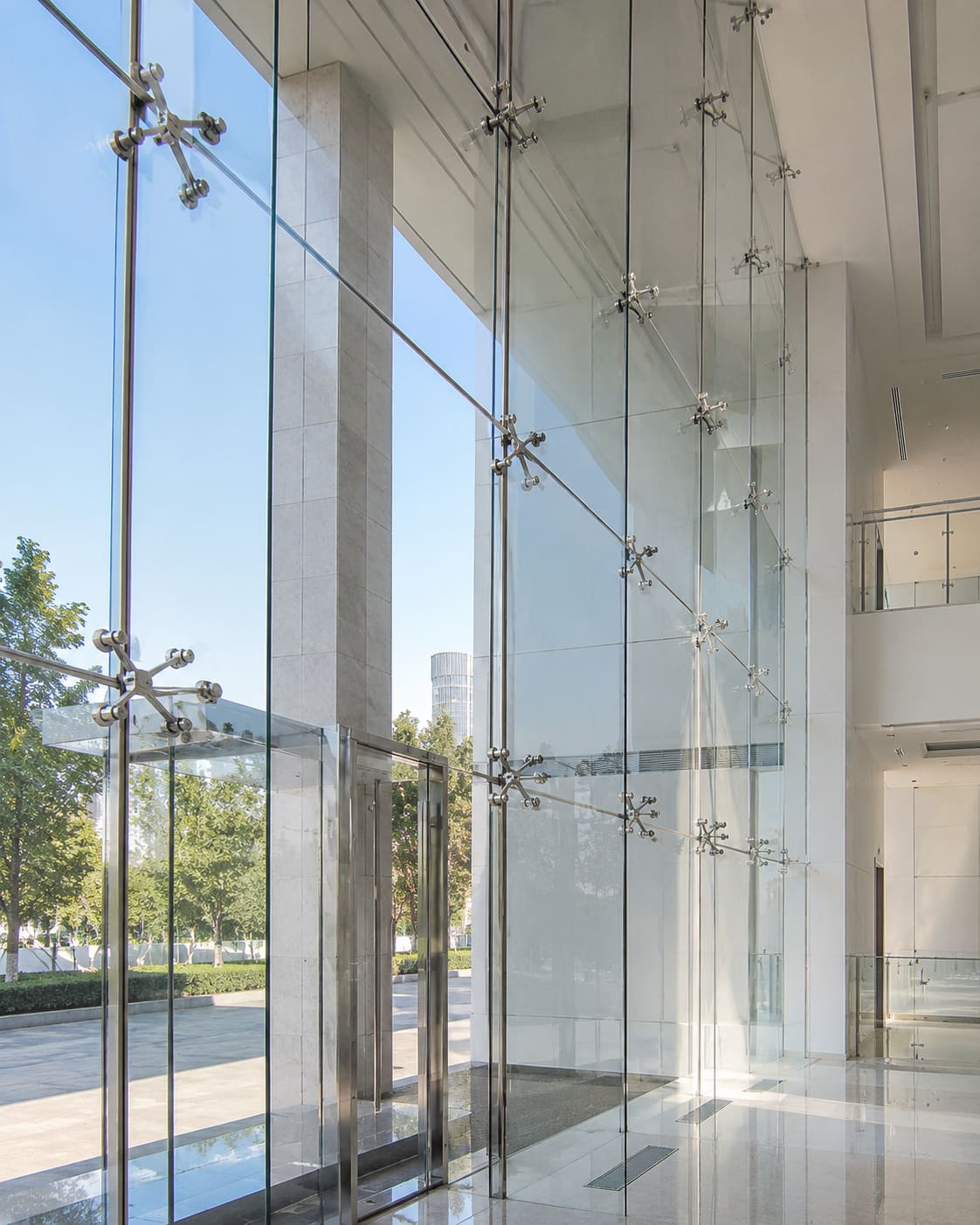
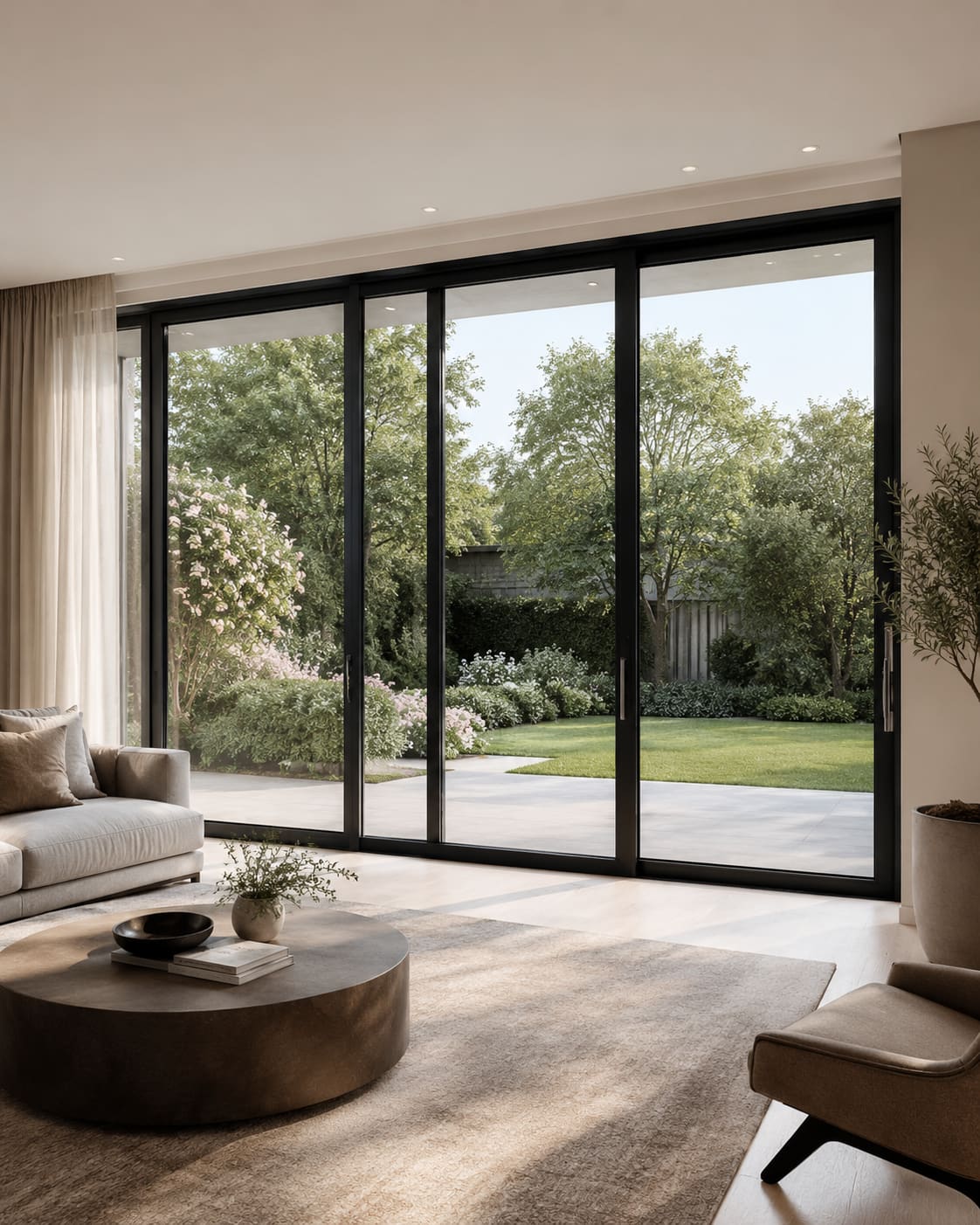
Aluminium is the clear winner on structural strength. Because the metal is rigid, aluminium frames can be slimmer yet carry larger, heavier panes of glass without sagging or needing bulky reinforcement. That means bigger uninterrupted views, taller sliding doors, and minimalist sightlines that suit modern architecture.
uPVC is strong enough for typical residential windows but relies on internal galvanised-steel reinforcement inside the profile to hold shape on larger openings. Push uPVC to very large sizes and frames get chunkier, or the design has to be split into more panels, which interrupts the view.
- Large balcony sliders and 8 ft+ openings → aluminium handles them elegantly
- Corner windows and full-height glazing → aluminium's slim frames maximise glass
- Standard bedroom and kitchen windows → both perform well; choose on insulation and cost
You can see the difference slim aluminium frames make to large openings across our recent projects, where big spans stay light and uninterrupted.
Durability, Lifespan and Maintenance
Both materials are corrosion-proof and vastly outlast old wooden or mild-steel windows, which rot, rust and need repainting. Neither uPVC nor aluminium will rust, and both shrug off dust, humidity and the coastal salt air found along the Andhra Pradesh coast.
- uPVC lifespan: typically 20–25 years; quality profiles carry UV stabilisers so they resist yellowing under harsh Indian sun. Lower-grade uPVC can discolour or become brittle over time, so brand and profile grade matter.
- Aluminium lifespan: typically 25–35+ years; a good powder-coated or anodised finish is extremely tough and colour-stable.
Maintenance is minimal for both. uPVC never needs painting and wipes clean with soapy water. Powder-coated aluminium is similarly easy to clean and holds its finish for decades. The main upkeep for either system is the moving parts - rollers, gaskets and locks - which benefit from occasional cleaning and, eventually, replacement. Good hardware is the difference between a window that glides for 15 years and one that stiffens in three, so never economise on rollers and locking mechanisms.
Looks, Colours and Design Flexibility
Aluminium offers the widest design freedom. Powder coating comes in almost any RAL colour, plus metallic, matte, textured and wood-finish options, and the slim frames suit minimalist and premium interiors. If you want black-framed steel-look windows, thin profiles or large pivot doors, aluminium is the natural choice.
uPVC is most commonly available in white, along with woodgrain laminates (golden oak, walnut, mahogany) and a growing range of solid colours. It looks clean and neat, but frames are inherently bulkier than aluminium, so it reads as more practical than architectural.
If the design brief is contemporary, gallery-like and glass-forward, aluminium delivers the look. If the brief is comfortable, quiet and unfussy, uPVC does the job beautifully. Browse our services to see the full range of profiles, finishes and glazing options we fabricate for Hyderabad homes.
Choosing for Hyderabad, Telangana and Andhra Pradesh
The local climate should drive your decision. Hyderabad and Secunderabad see hot, dry summers with intense sun on west and south facades, followed by a humid monsoon. For west-facing living rooms and bedrooms that bake in the afternoon, insulation is worth paying for - uPVC with DGU, or thermal-break aluminium with DGU, will keep rooms cooler and cut AC running costs.
Noise is the other big local factor. Homes along busy corridors - the ORR, main roads in Gachibowli, Kukatpally, Kondapur and around Secunderabad - benefit hugely from double or laminated glazing in either material. In coastal Andhra Pradesh, both systems resist salt-laden air far better than steel or wood, so durability is not a concern; comfort and budget should decide.
Our practical local recommendation:
- West/south-facing and roadside rooms → prioritise DGU; uPVC for value, thermal-break aluminium for large spans
- North/east rooms and standard openings → either material; decide on budget and look
- Big balcony doors and premium living rooms → aluminium, ideally thermal-break
Because both are made-to-measure, correct fabrication and sealing matter as much as the material itself in our dusty, monsoon climate.
Common Mistakes to Avoid
The biggest error is comparing on frame price alone. A window is a system - frame, glass, gaskets, mesh and hardware - and a low quote often means single glazing, thin profiles or budget rollers that fail early.
- Ignoring the glass: single 5 mm glass in either frame will still let in heat and noise. Match the glass (DGU/laminated) to the room's orientation and noise exposure.
- Skimping on hardware: cheap locks and rollers are the first thing to fail. Insist on branded multi-point locks and quality rollers.
- Choosing basic aluminium for AC rooms: without a thermal break, aluminium conducts heat and undermines cooling. Specify thermal-break profiles where climate control matters.
- Buying under-grade uPVC: unstabilised uPVC yellows and turns brittle under Hyderabad sun. Ask about UV stabilisation and lead-free formulation.
- Poor installation: even the best window fails if the wall interface is not sealed and squared. Insist on proper fixing, backer rod and sealant, especially before the monsoon.
Getting these right matters more than the aluminium-versus-uPVC choice itself. When you get a free quote from us, each opening is measured and specified individually so the glass, frame and hardware suit the room rather than a one-size template.