The best shopfront designers in Hyderabad are specialist glass-and-aluminium fabricators who design, temper, fabricate and install under one roof, and who understand the twin cities' 40-plus degree summers, June-to-September monsoon downpours and near-constant dust. In practical terms, the right team works confidently with toughened and laminated glass, supplies branded hardware, hands you a 3D elevation before cutting a single panel, gives a written warranty, and can show you completed retail work across Gachibowli, Banjara Hills, Kukatpally, HITEC City, Kondapur and Secunderabad. Hakimi Aluminium and Glass is one such team, delivering glass shopfronts and front elevation glazing across Hyderabad, Secunderabad and the wider Telangana and Andhra Pradesh region.
Your shopfront is the single biggest driver of walk-in footfall, so the designer you pick matters as much as the location you lease. A cheap, badly sealed storefront leaks during the monsoon, fogs up in summer, and looks dated within two years; a well-engineered one keeps pulling customers in for a decade with almost no maintenance. This guide breaks down the shopfront styles common in Hyderabad, gives realistic INR price ranges for 2026, explains the branded hardware that separates a durable facade from a rattly one, and lists the exact questions to ask before you hand over an advance.
Whether you run a boutique in Jubilee Hills, a pharmacy in Kondapur, a mobile showroom in Ameerpet, a restaurant in Financial District or a supermarket in Dilsukhnagar, the fundamentals are identical: one accountable team, the correct glass specification, branded fittings and a written warranty. You can get a free quote at any point, and it helps to browse our recent projects to see finishes in person, but read on first so you know exactly what you are buying and what a fair price looks like.
What makes the best shopfront designers in Hyderabad stand out
The best shopfront designers in Hyderabad handle design, fabrication and installation under one roof, so you deal with one accountable team instead of juggling a designer, a glass supplier and a separate fitter who all blame each other when a joint leaks. In a market defined by heavy summer heat and monsoon-driven water ingress, in-house quality control matters far more than the lowest quote on the table. A full-service fabricator like the one behind our services owns every step, which means a single warranty and a single phone number when something needs attention.
When you shortlist fabricators, prioritise the ones who tick these boxes:
- Uses toughened (tempered) glass of 10mm to 12mm for frameless facades and 6mm to 8mm for framed shopfronts.
- Supplies branded hardware from names like Taiton, Enox and Ozone, not unbranded imports that fail within months.
- Provides a 3D or CAD elevation before fabrication so you sign off on the exact look up front.
- Shows real, recent retail work in areas like HITEC City, Madhapur, Kondapur or Kokapet rather than stock photos.
- Offers a written warranty covering glass, hardware and workmanship, plus a clear callback policy.
A designer who resists giving you a written BOQ, dodges questions about glass thickness, or cannot name the hardware brand they fit is a designer to walk away from. Transparency at the quotation stage is the single best predictor of how a team will behave months later when a floor spring needs adjusting under warranty. Ask to visit at least one live site and one two-year-old installation; a confident fabricator will happily arrange both.
Popular glass shopfront styles in the twin cities
The most popular shopfront styles in Hyderabad are frameless toughened glass, aluminium-framed glazing, ACP-and-glass combinations, automatic sliding entrances and structural spider glazing. Your choice depends on your sector, your budget and the kind of footfall your locality attracts, and most storefronts blend two or three of these rather than committing to just one.
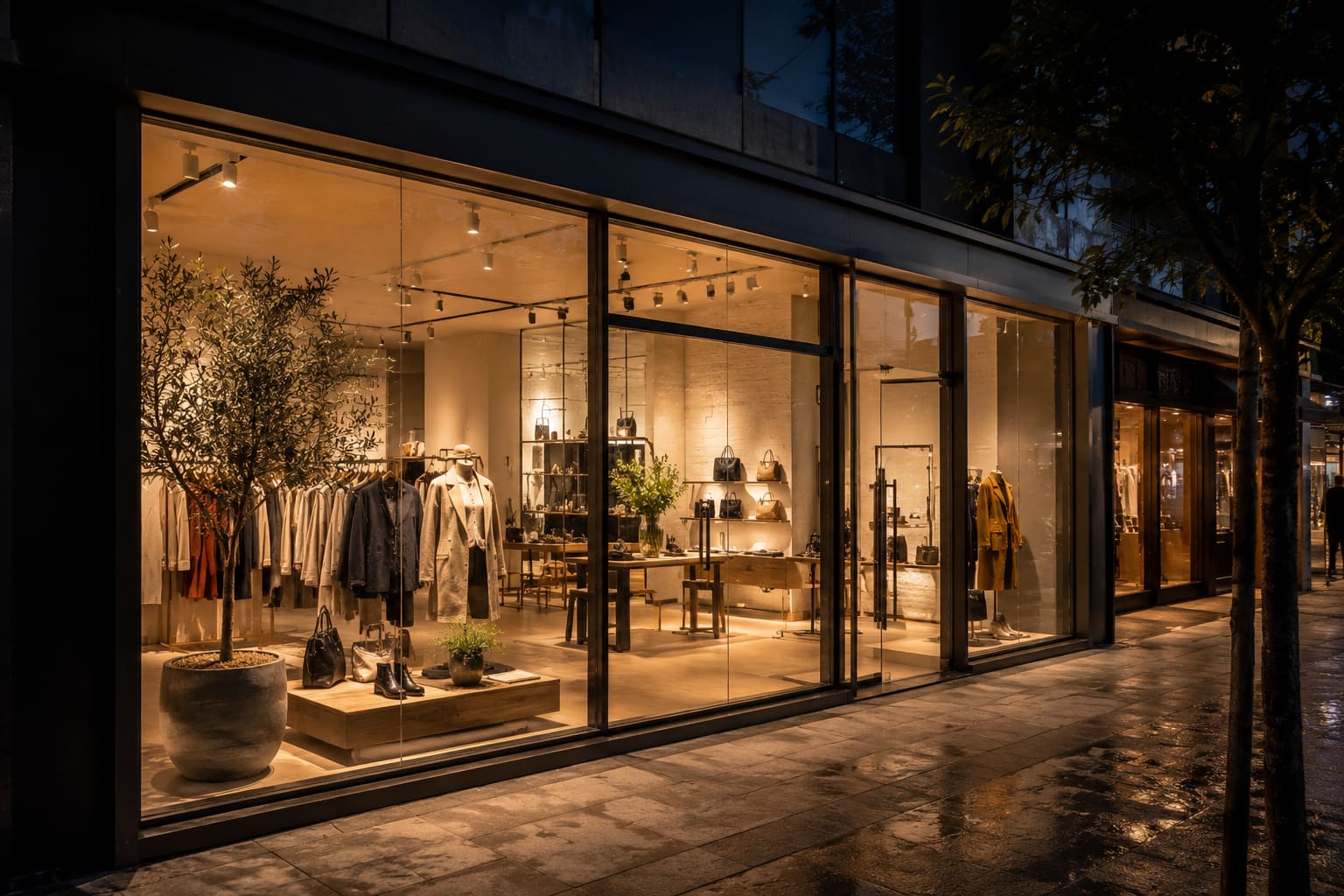
- Frameless toughened glass: a premium, minimal look favoured by boutiques, jewellers and cafes in Jubilee Hills and Banjara Hills. It relies on patch fittings and floor springs instead of visible frames, maximising the display area.
- Aluminium-framed shopfronts: cost-effective, robust and quick to install, ideal for high-traffic retail in Kukatpally and Dilsukhnagar where durability matters more than minimalism.
- ACP plus glass elevations: pairs solid Aluminium Composite Panel branding bands with display glazing, a combination common in Financial District and Gachibowli showrooms that need bold signage above the glass line.
- Automatic sliding doors: sensor-driven entrances used by pharmacies, clinics and supermarkets across Kondapur and Miyapur, where hands-free access improves both hygiene and convenience.
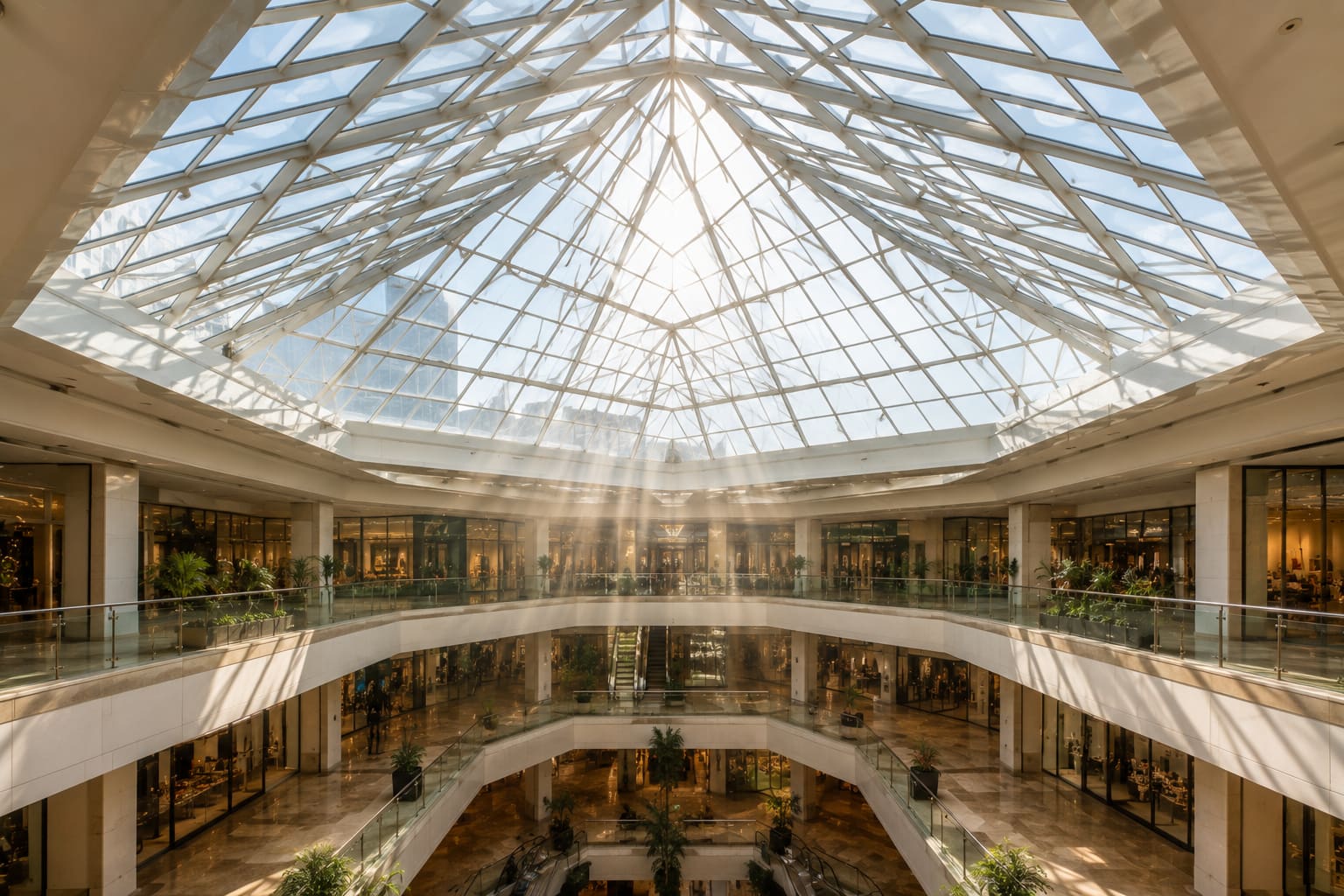
- Structural spider glazing: dramatic double-height facades for flagship stores and mall anchor units, held by stainless spider bolts for a near-invisible support system.
A typical Hyderabad showroom often combines an ACP fascia for signage, frameless display glass at eye level and an automatic sliding entrance in the centre, all engineered by the same fabricator so the transitions look deliberate rather than patched together. Matching your style to your sector matters: a jeweller needs security-grade laminated glass and tight sightlines, while a supermarket needs wide, wear-resistant automatic entries built for constant traffic.
Shopfront cost in Hyderabad: realistic INR ranges for 2026
A commercial shopfront in Hyderabad typically costs between INR 550 and INR 1,600 per square foot in 2026, depending on glass type, hardware, framing and finish. A standard 12ft x 10ft (120 sq ft) storefront therefore lands roughly between INR 70,000 and INR 1,90,000 installed, before signage. Use these indicative rates to sanity-check any quote you receive:
- Aluminium-framed glass shopfront: INR 550 to INR 850 per sq ft.
- Frameless toughened glass facade: INR 900 to INR 1,600 per sq ft including patch fittings and floor springs.
- ACP cladding bands: INR 220 to INR 420 per sq ft for the solid panel areas.
- Automatic sliding entrance: INR 85,000 to INR 1,60,000 per unit depending on sensor and motor brand.
- Structural spider glazing: INR 1,400 to INR 2,500 per sq ft for double-height flagship facades.
Prices rise with 12mm glass, imported or automatic hardware, curved or bent glazing, heat-reflective coatings and express timelines that force overtime at the tempering plant. They ease slightly for repeat volume, simple rectangular openings and standard 8mm framed work. Watch for quotes that look unusually cheap: the saving almost always comes from thinner glass, unbranded fittings or skipped weather sealing, and it evaporates the first time a floor spring fails or a joint leaks. Always get a per-square-foot rate and a fixed, itemised BOQ in writing so you can compare like with like, and structure payment in stages tied to milestones rather than as one large advance. When you send us your shop dimensions we can turn around a detailed, itemised free quote so you have a real number to compare against.
Hardware and fittings that separate durable shopfronts from rattly ones
Hardware is where most cheap shopfronts fail first, because the glass usually outlives the fittings that carry and secure it. The best designers specify fittings rated for the daily open-close cycles a busy Hyderabad retail door actually sees, which for a supermarket or clinic can run to several hundred a day. Branded hardware from Taiton, Enox and Ozone costs a little more up front and saves far more over five years of use.
The fittings that matter most on a storefront:
- Floor springs: the buried hinge that controls a heavy glass door's swing and self-close. Under-rated springs sag within months, leaving a door that scrapes or refuses to shut; always match the spring rating to the actual door weight.
- Patch fittings and locks: the top, bottom and lock patches that hold a frameless door together, paired with reliable locking hardware for after-hours security.
- Handles and pulls: long D-pulls or bar handles are the single most touched part of your shop, so they must feel solid and resist pitting from constant hand contact and dust.
- Sliding gear and spider bolts: the rollers, tracks and structural bolts that keep large panels moving smoothly and holding safely, which is exactly where budget imports rattle and seize.
A good designer will list the exact brand and model of every fitting on your BOQ. If they will not, assume the cheapest available fitting is going in. It is worth asking specifically about the floor spring and sliding mechanism, because those two items cause the majority of post-installation complaints on Hyderabad storefronts.
Designing your shopfront for Hyderabad's climate
Design your Hyderabad shopfront for the climate by planning for 40-plus degree summers, monsoon downpours from June to September, and the fine dust that coats every surface in the twin cities. The right specification keeps your interior cool, dry and low-maintenance all year, and it is not an upsell, it is the difference between a facade that still looks new after five summers and one that streaks, warps and leaks by its second monsoon.
- Specify heat-reflective or tinted glass on west and south-facing frontages to cut the air-conditioning load and protect displayed stock, fabrics and packaging from fading.
- Insist on proper structural silicone weather sealing and drainage channels so monsoon water cannot track in at the joints, which is the most common failure point on cheap installs.
- Choose powder-coated aluminium sections that resist corrosion and colour fading through years of harsh sun rather than mill-finish or painted alternatives.
- Opt for laminated glass at street level for security and to dampen traffic noise on busy roads such as the ORR service lanes and inner-ring arterials.
- Plan easy-clean detailing, because dust settles fast; frameless glass with minimal ledges and horizontal surfaces stays presentable with far less labour.
For sun-facing frontages in particular, well-detailed front elevation glazing with the right coating pays for itself through lower cooling bills, especially for shops that run air-conditioning through the long Telangana summer. Ask your designer to note the orientation of your frontage on the survey so the glass specification is matched to how much sun that wall actually takes.
Installation timeline and process across Hyderabad and Secunderabad
A standard shopfront installation in Hyderabad or Secunderabad takes about 7 to 14 days from final design approval, with structural and double-height facades running to three weeks or more. Understanding the sequence helps you plan your store opening without nasty surprises, and lets you spot a designer who is over-promising an unrealistic date.
- Site survey and measurement: 1 day, ideally done before you finalise interiors so the openings match the fabricated units exactly.
- 3D or CAD elevation and BOQ sign-off: 1 to 3 days, including one round of design revisions.
- Glass tempering and delivery: 4 to 6 days, because toughened glass cannot be cut or drilled after tempering, so every measurement must be final before this stage begins.
- On-site fabrication and fitting: 1 to 3 days for the framing, glazing, hardware and sealing.
- Snagging and handover: half a day to adjust the door swing, check every seal and demonstrate operation of locks and automatic gear.
Book your slot early during the festive and wedding-season rush from roughly September to December, when tempering plants across Telangana run at capacity and lead times stretch. A designer who commits to a written schedule, sequences the work so tempering starts the moment measurements are locked, and offers a penalty for slippage is signalling that they take your opening date seriously. Confirm who is responsible for site protection during fitting, as glass edges and polished floors are easily damaged during a rushed installation.
GHMC permissions, signage and compliance
Most established shopfront designers in Hyderabad advise on GHMC signage norms, but you remain legally responsible for your trade licence and signage approvals. A good fabricator designs your elevation so the branding bands and projections fall within permitted dimensions, which reduces the risk of a costly redo after an inspection or, worse, a demolition notice for encroachment.
- Keep signage within GHMC's permitted size and projection limits for your zone and road width.
- Factor in any advertisement or signage fee levied by the local body when budgeting the overall project.
- Avoid encroaching on the footpath or setback line, a common cause of notices in older market areas.
- Retain your BOQ, warranty and material test certificates in case of any inspection query.
Getting the elevation right on paper is cheaper than fixing it in aluminium and glass, so raise compliance early in the design conversation rather than after fabrication. Your fabricator cannot pull your licence for you, but they can and should keep your projections legal by design.
How to choose the right shopfront designer and avoid common mistakes
Choose your shopfront designer by weighing in-house fabrication, glass and hardware specification, a written warranty and verifiable local references, not by picking the lowest quote. The cheapest bid usually turns into the most expensive facade once you factor in early hardware failure, monsoon leaks and a premature refit. Use this checklist and question list before you commit:
- Do you fabricate and temper in-house, or subcontract? In-house means tighter quality control and a single point of accountability.
- What exact glass thickness and hardware brand will my BOQ list? Vague answers here are a red flag.
- Can I see a two-year-old installation of yours nearby? Aged work reveals sealing and hardware quality far better than a new site.
- What does the warranty cover, and how fast is a callback? Get the response time in writing.
- Is the payment schedule tied to milestones? Avoid paying a large lump sum before tempering even starts.
The most common mistakes buyers make are paying a big advance to an unaccountable middleman, accepting a verbal quote without a written BOQ, letting glass thickness be downgraded quietly to hit a price, and skipping the climate specification to save a few thousand rupees. Each of these shows up within the first monsoon or summer. Take an hour to compare two or three detailed quotes and to walk our recent projects or any fabricator's live sites before you decide. For a compliant, well-engineered storefront tailored to your locality, sector and budget across Hyderabad, Secunderabad, Telangana or Andhra Pradesh, send us your dimensions and we will suggest a specification that balances footfall appeal, durability and cost.