To choose facade glass correctly, start with the building's orientation and cooling load, then pick a glass type and coating that hit a Solar Heat Gain Coefficient (SHGC) of 0.25 to 0.35 with a Visible Light Transmission (VLT) of 40 to 60 percent. For Hyderabad's climate the best all-round choice is a high-performance low-E double glazed unit (DGU), because it blocks solar heat while keeping interiors bright. This single decision shapes how the building looks, how much you spend on air-conditioning every month, and how comfortable the interiors feel year-round. Where summer temperatures regularly cross 40 degrees Celsius and the glare off the west face is relentless, the wrong glass turns a striking facade into an expensive heat trap.
The good news is that choosing well is a structured process, not a guessing game. This guide breaks the decision into the factors that actually matter: glass type, solar and thermal performance ratings, thickness and safety, glazing system, orientation, coatings and cost. Whether you are building a corporate tower in HITEC City, a showroom on the Secunderabad stretch, or a residence in Jubilee Hills or Vijayawada, the same principles apply, scaled to your budget and sun exposure.
We supply and install facades across Hyderabad, Secunderabad and the wider Telangana and Andhra Pradesh region, so the numbers below reflect real project rates rather than theory. If you want a site-specific specification, our glass facade work team can model your envelope before you commit a rupee. You can also get a free quote once you know the approximate glass area and orientation, or browse our recent projects to see how these choices look on completed buildings.
Start With Glass Type and Performance Ratings
Facade glass is not a single product, and the biggest mistake owners make is treating it like one. The core choices you will weigh are single glazed toughened glass, double glazed units (DGU), and various coated glasses that manage heat and light. For most commercial facades in Telangana, a high-performance coated DGU is the sweet spot between comfort and cost.
The two numbers that decide comfort are SHGC (Solar Heat Gain Coefficient) and VLT (Visible Light Transmission). Lower SHGC means less solar heat enters the building; higher VLT means more natural daylight reaches the interior. The trick is to get low heat gain without a dark, cave-like interior, which is exactly what modern coatings are engineered to do. For Hyderabad's climate, aim for these targets:
- SHGC: 0.25 to 0.35 for glass on east and west faces that take direct sun
- VLT: 40 to 60 percent to keep interiors bright without excessive artificial lighting
- U-value: below 2.0 W/m2K for DGUs where you run heavy air-conditioning
- Light-to-Solar-Gain (LSG) ratio: above 1.25 for genuinely high-performance glass
Reflective and low-E (low emissivity) coatings are what deliver these numbers. A low-E DGU can cut cooling loads by 25 to 40 percent compared to plain tinted glass, which pays back through lower electricity bills over the building's life. When you compare quotes, insist on seeing the manufacturer's performance data sheet from a recognised brand such as Saint-Gobain, AIS or Guardian, rather than accepting a vague description like tinted blue. The coating and its published rating are what you are actually buying, and a data sheet is the only way to verify you are getting it.
Single Glazing vs DGU vs Structural Glazing
Once you understand the ratings, the next decision is the glazing system that holds the glass. Each carries a different cost and performance profile, and the right pick depends on the building type, height and budget.
- Single toughened glass: lowest cost, suits low-rise commercial, boundary screens and budget projects where thermal performance is secondary.
- Double glazed units (DGU): two panes with a sealed air or argon gap of 12 to 16mm, delivering far better heat and acoustic insulation - the default for offices and premium retail.
- Structural glazing: glass bonded to the frame with structural silicone for a flush, frameless external look, common on corporate towers and IT campuses.
- Unitised curtain wall: factory-assembled panels craned into place, which speeds up erection and improves quality control on tall buildings.
For a seamless glass skin with no visible framing lines, structural glazing is the go-to system, and it almost always uses a high-performance DGU to keep the sealed cavity performing for decades. If your design leans toward a framed or semi-unitised look instead, our glass facade work covers the full range so you are not forced into one system to suit a contractor's convenience. Browse our services to see how framed, unitised and structural systems compare for your specific building height and wind exposure.
Get Glass Thickness and Safety Right
Glass thickness is dictated by pane size, wind load and the glazing system. Under-specifying to save money is a false economy and a genuine safety hazard, especially for high-rise facades exposed to Hyderabad's pre-monsoon squalls, which can gust past 60 km/h. Thickness should be calculated against IS 16231 and the local wind speed for your zone, not copied from a neighbouring building.
- 8mm to 10mm toughened glass for typical framed curtain wall panels
- 12mm toughened for large spans and structural glazing where the glass carries load
- Laminated glass (two panes bonded with a PVB or SGP interlayer) for overhead glazing, balustrades and anywhere a fall risk exists
Always insist on toughened (tempered) glass for facades. It is roughly four to five times stronger than annealed glass and, if it breaks, crumbles into blunt granules instead of dangerous shards. For added peace of mind on tall buildings, specify heat-soaked toughened glass (heat-soak tested to EN 14179), which screens out the rare panels prone to spontaneous breakage from nickel sulphide inclusions - a genuine risk on any large expanse of toughened glass. Where a facade combines strength with fall protection, laminated-toughened glass gives you both: the panes stay bonded to the interlayer even after impact, so nothing falls to the street below.
Understand the Cost in INR
Pricing depends on glass type, coating, thickness and the glazing system, but indicative supply-and-install rates in Hyderabad and across Telangana and Andhra Pradesh give you a working budget you can plan around.
- Single toughened tinted glass: around INR 250 to 450 per sq ft installed
- High-performance reflective single glazing: around INR 400 to 650 per sq ft
- Low-E double glazed units (DGU): around INR 700 to 1,200 per sq ft
- Structural glazing with imported high-performance DGU: INR 1,200 to 2,000+ per sq ft
These figures include the aluminium framing and standard installation; premium imported glass brands, spider fittings, ceramic frit patterns and complex geometries push costs higher. As a rule, spending an extra INR 300 to 500 per sq ft on the glass coating almost always costs less over ten years than the additional air-conditioning that cheap glass demands. On a 5,000 sq ft facade, that upgrade is roughly INR 15 to 25 lakh in first cost, and it is often recovered within four to six years through lower running costs. Ask any bidder for a life-cycle comparison, not just the lowest headline rate, and confirm whether the quote is on the glass area or the elevation area - the two differ once you account for framing, and that difference quietly changes the real per-sq-ft price. When you are ready to firm up numbers, get a free quote with your drawings and we will price it against actual glass area.
Match the Glass to Orientation and Use
The best facade glass for one face of a building is often wrong for another. Design around the sun path rather than picking one product for the whole envelope - a common and costly oversight in fast-track commercial projects across Hyderabad.
- West and east faces: prioritise low-SHGC reflective or low-E DGU to block harsh morning and evening sun and glare
- North face: you can use higher-VLT glass for maximum daylight with minimal heat penalty
- South face: moderate SHGC with external shading or fins works well at Hyderabad's latitude
- Ground-floor showrooms and retail: favour high-clarity, high-VLT glass so products stay visible from the street
Also weigh acoustics if your building faces a busy corridor like the Outer Ring Road, the PVNR Expressway or an airport approach. A DGU with differing pane thicknesses - for example an 8mm outer and 6mm inner - breaks up the resonance and dampens traffic noise noticeably compared with two equal panes. A good facade contractor will model these choices for your specific site and orientation before you commit, rather than applying one glass to every elevation to simplify procurement.
Coatings, Colour and Aesthetics
Beyond raw performance, glass colour and reflectivity define the building's identity, and this is where owners and architects often disagree. The coating you choose changes both the exterior appearance and the quality of interior light, so treat it as an architectural decision, not just a technical one.
- Neutral and clear high-performance coatings: contemporary, understated, popular for corporate and IT campuses in Gachibowli and the Financial District
- Blue and green tints: the classic commercial look, still widely specified across Hyderabad and Secunderabad
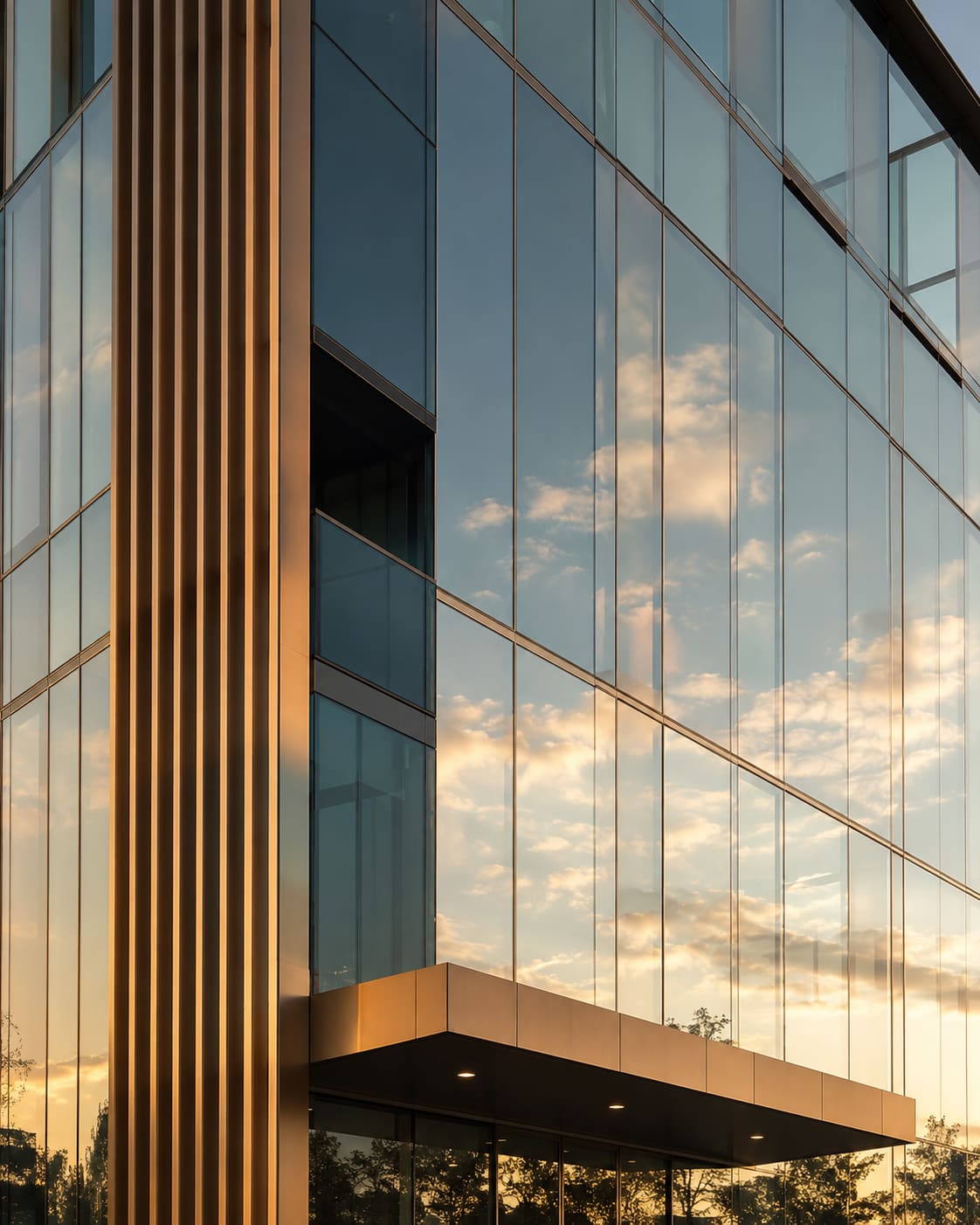
- High-reflectivity silver and gold: dramatic mirror effect, but check local glare rules near highways and airport approach paths
Remember that a highly reflective exterior often means a darker interior, so balance kerb appeal against the VLT your occupants actually need to work comfortably. Always mock up a sample panel on site and view it at different times of day before signing off an entire tower's worth of glass - a small step that prevents an expensive colour mismatch, because glass reads very differently on a showroom shelf versus a full elevation in bright Telangana sun. Our glass facade work team keeps physical samples of common coatings so you can judge them under real daylight before ordering.
Installation, Fittings and Long-Term Maintenance
Even the best glass fails if the system around it is poorly detailed. The frame, sealants, gaskets and hardware all have to work together to keep water out and the glass secure through years of thermal expansion and monsoon loading. This is where cutting corners shows up two or three years later as a leak or a rattling panel.
- Use structural silicone from a reputable brand, rated for the wind loads at your building height and location
- Specify quality gaskets and weather seals to prevent water ingress during the monsoon
- Ensure DGU edge seals are dual-sealed (butyl plus secondary silicone) so the cavity does not fog up over time
- Plan for facade access (a building maintenance unit or rope access) so the glass can actually be cleaned and resealed
Insist on a factory-certified fabricator and a proper method statement, because a DGU installed with a compromised edge seal will fail internally long before the glass itself wears out. Budget for a maintenance schedule too: reapplying perimeter sealant and cleaning the drainage channels every few years is far cheaper than remediating a leaking facade after water has reached the interior finishes. Ask your contractor for the design life of each component so the sealant, gaskets and glass are matched to the same 20-plus-year horizon.
Common Mistakes to Avoid
Most facade problems in Hyderabad trace back to a handful of avoidable decisions made early, usually to shave the initial cost. Knowing them upfront saves both money and years of frustration.
- Choosing glass on price alone and ignoring SHGC, which loads the building with heat and inflates power bills for its entire life
- Using one glass type on every elevation instead of tuning it to each orientation
- Skipping heat-soak testing on large toughened panels, then facing spontaneous breakage on a high floor
- Under-specifying thickness for the wind zone to save a few rupees per sq ft
- Accepting a vague spec with no manufacturer data sheet, so you cannot verify what was actually installed
- Forgetting facade access and cleaning, leaving a beautiful envelope that quickly looks grimy and streaked
Avoiding these is mostly about discipline at the specification stage. Lock down the glass make, coating, SHGC, VLT, thickness and glazing system in writing before any order is placed, and hold the contractor to that spec on site. If you would like a second opinion on a spec you have already been quoted, our team is happy to review it - see our recent projects for the kind of buildings we deliver, then get a free quote against a like-for-like scope.