Clear vs tinted vs reflective glass comes down to one core trade-off: clear glass maximises daylight and views, tinted glass balances light with moderate heat and glare control, and reflective glass delivers the strongest heat rejection plus daytime privacy. If you only remember one line, remember that: for a hot, west-facing Hyderabad elevation, reflective is the coolest, tinted is the sensible middle, and clear is the brightest but hottest. This choice is one of the first you face when planning windows, glass facade work, partitions or shopfronts, and each type behaves very differently once the Telangana sun hits it.
The three types look almost identical on a drawing, yet picking wrong can mean higher electricity bills, glare complaints, or an exterior that never quite looks right. On a west-facing elevation in Gachibowli or a street-level showroom in Secunderabad, the same 6mm pane can be a comfortable, energy-smart choice or an afternoon greenhouse depending purely on which product you specify.
At Hakimi Aluminium and Glass we specify all three every week across Hyderabad, Secunderabad and the wider Telangana and Andhra Pradesh region. This guide breaks down how they compare on heat, glare, privacy, appearance, safety and cost, with indicative INR pricing so you can budget before you commit. You can also see the mix of finishes on real elevations in our recent projects, and when you are ready, get a free quote with your orientation and area for an exact figure.
What clear, tinted and reflective glass actually do
Understanding the three products starts with what happens to sunlight when it reaches the pane. Solar energy is either transmitted through the glass, absorbed within it, or reflected back outside, and each glass type shifts that balance in a different direction. That single physics fact explains every difference in heat, glare, privacy and price that follows.
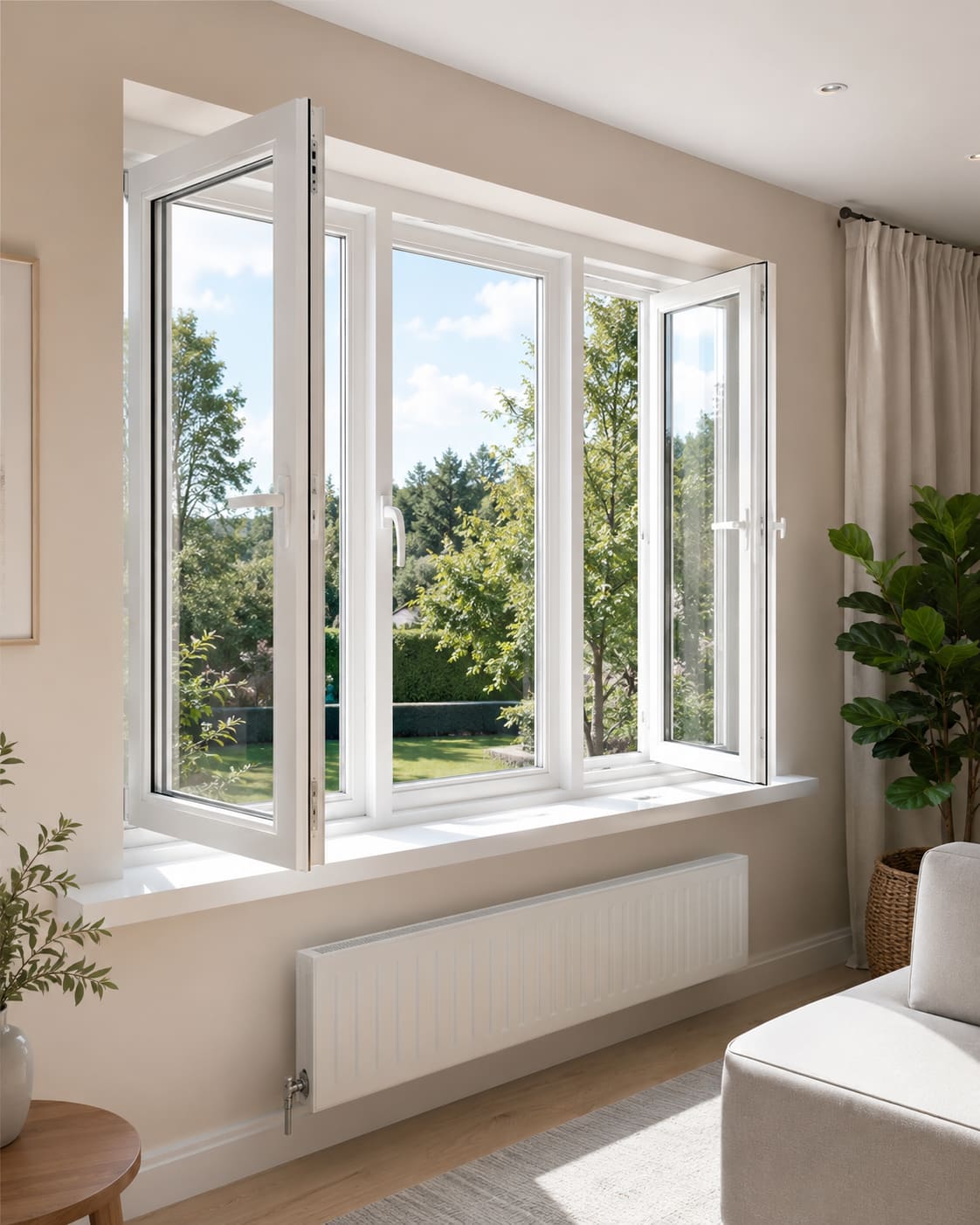
Clear float glass is the standard transparent glass used in most interiors, low-rise windows, internal partitions and balcony railings. It lets in maximum daylight and views but offers almost no heat or glare control, which matters in a hot city like Hyderabad where surface temperatures on west-facing glass climb sharply through the afternoon.
Tinted glass has a colourant fused into the glass body - usually grey, bronze, green or blue - that absorbs part of the solar heat and softens glare while keeping a natural view outward. Because the colour is inherent to the glass rather than a surface film, it never scratches off and looks consistent across a whole elevation for the life of the building.
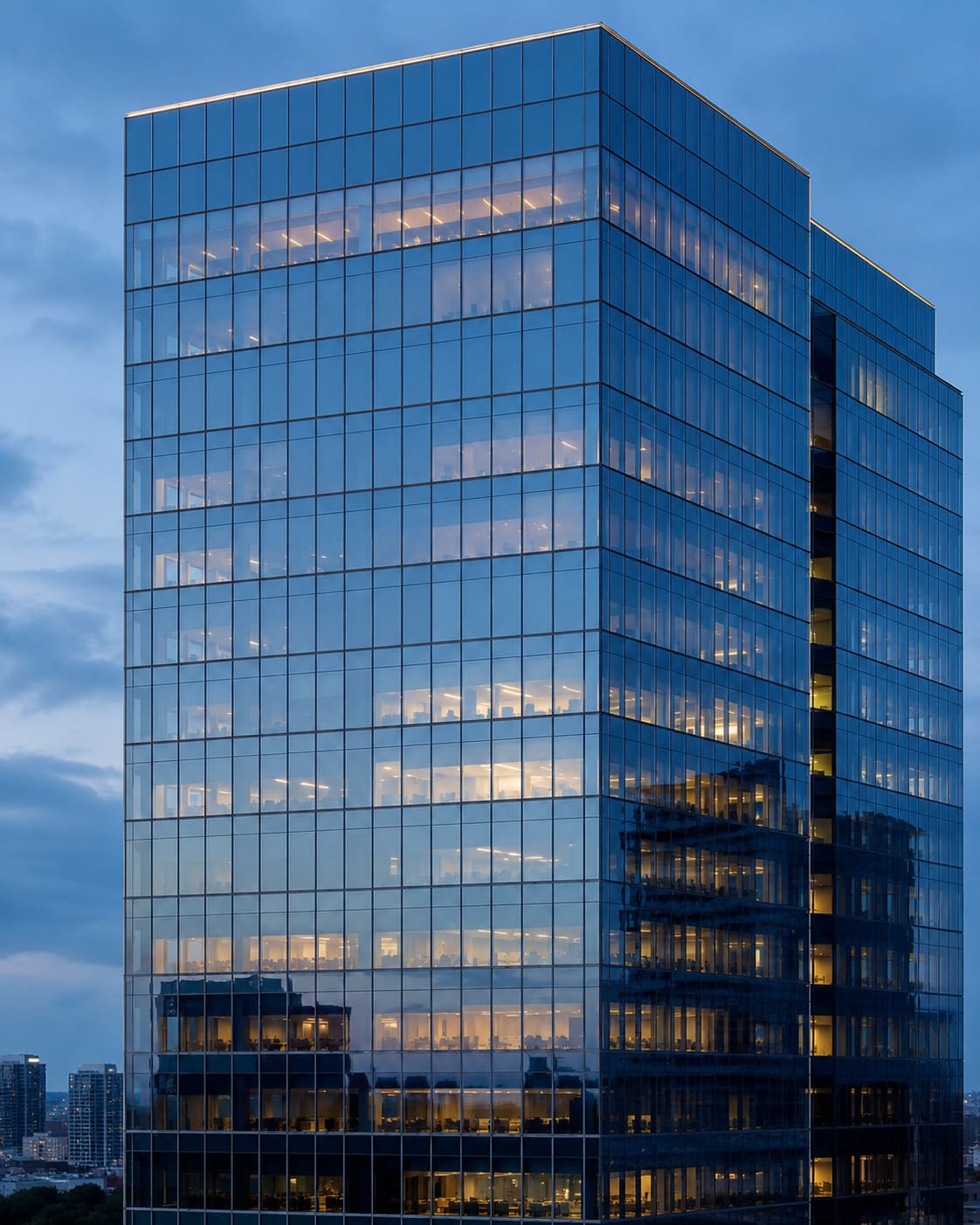
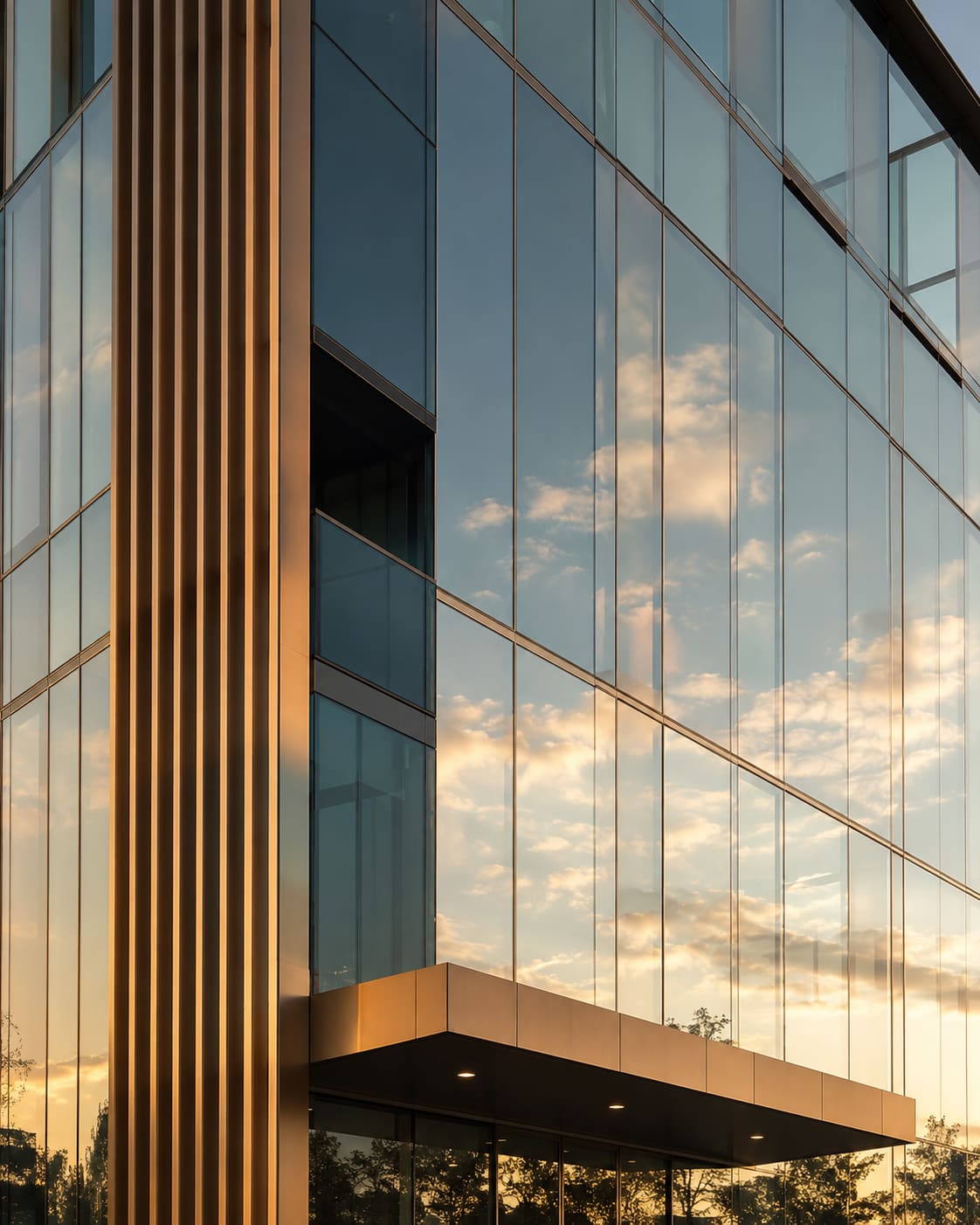
Reflective glass carries a thin metallic or metal-oxide coating that bounces a large share of solar radiation away, giving strong heat rejection, daytime privacy and the mirror-like sheen seen on most commercial facades and structural glazing projects across HITEC City and the Financial District.
- Clear: best daylight and clarity, weakest heat control, no privacy
- Tinted: moderate heat and glare control, subtle colour, view retained, mild privacy
- Reflective: highest heat rejection and daytime privacy, mirrored appearance
Heat, glare and energy performance in the Telangana climate
For Hyderabad's long summers, heat gain is usually the deciding factor for west- and south-facing glazing. The single most useful number is the Solar Heat Gain Coefficient (SHGC): the fraction of solar heat that passes through the glass. Lower is cooler, and it is the one spec you should ask every glass supplier to quote.
Clear glass typically has an SHGC of around 0.82, meaning most of the sun's heat passes straight through and loads your air conditioning all afternoon. On a large glazed area facing the setting sun, that is the difference between a comfortable room and one your AC struggles to hold below 26 degrees.
Tinted glass brings SHGC down to roughly 0.55-0.65, a noticeable improvement for homes and small offices without changing the character of the view. Reflective glass performs best of the three, often in the 0.25-0.45 range, which can meaningfully cut cooling costs on a fully glazed facade in Gachibowli, Kondapur or Madhapur.
Light transmission tells the other half of the story. Clear glass transmits around 88-90% of visible light, tinted roughly 40-60%, and reflective as low as 8-30% depending on the coating, so glare drops in the same order that heat rejection improves. The art of a good spec is landing enough daylight without the afternoon glare that forces occupants to pull the blinds.
- Clear: SHGC ~0.82, visible light ~88-90%, minimal glare control
- Tinted: SHGC ~0.55-0.65, visible light ~40-60%, softened glare
- Reflective: SHGC ~0.25-0.45, visible light ~8-30%, strongest glare and heat control
For the strongest results we frequently recommend double-glazed (insulated) units combining a reflective or low-E coating with a sealed air gap, which can push effective SHGC below 0.25 while also cutting outside noise - useful along busy corridors like the ORR service roads. Single reflective glass remains a cost-effective middle path where a full DGU is not in the budget.
Privacy, appearance and where each type fits best
Reflective glass gives excellent daytime privacy because the coating behaves like a one-way mirror whenever it is brighter outside than inside. At night, with interior lights on, that effect reverses and people outside can see in, so reflective glass suits offices, showrooms and facades far better than bedrooms.
Tinted glass offers mild privacy and a warm, understated tone that works well for residential windows and boutique storefronts across Secunderabad and Banjara Hills. Clear glass offers no privacy at all but is ideal for internal partitions, display shopfronts and balustrades where visibility is the entire point.
Appearance is where reflective glass wins on street presence: bronze, silver, blue and green coatings give an office building a clean, uniform, high-end facade that reads well from the road. Tinted delivers a subtler, softer look, while clear reads as open and honest, which retailers often want at eye level to pull customers in.
- Residences: clear for interiors and stair shafts, tinted for sun-facing bedrooms and living rooms
- Offices and showrooms: reflective for facades and street-facing glazing
- Retail: clear at eye level for display, tinted or reflective above for comfort
- Bathrooms and shower screens: frosted or tinted toughened glass for privacy without losing light
Safety, thickness and toughening options
Glass type and glass strength are two separate decisions, and any of the three can be toughened. For doors, low-level glazing, staircases, shower screens and large facade panels, Indian practice follows IS 2553, and toughened (tempered) glass is strongly recommended because it is four to five times stronger than annealed glass and, if it does break, shatters into small blunt granules rather than dangerous shards.
Thickness is chosen by span and wind load, not by preference. As a rough guide for Hyderabad projects:
- 5-6mm: typical residential windows and internal partitions
- 8-10mm: larger windows, glass doors and shopfronts
- 12mm and above: frameless doors, structural facades and canopies
Frameless and semi-frameless installations depend heavily on the supporting hardware and precise fabrication, which is why toughening must be done before any coating is heat-treated and before holes or cut-outs are made - a toughened pane cannot be re-cut. On tall or wind-loaded facades we combine toughened reflective glass with engineered brackets, and you can see how that is detailed on real elevations among our recent projects.
Indicative glass pricing in Hyderabad (INR)
Prices vary with thickness, brand, coating and quantity, but these Hyderabad ranges give a realistic starting point for supply of the glass alone. Fabrication, aluminium framing, hardware and installation are additional line items on any quote.
- Clear float glass (5-6mm): approx INR 90-140 per sq ft
- Tinted glass (5-6mm): approx INR 130-200 per sq ft
- Reflective glass (6mm): approx INR 170-280 per sq ft
- Toughening (any type): add approx INR 60-120 per sq ft
- Double-glazed (DGU) upgrade: add approx INR 150-400 per sq ft
As a worked example, a 200 sq ft sun-facing elevation costs roughly INR 18,000-28,000 in clear glass versus INR 34,000-56,000 in reflective at supply stage. The difference is real, but so is the recurring saving when the AC no longer fights the afternoon sun.
For a mid-size Hyderabad office facade, that reflective premium over clear often pays back through lower cooling bills within two to four cooling seasons, which is why reflective and DGU glazing dominate commercial glass facade work across Telangana and Andhra Pradesh. To pin down your own numbers, get a free quote with the area, orientation and finish you have in mind.
Framing and hardware that complete the glazing
The glass is only half the assembly. How it is framed and moved determines both performance and daily usability, and this is where hardware choice matters as much as the pane itself. A premium reflective pane in a leaky, non-thermal frame will still under-perform.
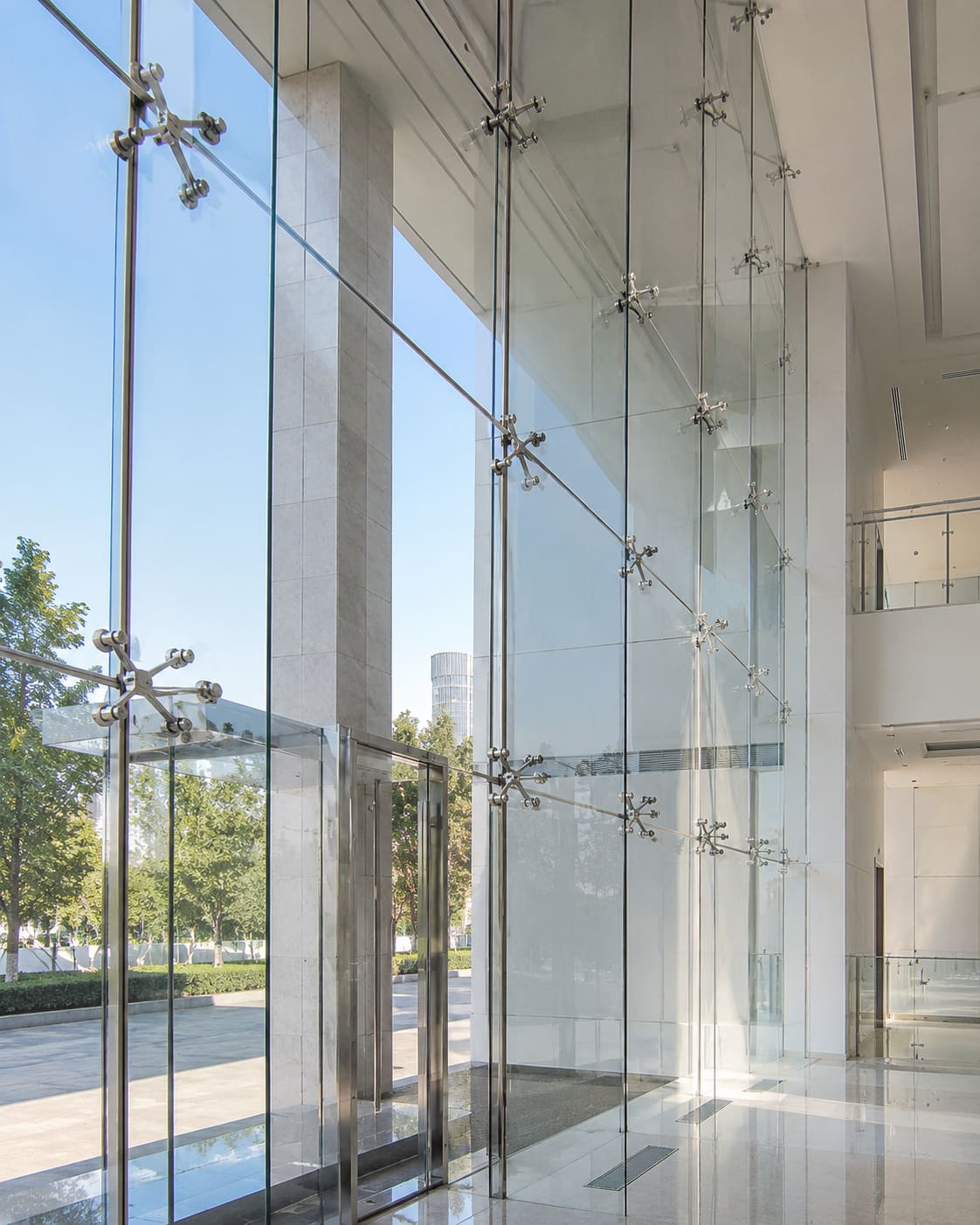
For sun-facing elevations the framing itself contributes to thermal comfort: thermally-broken aluminium sections reduce the heat conducted around the glass, complementing tinted or reflective panes and preventing the frame from becoming a hot bridge. Sliding windows and doors need smooth, load-rated rollers so heavy toughened panels glide without sagging over years of use, while spider-glazed facades rely on engineered structural fittings to carry the load.
Browse our services for facade, window and partition fabrication, and remember that gaskets and structural sealants must be confirmed compatible with tinted and reflective coatings - the wrong silicone can attack a soft coating over time.
- Match hardware grade to glass weight, not just glass type
- Use thermally-broken frames on west and south facades for the best energy result
- Confirm gasket and sealant compatibility with tinted and reflective coatings
Common mistakes to avoid when specifying glass
Most glazing regrets in Hyderabad homes and offices trace back to a handful of avoidable errors. Knowing them up front saves money and rework, because glass cannot be modified once it is toughened and coated.
- Specifying clear glass on a west or south facade to save money, then paying it back many times over in AC bills and glare complaints.
- Using reflective glass on bedrooms and expecting night privacy - it only works in daylight, so pair it with blinds or choose tinted instead.
- Forgetting to specify toughened glass in safety-critical spots like doors, low windows and shower screens, which is both unsafe and non-compliant with IS 2553.
- Choosing coating colour from a small sample under showroom light; always view a larger piece outdoors, since bronze and blue read very differently on a full elevation.
- Ignoring orientation and treating every window the same - an east-facing window and a west-facing one have completely different heat problems.
- Under-sizing frame hardware for heavy toughened or double-glazed panels, which leads to sagging sliders and misaligned doors within a couple of years.
How to choose the right glass for your project
Start with orientation and use. If a window faces east for gentle morning light or opens onto a shaded courtyard, clear glass may be perfectly comfortable and cheapest. If it faces the harsh west or south sun, tinted is the sensible minimum and reflective or a DGU is the performance choice.
Then layer in privacy, budget and appearance. A commercial facade almost always favours reflective glass for its heat rejection and uniform mirror finish; a family home usually mixes clear interiors with tinted sun-facing rooms; a retail unit keeps clear glass at display height and adds heat control above the shopfront line.
- Prioritise heat control: reflective, then tinted, then clear
- Prioritise daylight and view: clear, then tinted, then reflective
- Prioritise daytime privacy: reflective, then tinted, then clear
- Prioritise lowest cost: clear, then tinted, then reflective
Whichever you choose, specify toughened glass for any safety-critical location and pair it with hardware rated for the load. Our team can survey your site anywhere in Hyderabad, Secunderabad or across Telangana and Andhra Pradesh and recommend the exact glass, coating and framing combination for your elevation - the right choice is always the one matched to your orientation, not the most expensive product on the shelf.