
DGU outperforms single glazing on thermal insulation, noise control and condensation resistance, while single glazing is cheaper, lighter and simpler to replace, which makes each the correct answer for different openings in the same building. A Double Glazed Unit (DGU), also called an insulated glass unit or IGU, is two glass panes hermetically sealed around a spacer bar with a 6 to 20 mm air or argon-filled cavity; single glazing is a single pane set directly into the frame. On the headline metric of thermal performance, a DGU delivers a U-value of roughly 1.1 to 2.8 W/m2K against 5.7 to 6.0 W/m2K for single glazing, meaning it loses or gains only one-third to one-half as much heat through the same window area.
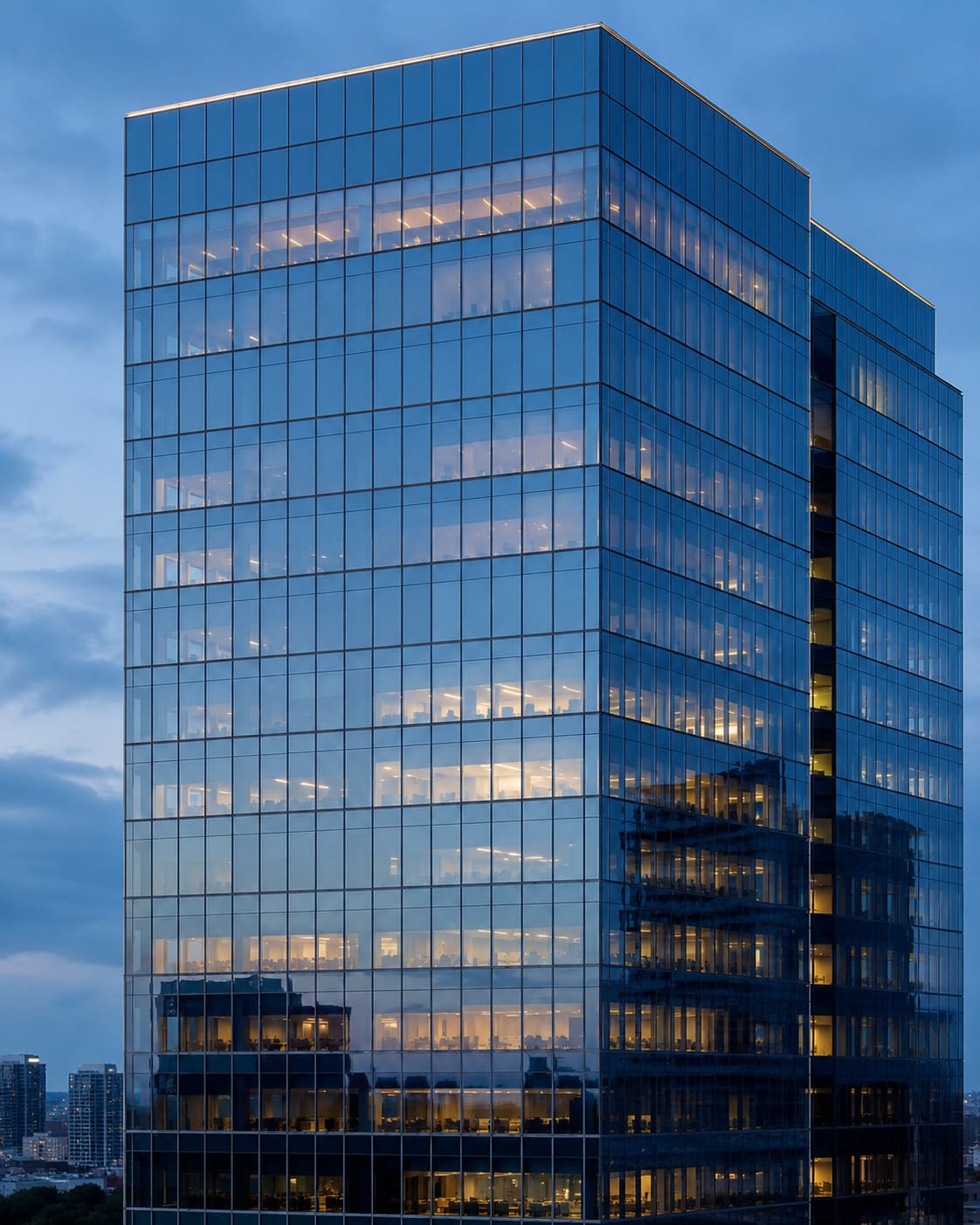
In a composite, cooling-dominated climate like Hyderabad and Secunderabad, where summer temperatures routinely cross 40 C, that gap translates into measurably lower indoor heat gain and reduced air-conditioning bills across the year. The same physics governs the commercial towers of Gachibowli and HITEC City, where a high-performance DGU facade is often the fastest route to Energy Conservation Building Code (ECBC) compliance. If you are specifying windows for a new home or a curtain wall for an office, this guide shows exactly where the DGU premium pays for itself and where single glazing is the smarter spend.
This comparison covers construction, insulation, solar control, acoustics, condensation, safety, cost, timelines and common mistakes, referencing Indian standards including IS 2553 for safety glass, the National Building Code (NBC) 2016 and the ECBC. Where large elevations are involved, the glass ties directly into engineered glass facade work and the frame it sits in, whether that is thermally broken aluminium or a uPVC window system. You can also get a free quote for a like-for-like DGU versus single-glazing costing on your own drawings.
What DGU and Single Glazing Actually Are
A DGU is two panes separated by a spacer and sealed at the edge, while single glazing is one pane held in the frame. The insulating advantage of a DGU comes from the sealed cavity, not the glass itself, because still air, and even more so argon, is a very poor conductor of heat.
- DGU construction: glass + spacer (aluminium or warm-edge) + a primary and secondary edge seal, with a desiccant packed inside the spacer to keep the cavity permanently dry.
- Typical make-up written as 6-12-6 mm (glass-gap-glass) gives an overall thickness of about 24 mm; the cavity commonly ranges from 6 to 20 mm, with 12 to 16 mm being the acoustic and thermal sweet spot.
- Single glazing: a single float, toughened or laminated pane, commonly 4, 5, 6, 8 or 10 mm thick, set into the same frame profile.
- Either pane in a DGU can be toughened to IS 2553, laminated for safety and acoustics, solar-control coated, or low-E coated to cut heat gain further.
- A DGU is a sealed, dead-air sandwich, so unlike single glass it cannot be cut or drilled on site; every unit is factory-made to exact size, which affects lead time and pricing.
This single structural difference, a permanently sealed insulating cavity, is the root of almost every performance gap that follows in this comparison.
Thermal Insulation and Solar Heat Gain
On thermal insulation, DGU roughly halves heat flow compared with single glazing, with U-values of 1.1 to 2.8 W/m2K versus 5.7 to 6.0 W/m2K. This is the single biggest reason DGU dominates specification for air-conditioned buildings across Telangana and Andhra Pradesh.
- U-value measures conductive heat transfer, and lower is better; a DGU with an argon fill and a low-E coating can reach roughly 1.1 to 1.6 W/m2K.
- Solar Heat Gain Coefficient (SHGC) controls radiant solar heat; clear single glazing has an SHGC near 0.82, while a solar-control DGU can drop below 0.30.
- For Hyderabad's cooling-dominated load, a low-SHGC DGU reduces the solar heat entering through windows by 50 to 70 percent.
- The ECBC prescribes maximum U-value and SHGC limits for building envelopes by climate zone, and a well-specified DGU is the standard route to meet them.
- Lower heat gain shrinks the required air-conditioning tonnage and its running cost, and supports a higher BEE star rating for the whole building.
For large glazed elevations, pairing a low-SHGC DGU with well-detailed glass facade work lets architects keep the daylight and city views while still hitting the envelope numbers the code demands. Real examples of that balance appear in our recent projects.
Noise Reduction and Acoustic Comfort
A 6-12-6 mm DGU reduces external noise by about 30 to 35 dB, compared with roughly 25 to 30 dB for a single 6 mm pane, and that 5 to 10 dB gap is clearly audible. For homes on busy corridors, acoustics alone often justifies the upgrade.
- The air gap and, ideally, unequal glass thicknesses (an asymmetric make-up such as 6-12-8 mm) disrupt sound transmission across a wider band of frequencies.
- Adding a laminated pane with an acoustic PVB interlayer to the DGU can push noise reduction toward 38 to 42 dB, enough to soften heavy traffic to a murmur.
- Single glazing offers limited acoustic benefit and performs poorly against traffic, construction and horn noise on arteries like the Outer Ring Road, NH-65 and the airport corridor.
- Acoustic performance depends on the operable sash sealing tightly, so a premium DGU in a loose, poorly gasketed frame will underperform a modest DGU in a tight, well-installed one.
In practice a window is only as quiet as its weakest air path; the glass, the frame and the installation are one acoustic system, not three separate purchases.
Condensation, Humidity and Interior Protection
DGU strongly resists interior condensation because the inner pane stays close to room temperature, whereas single glazing frequently fogs and drips in humid or heavily air-conditioned rooms. This protects frames, sills, curtains and adjacent finishes from long-term moisture damage.
- The warm inner surface of a DGU generally stays above the dew point in Indian conditions, so it remains clear where single glass would run with water.
- Persistent condensation on single glazing can rot timber sub-frames, corrode ironmongery and encourage mould on plaster reveals.
- A failed DGU seal shows as internal fogging between the panes that cannot be wiped away, signalling the sealed unit needs replacement.
- In monsoon-humid, coastal-adjacent parts of Andhra Pradesh such as Visakhapatnam, the condensation advantage of DGU is even more pronounced than in dry inland areas.
Condensation control is not only a comfort issue; in kitchens, bathrooms and densely occupied offices it directly affects the durability of the surrounding building fabric.
Safety, Glass Options and Durability
Both DGU and single glazing should use safety glass in high-risk locations, meaning toughened glass to IS 2553 or laminated glass for large panes, doors, low-level glazing and facades. Untreated float glass breaks into dangerous shards and is unsuitable for these applications.
- A DGU can combine a toughened outer pane with a laminated inner pane, delivering safety, security and acoustic benefit in one sealed unit.
- DGU seal life is typically 15 to 25 years; single glazing has no seal to fail and is simpler and cheaper to swap out when broken.
- Laminated single glazing is common for shopfronts and balustrades, where it holds together on impact even though it does little for insulation.
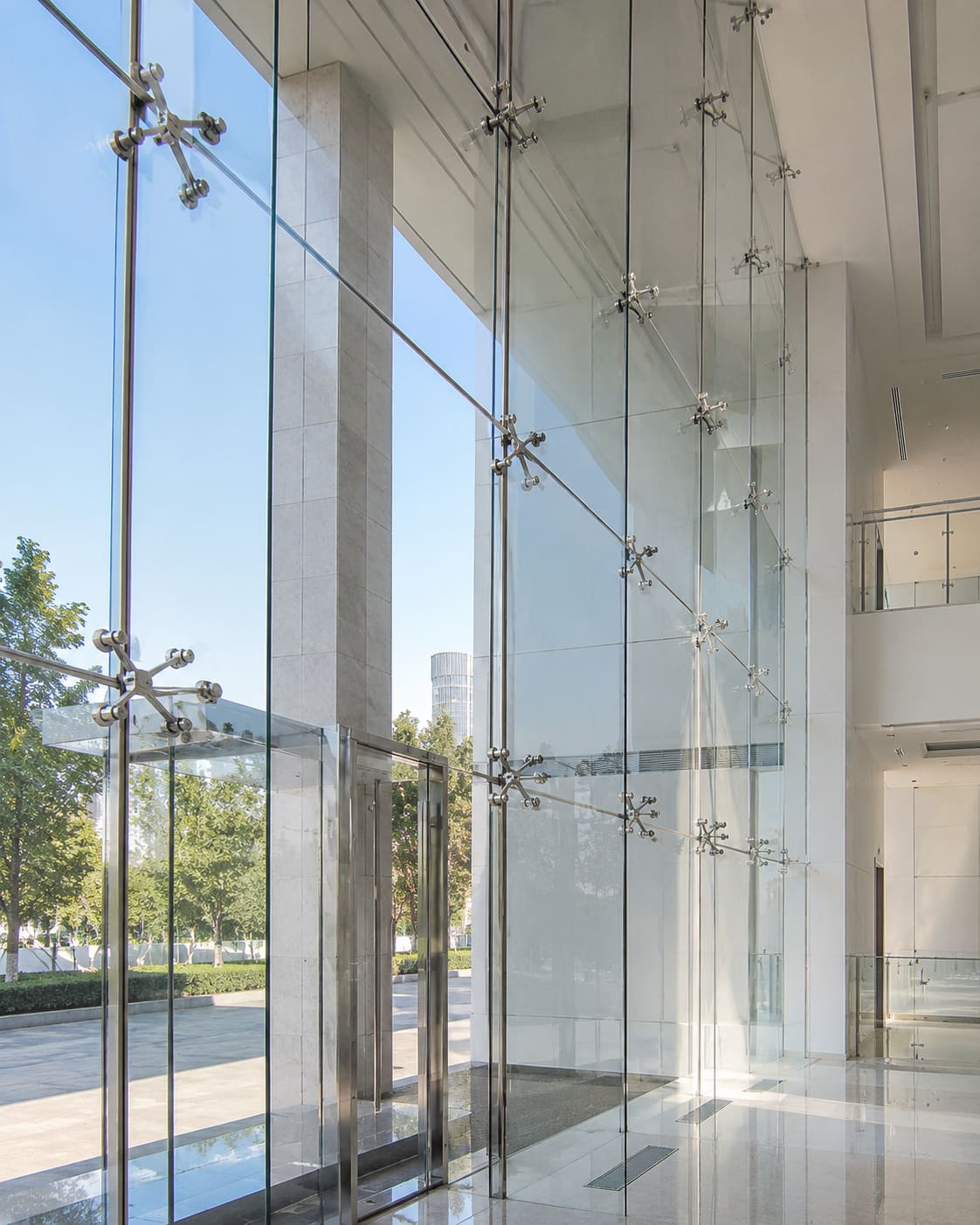
- Facade and structural glazing must follow NBC 2016 and use structural silicone qualified to recognised standards, together with correctly rated spider and structural fittings engineered for wind load.
- Buy factory-sealed DGUs with a warranty; a good edge seal, correct desiccant and clean assembly are what separate a 20-year unit from one that fogs in three.
In short, the glass make-up decides safety and lifespan, while the frame and hardware decide how well that glass keeps performing over years of daily use.
Cost, Weight and Frame Requirements in India
DGU costs about INR 550 to 1,200 per sq ft installed in India, versus INR 250 to 500 per sq ft for comparable single glazing, but the premium is recovered through lower energy bills over time. The exact figure depends on glass thickness, coatings, cavity width, spacer type and the frame system chosen.
- Indicative glass rates: plain 5 mm single float around INR 250 to 350 per sq ft installed; toughened single around INR 350 to 550; a clear 6-12-6 DGU around INR 550 to 750; and a low-E or acoustic laminated DGU around INR 900 to 1,200.
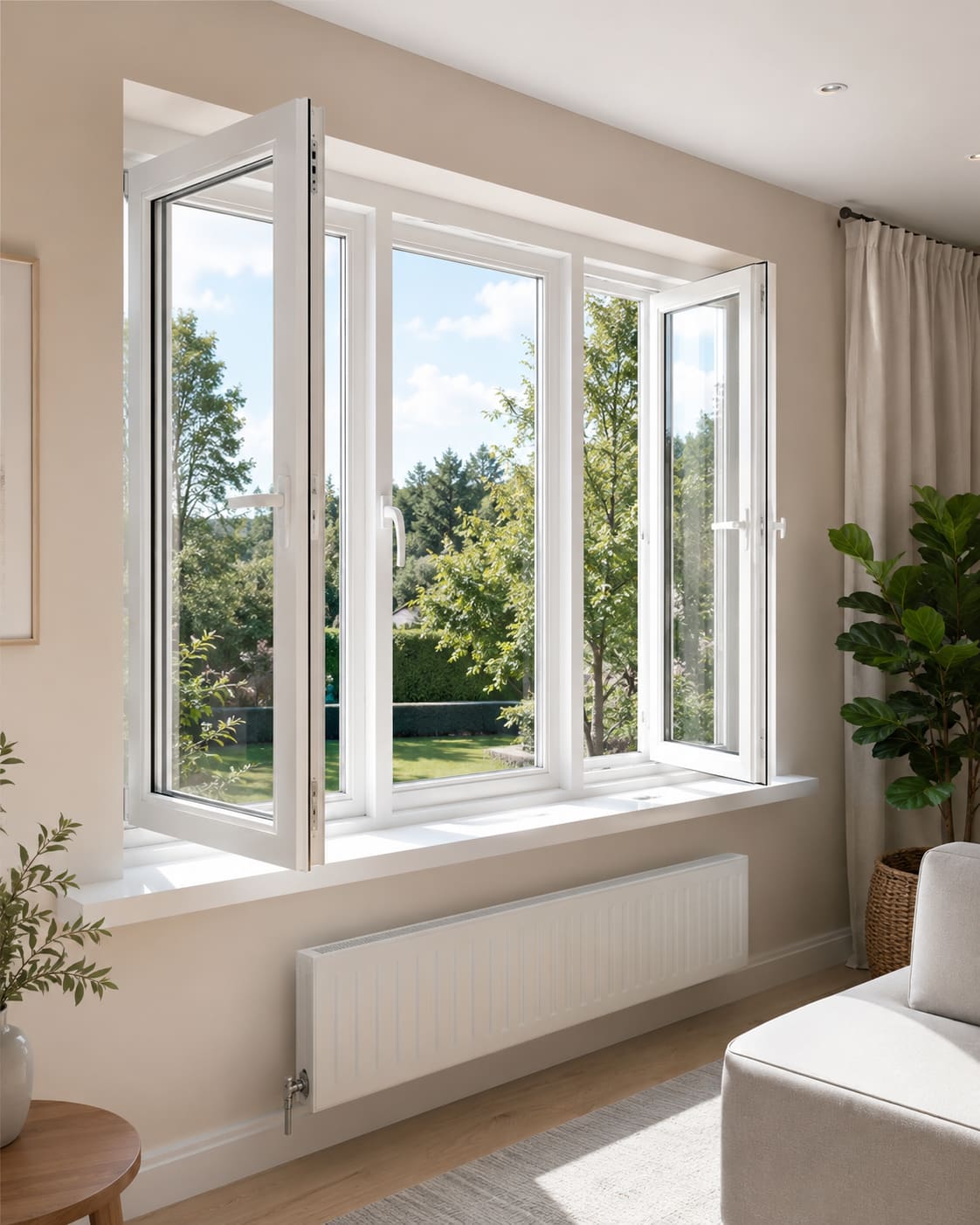
- DGU is heavier because it uses two panes, so it needs a deeper, stronger frame; thermally broken aluminium or a robust uPVC window system is typically specified.
- Single glazing is lighter and fits slimmer, cheaper frames, which is part of why it remains popular for internal and low-budget applications.
- The heavier DGU sash puts more demand on rollers, hinges and locks, so specifying good-quality hardware protects the investment over its life.
- Payback on the DGU premium in a cooling-dominated Hyderabad building commonly falls within 4 to 8 years through reduced cooling load.
Across a whole building the arithmetic usually favours DGU on conditioned, sun-facing elevations and single glazing on shaded, non-conditioned ones, rather than one glass type everywhere. You can compare full system options across our services.
Process, Lead Time and How to Order
Because DGUs are made to size in a factory, they carry a lead time that single glazing usually does not, so the ordering process needs planning. A typical project runs from measurement to installation over one to three weeks depending on glass type and quantity.
- Step 1, survey and specification: confirm opening sizes, orientation, whether the room is air-conditioned, and target U-value and SHGC for each elevation.
- Step 2, glass selection: choose make-up (for example 6-12-6 mm), coatings (low-E, solar-control), and whether either pane needs toughening or lamination.
- Step 3, fabrication: DGUs are sealed and cured in a controlled facility, generally taking 5 to 12 working days; single glass can often be toughened and supplied faster.
- Step 4, installation: units are glazed into thermally broken aluminium or uPVC frames with correct setting blocks, drainage and gaskets.
- Because a sealed unit cannot be resized on site, accurate measurement up front avoids costly remakes, which is where a proper site survey earns its value.
Order early for large or coated DGUs, since imported low-E glass and specific spacer colours can extend lead times, especially during peak construction season in Hyderabad.
Common Mistakes to Avoid
The most common mistake is putting a premium DGU into a weak frame or poor installation, which throws away much of the performance you paid for. The glass, frame, gaskets and workmanship must be matched as a single system.
- Ignoring SHGC: buying a clear DGU with no solar-control coating for a west-facing Hyderabad elevation still admits heavy radiant heat, undercutting the whole point of the upgrade.
- Undersizing the frame: fitting a heavy DGU into a slim single-glazing profile leads to sagging sashes, hardware failure and air leaks within a few years.
- Skipping safety glass: using annealed float glass in doors, low-level windows or facades breaches NBC 2016 and IS 2553 and is genuinely dangerous.
- Buying on price alone: an unbranded DGU with a poor edge seal can fog internally within a couple of years, and the only fix is replacing the whole unit.
- Over-specifying everywhere: paying for acoustic low-E DGU on shaded, non-conditioned or internal openings wastes budget better spent on the exposed elevations.
Avoiding these errors is mostly about matching glass, frame and location deliberately rather than defaulting to one product across the building.
When to Choose DGU and When Single Glazing Is Enough
Choose DGU wherever insulation, noise control or condensation resistance affect comfort or running cost, and choose single glazing where those factors do not apply and budget or weight is the priority. Applying the right glass to the right opening is how you extract the best value from a project.
- Choose DGU for: air-conditioned homes and offices, bedrooms facing sun or noise, west and south elevations, and any building targeting ECBC or green-building compliance.
- Choose single glazing for: internal partitions, low-cost or naturally ventilated spaces, shaded elevations, staircases and non-conditioned utility areas.
- Mixed strategy: many Hyderabad and Secunderabad projects use DGU on the conditioned, exposed facades and single glazing on service cores and internal partitions to control cost.
- Commercial curtain walls almost always specify DGU to meet envelope and comfort targets, integrated with engineered glass facade work.
- Residential rule of thumb: fit DGU where you sleep, work and cool the air, and single glazing where you merely pass through.
Hakimi Aluminium and Glass supplies and installs both DGU and single-glazed systems, along with Taiton, Enox and Ozone hardware, across Hyderabad, Secunderabad and the wider Telangana and Andhra Pradesh region; send your drawings through get a free quote for a room-by-room recommendation.