In the domal vs system aluminium windows debate, system windows win on sealing, sound insulation and long-term weather performance, while Domal windows win on upfront cost and remain more than adequate for the majority of everyday homes. Both are aluminium, both look clean and modern, and both are a real upgrade over the flimsy commercial sliding sections builders fit by default, yet they sit at very different points on the quality and price curve. As a working rule, Domal costs around INR 450 to 750 per sq ft installed and system windows around INR 750 to 1,400 per sq ft, so the decision is really about matching performance to exposure and budget rather than picking the 'better' brand.
At Hakimi Aluminium and Glass we fabricate and install both types every week across Hyderabad, Secunderabad and the wider Telangana and Andhra Pradesh region, so we see exactly how each behaves in real conditions, from monsoon-driven horizontal rain on a 12th-floor Gachibowli flat to the gritty pre-summer dust that blows in off open plots in Shamshabad and the ORR corridor. Our aluminium windows work spans compact 2BHK apartments to full villa elevations, so the guidance below is drawn from installed jobs, not brochures.
This guide breaks down the genuine, load-bearing differences between Domal and system sections, wall thickness, gaskets, drainage, thermal breaks, hardware and price, so you can spec the right window room by room. Where premium sealing is worth paying for and where it simply is not both get an honest answer, because over a full house the wrong call is worth lakhs.
What Domal and System Aluminium Windows Actually Are
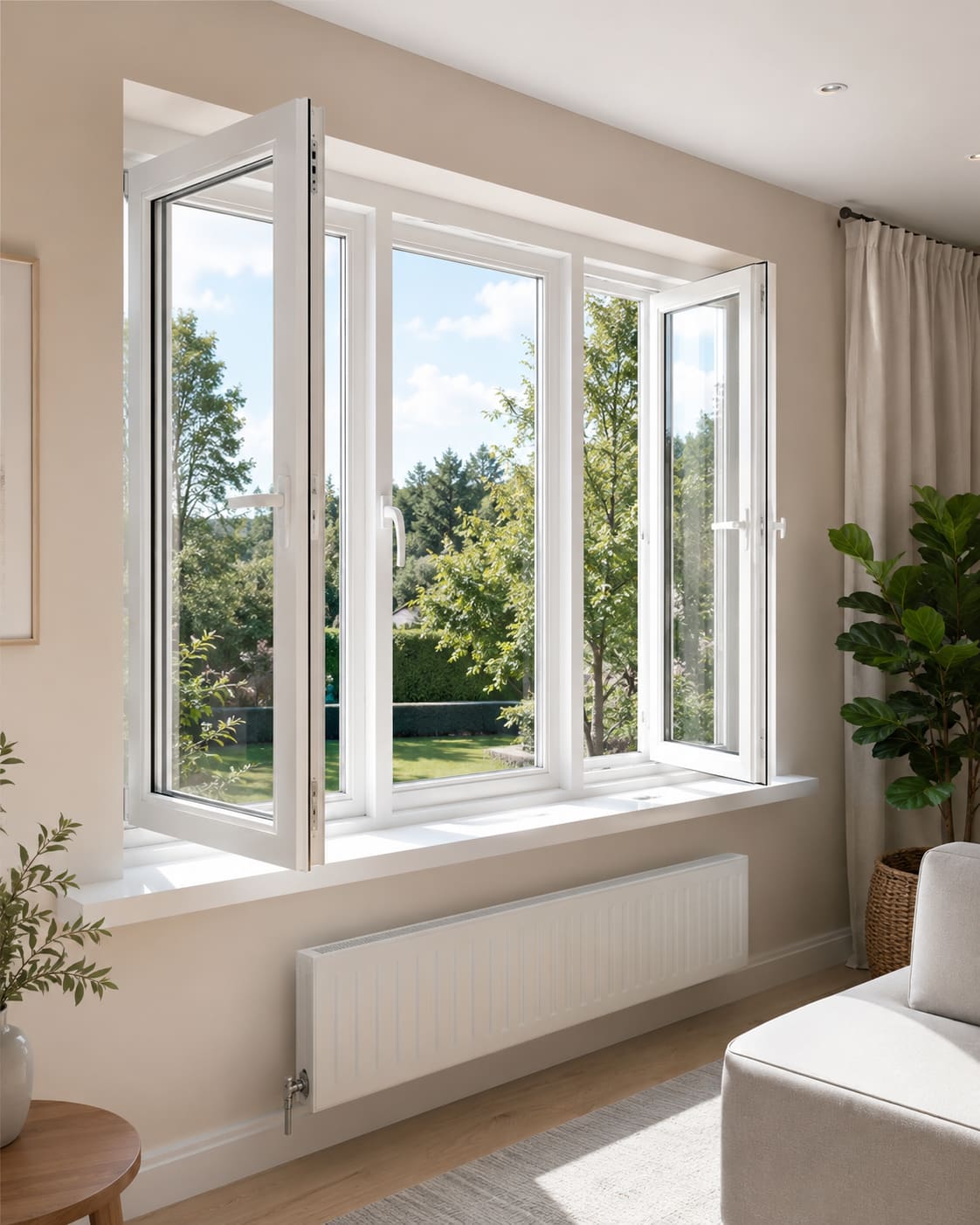
Domal is a well-known family of aluminium window and door sections, originally a Hindalco brand name that has since become a near-generic term for mid-range casement and sliding profiles. It offers a heavier wall thickness than the cheap commercial aluminium used in builder-grade flats, giving you sturdier casement, openable and 2-track or 3-track sliding windows at a sensible price. It is proven, widely stocked across Hyderabad, and easy to service years later because parts are everywhere.
System aluminium windows, by contrast, are engineered as a complete, sealed unit. The profile, gaskets, hardware, drainage channels and glazing beads are all designed and factory-tested to work together, usually with continuous EPDM gaskets, multi-point locking, concealed drainage and provision for double glazing or a thermal break. You are not just buying a frame, you are buying a validated performance package with tighter, more repeatable tolerances.
The practical distinction comes down to engineering depth versus everyday value:
- Domal: robust mid-range sections, single or double glazing, ideal for most homes and standard elevations
- System: premium engineered profiles, superior sealing, multi-chamber design, best for high-rises, villas and thermal comfort
- Both are genuine aluminium and both take quality locking hardware, so basic security is not the deciding factor between them
If you are still deciding on the frame material itself, it is worth comparing the whole range through our services before narrowing down to a specific section family.
Profile Construction and Wall Thickness Compared
The single most useful spec to ask any fabricator is the profile wall thickness, because it drives rigidity, hardware holding power and how large a glass pane the sash can safely carry. Thin walls flex, and flex is what eventually causes gasket gaps, dropped sashes, sticking handles and the rattle you hear in cheap windows within two monsoons.
- Commercial / builder aluminium: often below 1.1 mm, avoid for anything you want to last
- Domal sections: typically 1.2 to 1.6 mm wall thickness, single or twin chamber
- System sections: commonly 1.6 to 2.0 mm, multi-chamber, with dedicated gasket and drainage races
System profiles also carry engineered channels for water drainage and pressure equalisation, so wind-driven rain that gets past the outer line of defence is guided back out through weep holes rather than pooling on your sill and seeping inward. Domal handles ordinary rain perfectly well, but it relies on a single sealing line and lacks this layered, drained defence.
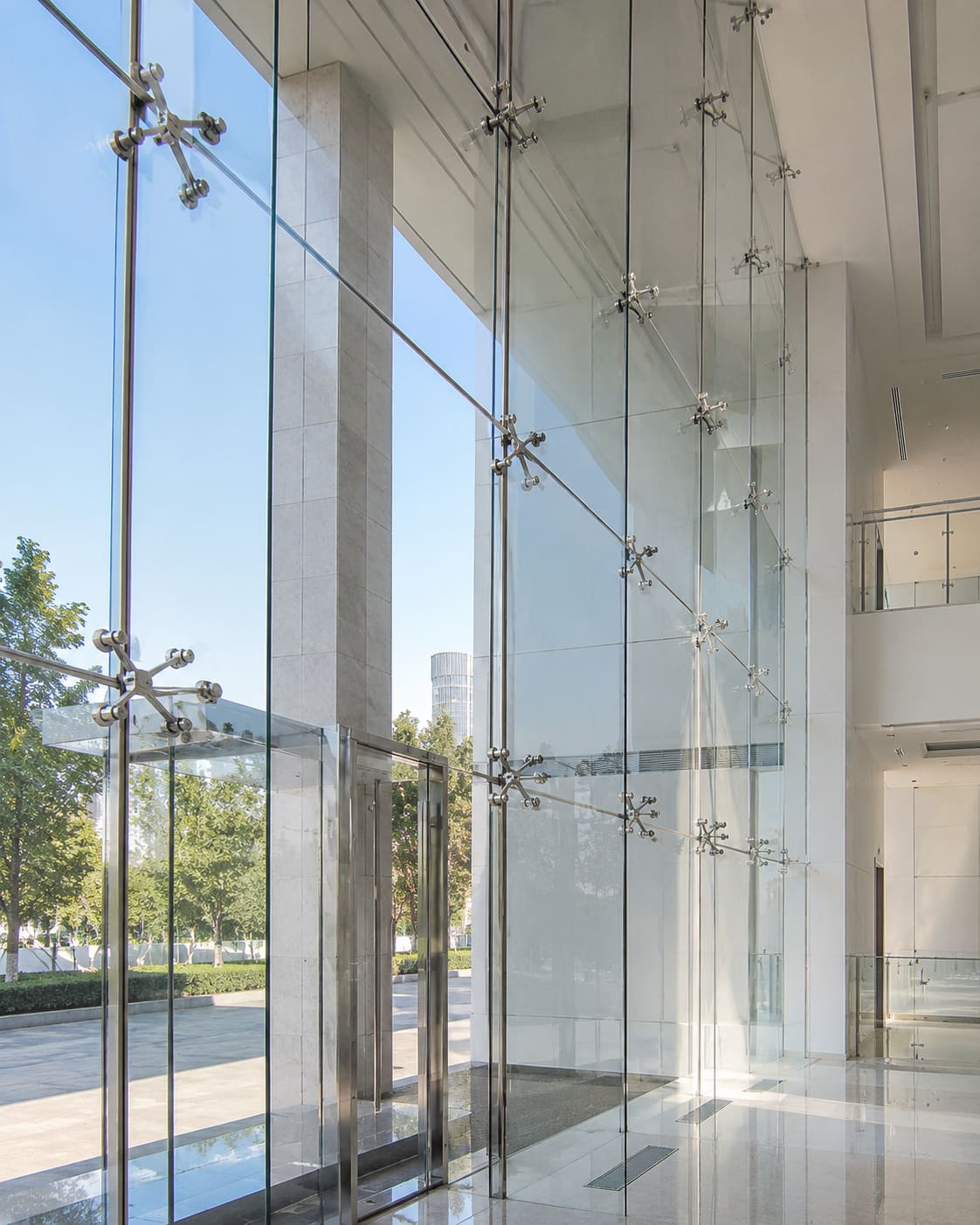
For large openings, tall sliders and structural spans, the extra stiffness of a system profile is not a luxury, it is what keeps the sash square and the seal continuous. This is why our facade and large-format glazing work leans on system-grade sections where deflection limits are strict, and you can see examples of that scale in our recent projects.
Performance: Sealing, Sound and Weather Resistance
The biggest real-world gap between the two is weather sealing. Domal casement windows use felt or basic press-in gaskets and perform perfectly well in typical Hyderabad weather, but during a heavy monsoon spell, or on an exposed high-rise elevation, system windows clearly pull ahead thanks to continuous EPDM seals and built-in water drainage that Domal simply does not have.
System profiles also accommodate thicker double-glazed units far more easily, which meaningfully cuts traffic noise on busy corridors like Gachibowli, HITEC City, Kukatpally, Secunderabad and the Outer Ring Road. If sound insulation, dust control or air-conditioning efficiency is a genuine priority, systems earn their premium.
- Air and water tightness: system windows are noticeably better sealed and actively drain trapped water
- Noise reduction: system profiles with double glazing are the strongest performer against road, rail and airport noise
- Dust control: continuous gaskets keep out the fine summer dust that is a constant across Telangana and the Deccan plateau
- Everyday homes away from major roads: Domal is usually more than adequate and saves real money you can put into better glass
Hardware matters here too. A quality window is only as tight as its rollers, friction stays and locking points, because those are what pull the sash firmly onto the gasket. Poor hardware defeats even a good profile, which is one reason we standardise on trusted fittings when we install our aluminium windows rather than whatever is cheapest on the day.
Thermal Performance and Energy Efficiency
Standard aluminium conducts heat readily, which is why a bare frame in full west sun feels warm to the touch and quietly adds to your cooling load. Both Domal and basic system profiles are non-thermally-broken by default, but the system route gives you a clear upgrade path that Domal generally does not.
A thermal break aluminium window inserts a low-conductivity polyamide strip between the inner and outer halves of the profile, dramatically slowing heat transfer and reducing condensation on the frame during cooler, humid mornings. In Hyderabad's climate the headline benefit is lower AC running costs in west- and south-facing rooms that take direct afternoon sun, plus a frame that does not radiate heat back into an otherwise cooled room.
- Domal: fine for naturally ventilated rooms and shaded elevations where thermal gain is modest
- System (non-thermal-break): tighter sealing already reduces conditioned-air leakage around the sash
- System with thermal break: the strongest choice for glass-heavy facades, top floors and fully air-conditioned villas
If your project has large glazed areas, the frame should be specified alongside the glass, low-E coatings and external shading rather than upgraded in isolation. Getting the whole envelope right is what actually lowers bills, and it is a conversation worth having early. You can get a free quote that prices the frame and glass together so the numbers reflect the real assembly.
Hardware, Fittings and Finishes
Windows are only as good as the fittings that move and secure them, and this is an area where a specialist fabricator makes a visible difference over the years. Both Domal and system windows can be equipped with premium hardware, but system profiles are engineered around specific multi-point locking gear, friction stays and concealed hinges for tighter, more consistent closing across the whole sash.
We supply and fit branded hardware from names like Taiton, Enox and Ozone, so you get the same reliable components regardless of which profile you choose:
- Multi-point locks and handle sets that pull the sash evenly onto the gasket
- Smooth, long-life rollers and stainless tracks for sliders that stay light to operate
- Friction stays and concealed hinges sized correctly for the glass weight
- Powder-coated, anodised or wood-finish surfaces in matched shades
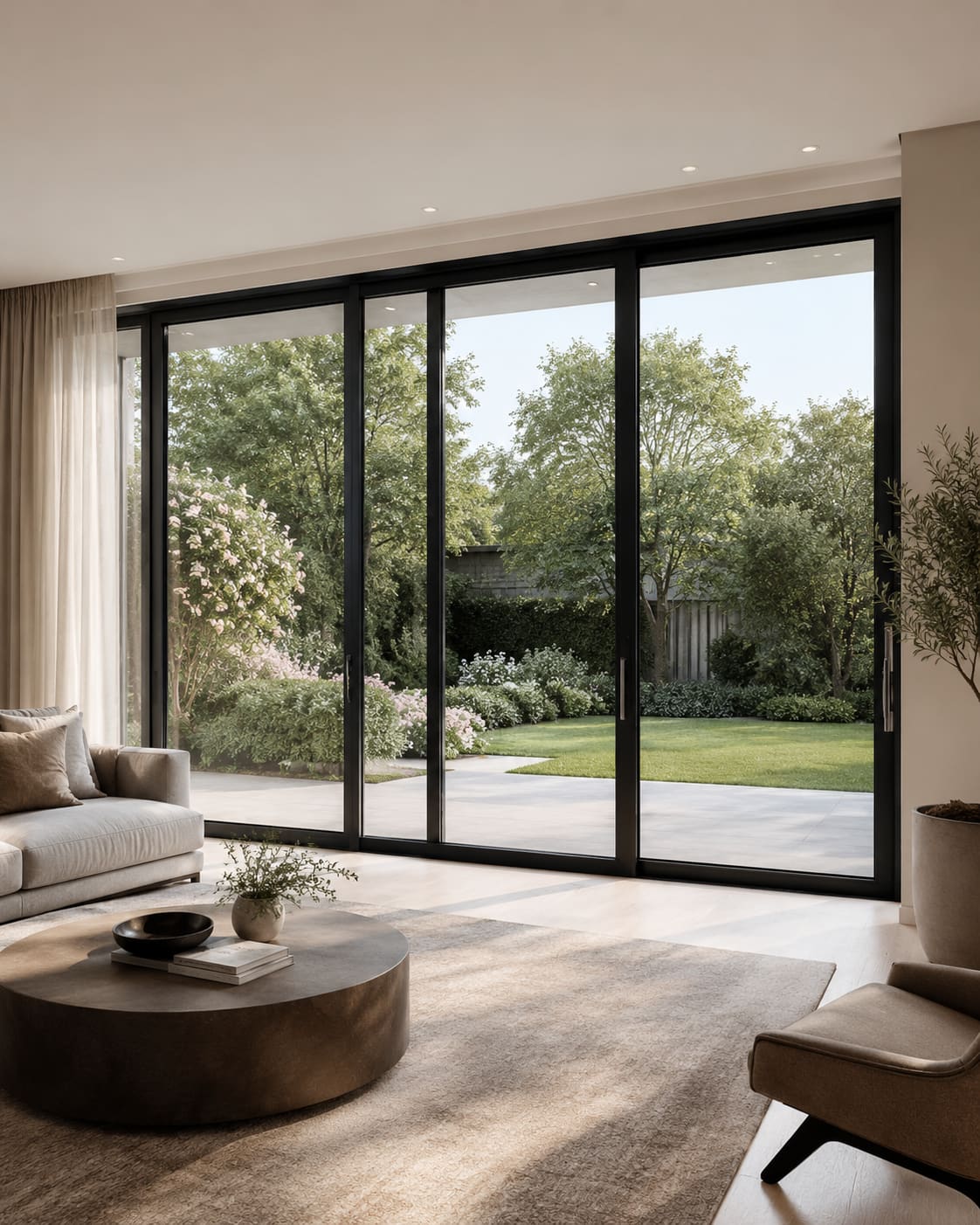
On finishes, both Domal and system accept powder coating and premium anodised or wood-grain looks. System ranges usually offer a wider colour-matched palette across windows, doors, ventilators and slim-sightline sliders, which matters if you want one seamless designer aesthetic across an entire villa elevation. The visual difference on a finished facade often comes down to sightline width, system sliders can carry more glass with slimmer frames, which is why they photograph so well in our recent projects.
Indicative Pricing in Hyderabad, Secunderabad and Telangana
Pricing always depends on glass thickness, hardware brand, colour, mesh and configuration, but these are realistic 2026 ranges we quote across the Hyderabad and Secunderabad market, useful for planning a working budget before a site survey.
- Domal aluminium windows: roughly INR 450 to 750 per sq ft installed
- System aluminium windows: roughly INR 750 to 1,400 per sq ft installed
- Thermal-break system windows: often INR 1,200 to 2,000+ per sq ft installed
- Add double glazing: typically INR 150 to 350 per sq ft extra
- Add mosquito mesh, premium handles or safety grille: INR 60 to 200 per sq ft extra
For a standard 5x4 ft (20 sq ft) window that means Domal often lands around INR 9,000 to 15,000, while a comparable system window sits closer to INR 15,000 to 28,000. Across a full villa with 15 to 20 openings the difference runs into lakhs, so it genuinely pays to decide, room by room, where premium sealing is worth it and where it is not.
One caution on quotes: a very low per-sq-ft number almost always hides thinner walls, cheaper felt seals or unbranded rollers, so compare like for like on wall thickness and gasket type, not just the headline rate. For an accurate figure on your actual drawings and elevations, get a free quote and we will price Domal and system options side by side on the same window schedule.
Durability, Maintenance and Warranty
Both window types are corrosion-resistant and hold up far better than steel or timber in Telangana's mix of humidity, dust and the salt-laden coastal air toward the Andhra Pradesh belt. The difference over a 10 to 15 year horizon is mostly about how gracefully the sealing and hardware age, not about the aluminium itself.
- Domal: gaskets and felt may need periodic replacement, but the parts are cheap and quick to service locally
- System: EPDM seals and engineered hardware last longer, though replacement parts are more specialised and best sourced through the original fabricator
- Powder-coated finishes on both typically carry manufacturer coating warranties of several years against fading and peeling
Routine care is minimal for either type: clean the tracks, wipe the frames, clear the drainage weep holes before monsoon, and occasionally lubricate rollers and stays. Where a system window's tighter tolerances need precise re-alignment after years of use, professional servicing keeps the seal performing exactly as designed. Because our aluminium windows are fabricated in-house, we can supply matching parts and re-align sashes long after the original install rather than leaving you to hunt for a compatible section.
Common Mistakes to Avoid When Choosing
Most window regret in Hyderabad homes traces back to a handful of avoidable errors, usually made to save a little money that costs more later.
- Chasing the lowest per-sq-ft rate without checking wall thickness, which is how sub-1.1 mm commercial sections get sold as 'Domal'
- Fitting single glazing on a road-facing bedroom and then trying to fix the noise afterwards, when the frame cannot take a thicker unit
- Skipping the drainage detail on exposed elevations, so monsoon water that gets in has nowhere to go
- Buying premium system profiles but pairing them with cheap unbranded rollers and locks that undo the sealing advantage
- Speccing one window type for the whole house instead of matching each opening to its exposure
The fix for all of these is a proper site survey before you commit. Exposure, floor level, road proximity and sun direction should drive the spec, and a good fabricator will tell you where you can safely save. If you would rather review the full material and service options first, start with our services and then narrow down with a survey.
How to Choose the Right Window for Your Project
Match the window to the exposure and the budget rather than defaulting to one brand for the whole house. A modest apartment, or an internal courtyard-facing room, rarely needs a full system, whereas a top-floor villa facing open ground, or a home catching the sea breeze in Andhra Pradesh's coastal districts, genuinely benefits from system-grade sealing and drainage.
- Choose Domal for value-driven homes, standard elevations, sheltered sides and tighter budgets
- Choose system for high-rises, premium villas, road-facing and west-facing rooms, and where thermal comfort matters
- Choose thermal-break system where energy efficiency, AC savings and frame condensation control are priorities
The smartest approach for many Hyderabad and Secunderabad projects is a deliberate mix: system windows on exposed, noisy or sun-hit facades, and Domal on the sheltered internal sides, keeping quality high where it counts and cost sensible everywhere else. Whichever direction you lean, our team can survey your site, recommend the right profile per elevation, and pair it with reliable hardware. Explore our aluminium window service or the thermal break aluminium option, and when you are ready, get a free quote that prices your exact window schedule both ways.