The choice between fixed vs openable windows comes down to one trade-off: fixed windows are the cheapest, most airtight option and give you the largest uninterrupted glass area for light and views, while openable windows cost 30 to 40 percent more but give you ventilation, cleaning access and an emergency exit. A fixed window is sealed permanently into its frame with no moving sash. An openable window - whether sliding, casement or top-hung - has a sash that swings or slides to let air in. For most Hyderabad homes the right answer is not one type for the whole house but a considered mix, room by room, facade by facade.
This is one of the earliest decisions in any home or office project, and it quietly shapes ventilation, energy bills, cleaning effort and views for the next 20 years. In Telangana's climate - hot, dry summers, a hard south-west monsoon and long dusty spells - the fixed-versus-openable balance directly affects comfort and running cost. Lean too far toward fixed glazing and rooms feel stuffy unless the AC runs constantly; make everything openable and you overspend while losing daylight, airtightness and a bit of your view to the extra frames.
Below we break down where each type earns its place across Hyderabad, Secunderabad and Andhra Pradesh, what you should realistically pay in INR per square foot, which glazing and hardware actually make a difference, and how to combine both types in a single window or facade. If you want a specification matched to your site, you can get a free quote or compare our aluminium windows and uPVC windows systems.
Fixed vs Openable Windows: The Core Difference
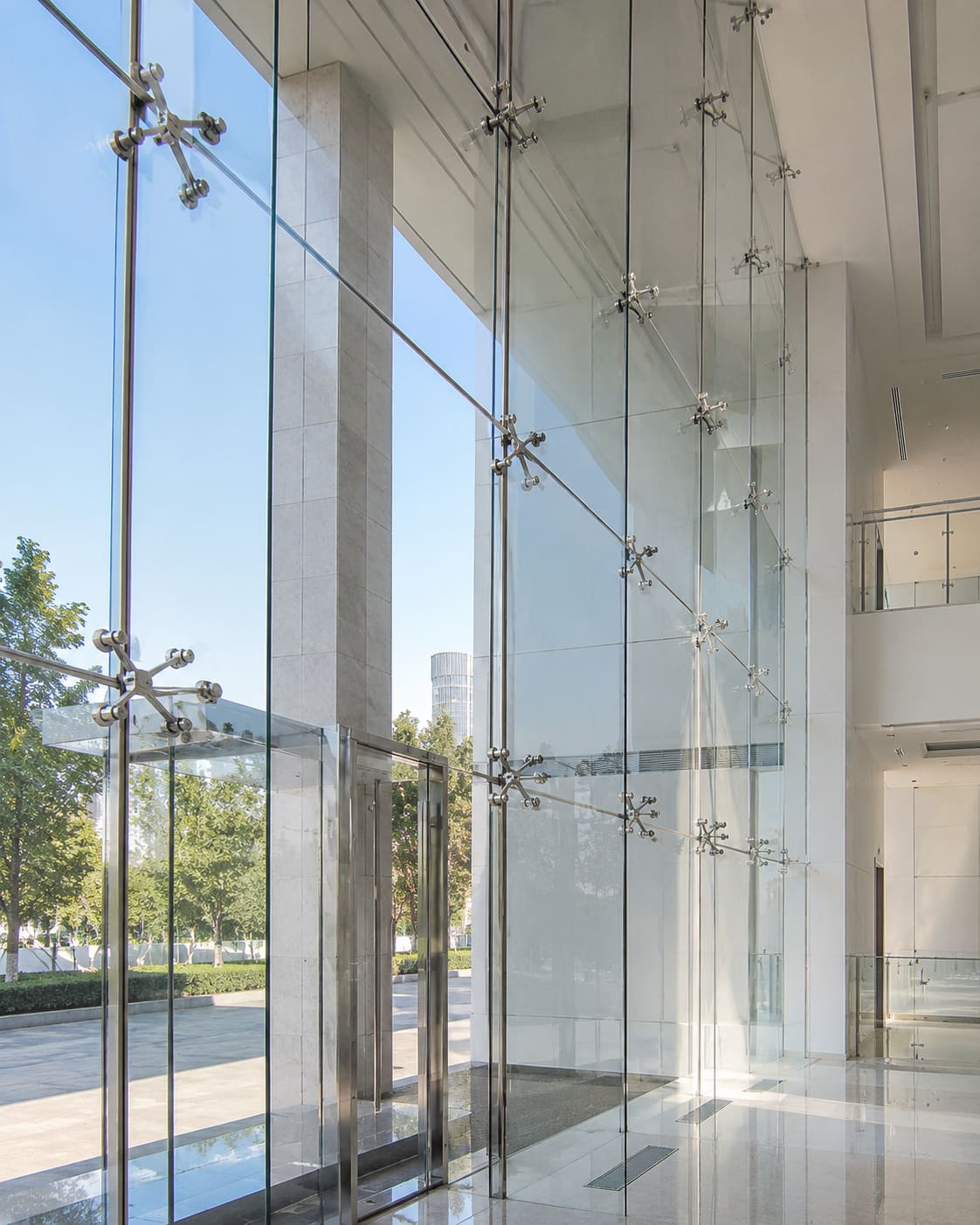
A fixed window has no moving sash, so it is cheaper per square foot, more airtight, and offers the largest uninterrupted glass area for views and daylight. An openable window sacrifices some of that glass to an operating frame and hardware, but in return delivers ventilation, an emergency exit and easier cleaning from inside. Everything else - glazing, safety, running cost - flows from that single structural difference.
- Fixed: best light, best weather-sealing, lowest cost, longest glass spans, but zero ventilation and hard to clean when high up.
- Openable: cross-breeze, cleaning access, fire escape and code compliance, but higher cost, more maintenance and a slightly reduced view where the sash frame sits.
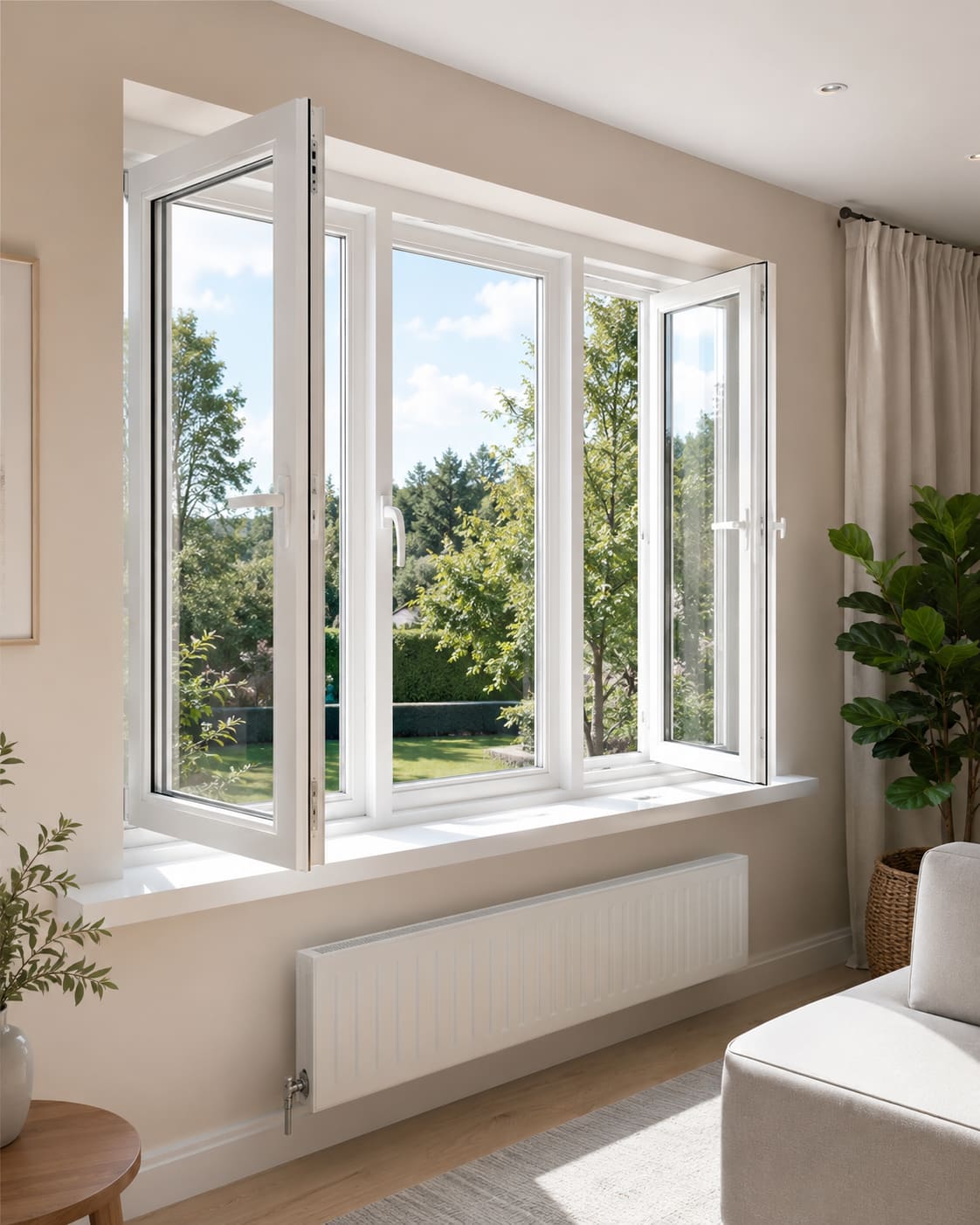
The smartest designs rarely commit to one type exclusively. A large picture unit is often a fixed centre pane flanked by two openable sashes - giving you the wide, unbroken view of a fixed window with the airflow of an openable one. That combination logic runs through every well-planned facade, from a simple flat window to a full-height elevation. Before you finalise a window schedule it is worth walking through our services so you understand which systems support which opening styles.
Which Window Type Belongs in Which Room
Room function should drive the fixed-versus-openable decision far more than aesthetics alone, because ventilation needs, safety requirements and cleaning access change from one space to the next. The exercise is simple: for every opening, ask whether that room needs air and an escape route, or only light and a view.
- Living rooms and lounges: a large fixed picture window for the uninterrupted view, paired with one or two slim openable vents for a cross-breeze.
- Bedrooms: openable (casement or sliding) is non-negotiable for night ventilation and a fire-escape route - never make a bedroom fully fixed.
- Kitchens: openable, ideally top-hung or a sliding vent above the counter, to clear cooking smoke, heat and grease-laden air quickly.
- Bathrooms and utility: small openable or louvered vents to exhaust steam and moisture and prevent mould in Hyderabad's humid monsoon months.
- Staircase high-level and gable glazing: fixed, because operating a sash you cannot easily reach is impractical and these openings are rarely accessed.
- Pooja rooms and studies: a fixed panel with a slim openable ventilator strikes the right balance of quiet, daylight and fresh air.
For high-rise flats in Gachibowli, Kokapet and the Financial District, wind loads and society safety rules often push balconies and upper-floor living areas toward fixed glazing with restricted openable vents. You can see how this plays out in real homes across our recent projects, where fixed picture panes and compact openable sashes are combined on the same elevation.
Cost in INR: Hyderabad and Telangana Indicative Rates
Pricing depends on the aluminium or uPVC system, glass thickness, hardware grade and the finish you choose, but these Hyderabad-market ranges help you budget realistically before a site measurement. Treat them as supply-and-install indicative rates for standard residential openings.
- Fixed aluminium windows: roughly INR 350 to 650 per sq ft with 5mm plain or tinted glass.
- Openable sliding aluminium windows: about INR 500 to 900 per sq ft depending on rollers and interlocks.
- Casement (side-hung / top-hung) aluminium windows: INR 650 to 1,100 per sq ft due to heavier hinges, friction stays and gaskets.
- uPVC equivalents: typically 15 to 30 percent higher than aluminium for the same configuration, but with better thermal insulation.
- Double-glazed (DGU) upgrade for heat and noise: add roughly INR 250 to 500 per sq ft on either type.
- Premium glass options (toughened, solar-control, laminated acoustic): add a further INR 150 to 400 per sq ft.
Because a fixed pane costs 30 to 40 percent less than an equivalent openable one, converting non-essential openable windows to fixed is a genuine way to trim a project budget without losing any daylight. On a typical 3BHK in Secunderabad with 12 to 15 window openings, shifting two or three low-use openings - a stairwell, a gable, a high living-room clerestory - to fixed can save tens of thousands of rupees. Ask us to value-engineer your window schedule, and compare framing systems such as aluminium windows against uPVC windows before you lock in a budget.
Casement vs Sliding: The Openable Window Comparison
Once you have decided a window should open, the next question is casement versus sliding - and the two behave very differently in Telangana conditions. The distinction is not cosmetic; it changes airtightness, rain resistance, how much of the window actually opens, and how the unit ages.
- Casement (side-hung or top-hung): the sash compresses against a continuous gasket, giving excellent airtightness, the best driving-rain resistance, and a full 100 percent clear opening for maximum airflow.
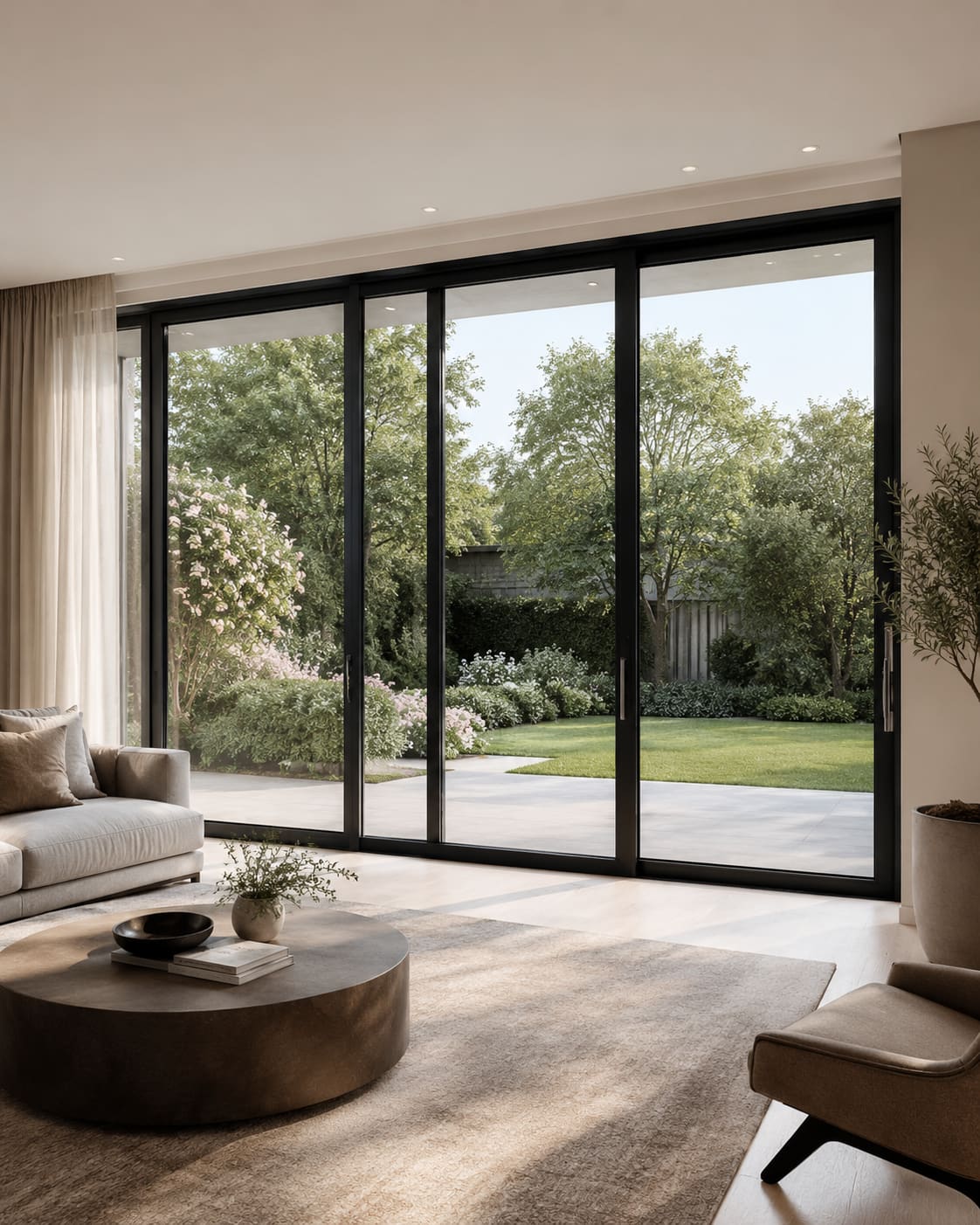
- Sliding: the sash rolls along a track, so it is space-saving and never projects outward, but the interlocking meeting rails always leave a small gap and only half the window opens at any time.
For bedrooms and studies facing busy roads in Secunderabad or Vijayawada, a casement window with double-glazed glass is the quietest, most weather-tight openable option available. For narrow balconies, passages and spaces where a swinging sash would foul furniture or a walkway, sliders are the practical winner. Whichever you choose, the hardware carries the load - rollers, hinges, friction stays and multi-point locks determine how the window feels and seals for the next decade far more than the frame profile does.
Glazing, Sealing and the Telangana Climate
Fixed windows are inherently better sealed, so they leak less conditioned air and keep out Hyderabad's fine summer dust more effectively than any sliding track can. If you run air-conditioning heavily through the April-May peak, maximising fixed glazing on your hottest facades directly lowers running cost, because there is simply no operable gap for cool air to escape or hot air to infiltrate.
Glass specification then does the heavy lifting on comfort. Single 5mm glazing is fine for shaded or low-traffic openings, but for west-facing rooms, roadside bedrooms or any large expanse of glass, a double-glazed unit meaningfully cuts both heat gain and noise. On coastal Andhra Pradesh sites the frame finish matters just as much as the glass.
- Prioritise fixed or casement units on facades hit by driving monsoon rain from the south-west.
- Use sliders where space is tight and full weather-sealing is less critical, such as internal balconies.
- Specify anodised or powder-coated aluminium to resist humidity and salt air along Andhra Pradesh's Visakhapatnam and Vijayawada belt.
- Add solar-control or tinted glass on east and west elevations to reduce afternoon heat load and glare.
- Choose warm-edge spacers and good gaskets on DGUs to prevent condensation during humid monsoon nights.
Hardware, Safety and Ventilation Standards
The difference between a window that works beautifully for years and one that jams after a single monsoon is almost always the hardware, not the frame profile. Openable windows depend entirely on hinges, friction stays, rollers, interlocks and multi-point locks that are correctly sized for the sash weight - undersized fittings sag, bind and let air whistle through within a season.
- For casement and top-hung sashes, use corrosion-resistant stainless friction stays and multi-point locks matched to the panel size.
- For sliders, quality rollers and interlocks keep the movement smooth and the meeting rail tight against dust and rain.
- Fit anti-lift blocks and good handles on ground-floor and accessible openings to improve security.
On the standards side, the National Building Code of India recommends that the openable ventilation area for habitable rooms be at least around 5 percent of the floor area - which is precisely why you cannot make an entire bedroom or kitchen fixed. Restrictor stays are also worth specifying above the ground floor to limit how far a sash opens, an important safety measure in high-rise Hyderabad apartments with young children. A uPVC window system with multi-point locking is often the simplest way to hit both the airtightness and the security targets on the same unit.
How to Combine Fixed and Openable in One Facade
The best-performing window walls treat fixed and openable as partners, not rivals. Fixed panes carry the view and the daylight; a measured amount of openable area handles the air and satisfies the ventilation code. Getting the ratio right is what separates a comfortable, affordable home from an over-glazed or a stuffy one.
- Picture window with side vents: a wide fixed centre pane flanked by two narrow casement sashes - the classic living-room solution.
- Full-height glazing with a top vent: fixed lower panels for the view, a top-hung sash above to exhaust rising hot air.
- Sliding-plus-fixed grids: alternate fixed and sliding modules across a long balcony run to cut cost while keeping usable airflow.
- Bedroom bay: a fixed corner pane for the view with a single casement for night ventilation and escape.
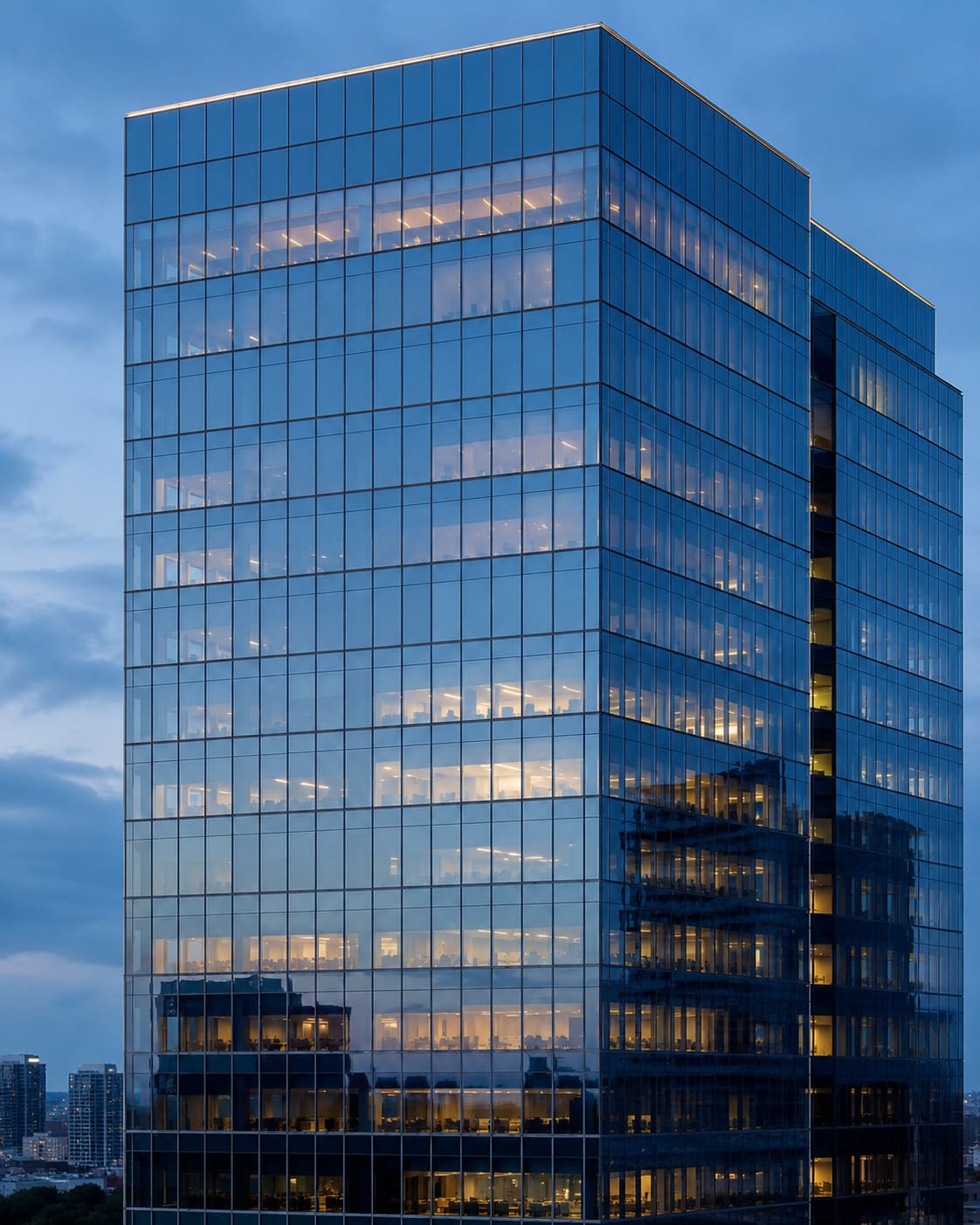
As a rule of thumb, aim for 60 to 80 percent fixed area with the remainder openable in living spaces, and increase the openable share in bedrooms, kitchens and bathrooms where airflow and safety come first. This same approach scales up to commercial elevations, where large fixed panels are punctuated by discreet openable vents. To see the ratio applied to homes and offices similar to yours, browse our recent projects or ask our team to draft a facade layout for your plot.
Maintenance, Lifespan, Mistakes and Local Advice
Over a 20-year horizon, fixed windows are the lowest-maintenance choice because there are no moving parts to wear, no gaskets to compress and no rollers to replace. Cleaning high fixed panes does require reach access, which is exactly why they suit gable and stairwell positions where they rarely need attention. Openable windows need periodic care: sliding tracks collect Hyderabad's fine dust and should be cleaned every few months, while casement hinges and stays benefit from occasional lubrication.
- Fixed: minimal maintenance, longest sealed-unit life, but hardest to clean when high up.
- Sliding: easy to clean glass from inside, but tracks need regular dust clearing to run smoothly.
- Casement: excellent seal and easy cleaning, though hinges and stays need light periodic servicing.
The most common mistakes we correct on Hyderabad sites are predictable and expensive to fix later. Avoid making a bedroom or kitchen fully fixed to save money - it fails ventilation norms and traps heat. Do not undersize the openable area and then rely on the AC year-round. Never pair premium glass with cheap hardware, because the fittings will fail long before the frame. And do not ignore facade orientation - a fully glazed west wall without solar-control glass or shading will overheat every summer afternoon.
For a specification matched to your rooms, orientation, wind exposure and budget across Hyderabad, Secunderabad, Telangana or Andhra Pradesh, get a free quote and we will prepare a window-by-window schedule that balances daylight, comfort, safety and cost - using the right aluminium windows or uPVC windows system for each opening.