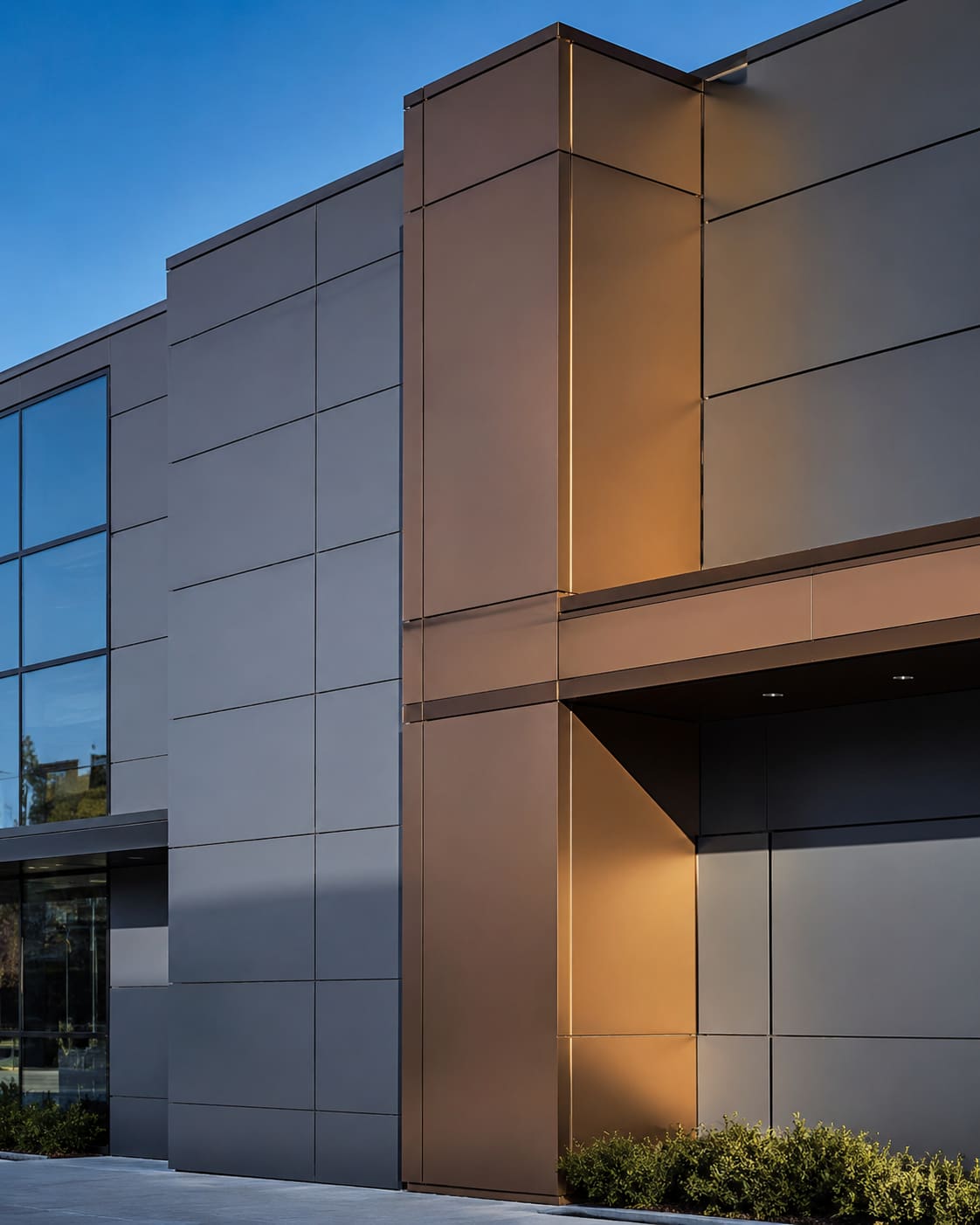
For most Hyderabad buildings, ACP (aluminium composite panel) elevation is the cheaper, faster and more forgiving choice at roughly Rs 220-450 per sq ft, while a structural glass facade delivers a premium high-rise look at Rs 550-1,400 per sq ft but demands more cooling and cleaning. The glass vs ACP elevation decision in Hyderabad really comes down to three things: your budget, your building type, and how the twin cities' heat, dust and monsoon will act on the surface over the next 15-20 years. There is no single winner - there is only the right material for your plot, your orientation and your maintenance appetite.
This guide compares both systems specifically for Hyderabad, Secunderabad and the wider Telangana and Andhra Pradesh climate, from IT-corridor towers in HITEC City and the Financial District to showrooms and homes in Banjara Hills, Kukatpally, Kondapur and Kokapet. We break down realistic INR pricing per square foot, thermal and dust behaviour, fire-safety norms tied to GHMC approvals, monsoon water-tightness, maintenance cycles and total cost of ownership - then finish with a simple decision checklist so you can brief a fabricator with confidence.
If you already know your direction, you can jump straight to our ACP cladding service or explore our glass facade work. Or send your elevation area and drawings and get a free quote, and we will size glass, ACP and a combination so you can compare like for like.
Glass vs ACP at a glance: the quick answer
If you want the short version: choose ACP when cost, speed and easy upkeep lead your brief, and choose glass when daylight, prestige and a seamless frameless look justify the higher spend and cooling load. Most Hyderabad projects that think carefully about it end up somewhere in between, using glass on the signature frontage and ACP on the flanks and rear.
- ACP wins on: installed price, installation speed, dust masking, ease of cleaning, colour choice and impact repair.
- Glass wins on: daylight, perceived building value, a premium corporate image, and being inherently non-combustible.
- Both perform well through Hyderabad's monsoon and summer - but only when detailed and sealed by a competent fabricator.
- The single biggest cost driver is not glass vs ACP, it is specification: FR vs PE core, single glass vs DGU, and framed vs spider glazing.
The sections below quantify each of these so you can put real numbers against your own elevation area rather than relying on a salesperson's headline rate.
Cost comparison in Hyderabad: real INR ranges per sq ft
ACP elevation is typically half to a third the installed cost of a glass facade in Hyderabad, which is exactly why it is the default for budget-conscious and mid-range projects. The rates below are indicative installed figures for the twin cities as of 2026 and will move with building height, design complexity, brand, glass performance grade and site access.
- ACP cladding: Rs 220-450 per sq ft installed, using 4mm FR/A2-grade panels (Alstone, Aludecor, Eurobond and similar) on a hot-dip galvanised or aluminium sub-framework.
- Structural / semi-unitised glass glazing: Rs 550-1,400 per sq ft installed, depending on single glass vs DGU (double glazed) and frame vs spider systems.
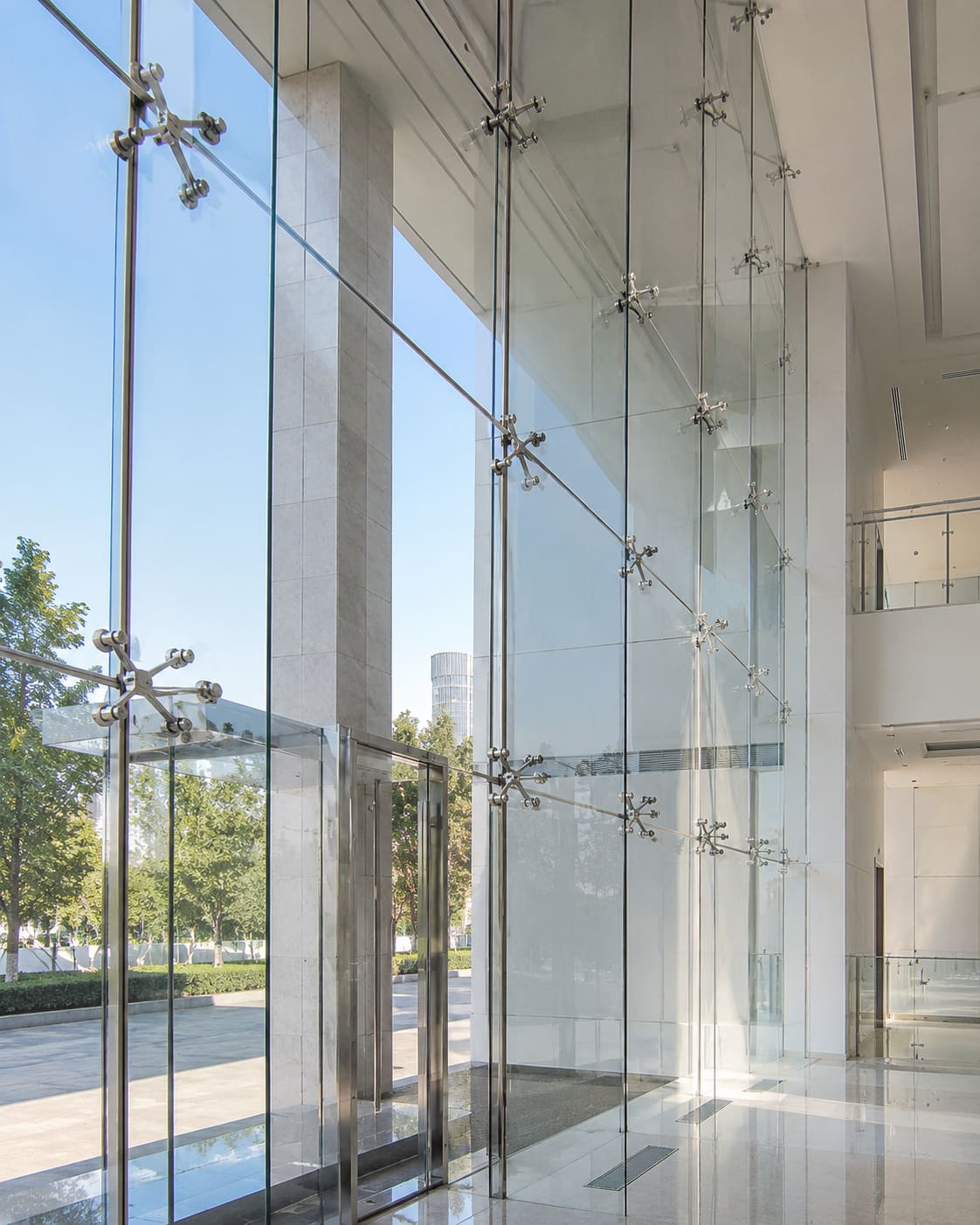
- Toughened glass with spider fittings for entrances and atriums: Rs 650-1,100 per sq ft, driven largely by the stainless hardware and thicker glass.
- Combination elevation (glass frontage + ACP bands): a common Gachibowli and Madhapur approach that balances cost and looks at roughly Rs 350-700 per sq ft blended.
Remember that headline per-sq-ft rates usually exclude scaffolding or cradle access, GST, and any additional structural steel your building may need to carry a heavier glazed load. Always ask whether a quote is supply-only or fully installed, and whether it includes the framework - a common cause of disputes on Hyderabad sites. A quick way to sanity-check any figure is to measure your true elevation area and multiply it out; if you would rather we do that for you, get a free quote with your drawings.
Heat and thermal performance in the Telangana climate
For Hyderabad's hot summers, ACP resists heat gain and keeps interiors cooler by default, while glass looks stunning but raises cooling loads unless you specify the right coating. Summer peaks touch 40-43 C across Telangana and Andhra Pradesh in April and May, so the wrong facade choice can add lakhs to your annual air-conditioning bill over the life of the building.
- A DGU or low-E glass facade can cut solar heat gain by 30-50% versus plain single glazing, but plain single glass on a west-facing HITEC City tower will spike AC costs badly.
- ACP with a ventilated air gap behind the panels acts as a thermal break and stays cooler than uninsulated glass without any special coating.
- If prestige demands glass, insist on a documented Solar Heat Gain Coefficient (SHGC) and a low U-value; treat the coating spec as seriously as the price per sq ft.
- East and north elevations tolerate more glass; reserve high-performance DGU or ACP for the punishing west and south faces common on Financial District and Kokapet plots.
The right glass facade work balances daylight against cooling load rather than just selling you clear glass. A capable fabricator will discuss glass performance numbers, not only tint and reflectivity - and will happily model the west face separately from the north.
Dust, pollution and how each surface ages
ACP masks Hyderabad's fine construction and road dust far better than glass, which shows every streak and needs frequent washing to stay presentable. This is a real running-cost difference, not a cosmetic footnote, especially along the dusty growth corridors where much of the city's new building is happening.
- Glass in a dust-heavy stretch of Kukatpally, Kondapur or Uppal will look grimy within weeks and needs a wash 3-4 times a year to keep its showroom shine.
- Textured or matte ACP finishes hide dust between cleans and only need an occasional water wash, cutting maintenance labour sharply.
- Pollution and hard-water spotting etch cheap glass over time; specify good-quality toughened or heat-strengthened glass to resist staining.
- ACP colour holds for 12-20 years with PVDF coatings before visible fade; low-grade polyester-coated panels can chalk within 5-7 years, so always check the coating type on the datasheet.
For frameless or minimal-frame glass fronts, tight joints and quality gaskets keep dust and water from tracking behind the panels - detailing that is easy to skimp on and expensive to fix later. This is one more reason a proven ACP cladding or glazing crew earns its rate.
Monsoon sealing and water-tightness in the twin cities
Both glass and ACP perform well through the Hyderabad monsoon if - and only if - they are sealed correctly with the right silicone and gaskets. Water ingress is almost always a workmanship failure, not a material one, which is why fabricator quality matters more than the brand printed on the panel.
- Insist on structural-grade silicone and EPDM gaskets at every joint to stop leakage during heavy June-to-September Secunderabad downpours.
- Weep holes and a drained, back-ventilated cavity behind ACP let any trapped water escape instead of tracking into walls and ceilings.
- For glazing, correct detailing at slab edges and transoms is what keeps a curtain wall dry for decades; this is where cheap crews cut corners.
- Reject any quote that skips a water test on a sample bay before full installation - it is cheap insurance against costly rework across an entire elevation.
A facade that leaks after the first monsoon almost always traces back to cut-price sealant or rushed labour, so weigh the fabricator's reputation as heavily as the sticker price. You can see how we detail slab edges and joints across our recent projects before you commit.
Fire safety and GHMC approval requirements
Only fire-retardant (FR) or A2 non-combustible ACP is acceptable for tall buildings in Hyderabad and Secunderabad, and it is now effectively mandatory for GHMC-linked approvals and fire NOCs. This is the single most important compliance point in the entire glass vs ACP debate and it can hold up your occupancy certificate if you get it wrong.
- Avoid cheap PE (polyethylene) core panels on any high-rise - they are combustible and have driven serious facade fires elsewhere in India.
- Ask your fabricator for the fire-grade certificate and batch test report before installation, and keep a copy in your building's compliance file.
- Glass is inherently non-combustible, which is one reason it is favoured for hospitals and high-rise corporate towers where fire strategy is scrutinised.
- Fire-rated glass and proper compartmentation may be required at certain floors; confirm this with your architect and the fire department early, not during inspection.
Getting the fire spec wrong can stall your occupancy certificate and force a costly re-clad, so lock the grade in writing at the quotation stage. If you want the compliant options explained against your building height, browse our services or ask us to spec it for you.
Looks and applications: which building suits which facade
Glass suits premium high-rises and corporate frontages, while ACP suits fast, colourful and cost-effective elevations across almost every other building type. Your building's use and its locality usually point clearly to one option, and the two rarely compete head to head once you factor in budget.
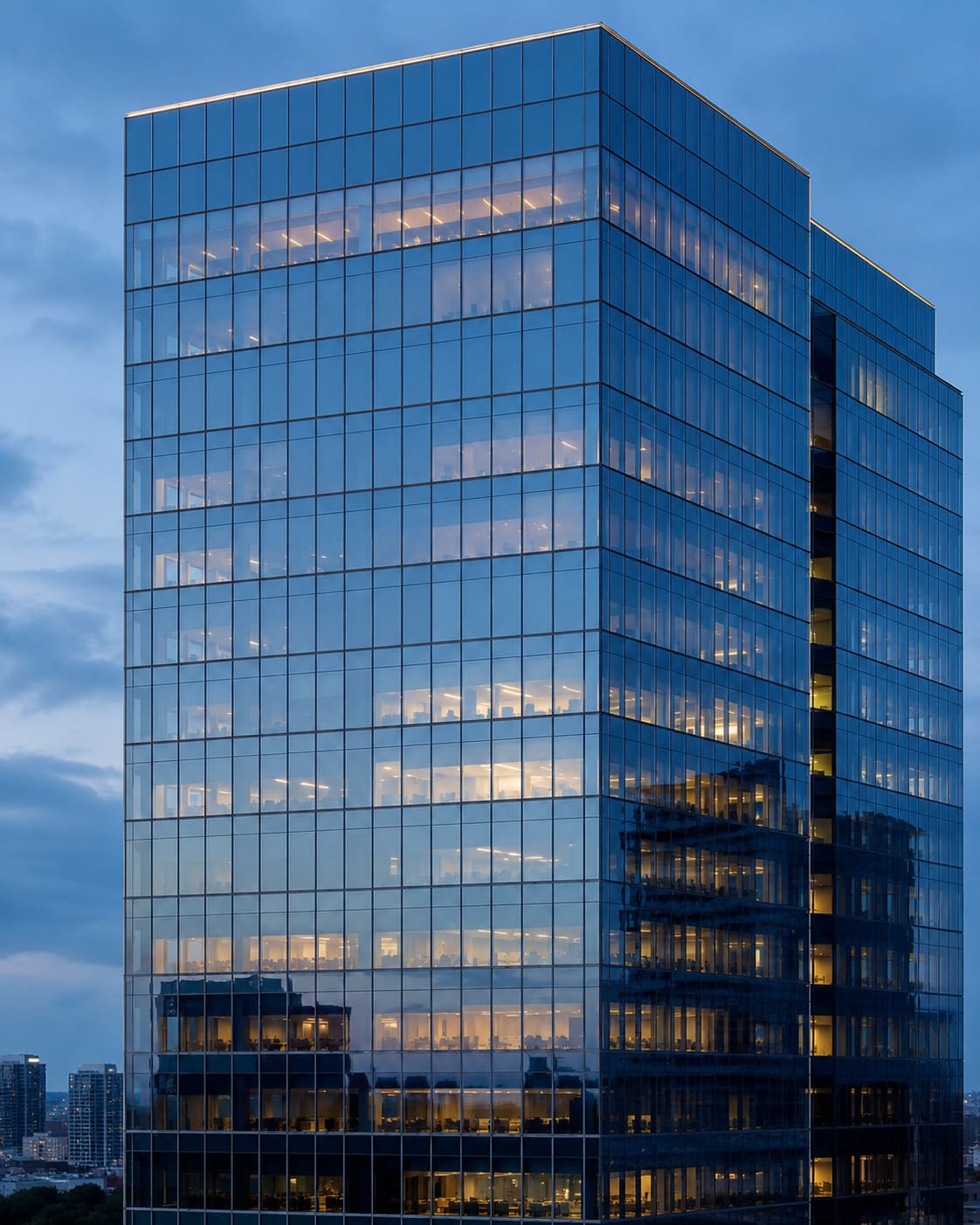
- Choose glass for: IT and corporate towers in the Financial District, Kokapet and HITEC City, plus banks, hospitals and flagship showrooms wanting a seamless, high-value facade.
- Choose ACP for: apartments, retail, schools, clinics and commercial blocks in Kukatpally, Kondapur, LB Nagar and Secunderabad where speed and budget lead the brief.
- Choose a combination for: mid-rise offices and mixed-use projects in Gachibowli and Madhapur that want a glass statement frontage with economical ACP on the flanks and service faces.
- Sliding glazed shopfronts and balcony enclosures work well at street level, giving a clean operable facade without the cost of full structural glazing.
Whichever way you lean, view a real Hyderabad reference site in a similar locality before signing - a facade that looks great in Kokapet may read very differently on a dusty arterial road in Uppal or LB Nagar.
Maintenance, lifespan and total cost of ownership
Over a 15-year horizon, ACP usually wins on total cost of ownership because it is cheaper to install, cheaper to clean and slower to date, while glass buys prestige and daylight at a premium. Look past the install quote to the running costs before you decide, because that is where the real difference compounds year after year.
- Glass needs professional rope-access or cradle cleaning 3-4 times a year in dusty zones; budget an annual maintenance contract from day one.
- ACP needs only occasional water washing and periodic sealant checks, keeping upkeep costs low across its 12-20 year service life.
- Re-sealing joints every 8-10 years applies to both systems; factor this into your long-term facade budget rather than treating it as a surprise.
- Panel or glass replacement after impact is faster and cheaper on ACP; a single large DGU unit can be slow to source and costly to swap.
- Glass rewards you with lower daytime lighting bills thanks to natural daylight, which partly offsets its higher cleaning cost in occupied office floors.
When you tally installation, cleaning, energy and mid-life resealing, ACP is the value pick for most buildings, while glass is a deliberate investment in image and daylight that pays back mainly on prestige corporate assets.
Common mistakes to avoid on Hyderabad elevations
The costliest elevation mistakes in the twin cities are almost always specification and workmanship errors, not material choice - and nearly all of them are avoidable at the quotation stage. Watch for these before you sign anything.
- Buying on price alone and ending up with PE-core ACP or thin single glazing that fails fire, heat or fade expectations within a few years.
- Accepting a supply-only rate you thought was installed, then paying separately for framework, scaffolding and GST that blow the budget.
- Speccing plain clear glass on a west or south face and discovering the AC load only after the first Telangana summer.
- Skipping the sample-bay water test and mock-up, then chasing leaks across the whole facade after the first monsoon.
- Ignoring the sub-framework: a good panel on a rusting or under-sized frame will still fail, so ask what the framing is and how it is anchored.
- Not keeping fire-grade certificates, warranties and coating datasheets on file, which slows approvals and voids claims later.
How to decide: a quick checklist for your building
Pick ACP if you want lower cost, faster work and easy upkeep; pick glass if daylight, prestige and a frameless look justify the higher spend and cooling. Run through this checklist before you finalise any elevation contract in Hyderabad, Secunderabad or across Andhra Pradesh.
- Set a per-sq-ft budget and multiply by your measured elevation area to sanity-check every quote you receive.
- Check orientation - heavily west- or south-facing walls favour ACP or high-performance DGU glass, never plain single glazing.
- Confirm the fire grade (FR/A2 ACP) and the glass thickness and DGU spec in writing, with certificates and batch reports.
- Ask for a Hyderabad or Secunderabad reference site you can physically visit in a comparable locality and dust exposure.
- Get a written warranty covering panels, sealant and workmanship, plus confirmed post-monsoon service support.
When you are ready, compare finished elevations across our recent projects, or share your drawings and get a free quote and we will price glass, ACP and a combination so you can decide with real numbers rather than guesses.