Glazing options for buildings are the glass and glass-assembly systems used in windows, doors, curtain walls and facades, and the main choices come down to single, double or triple glazing; annealed, toughened, heat-strengthened or laminated glass; clear, tinted, reflective or low-emissivity (low-E) coatings; and framed, structural glazing or spider point-fixed methods. Each option is defined by measurable properties: thickness in millimetres, thermal transmittance (U-value in W/m2K), Solar Heat Gain Coefficient (SHGC), visible light transmittance (VLT) and acoustic reduction in decibels (Rw).
Selecting glazing is a balance between daylight, solar heat control, safety, acoustics, structural wind resistance and cost. In India these decisions are shaped by the National Building Code of India (NBC) 2016, the Energy Conservation Building Code (ECBC), IS 2553 for safety glass and IS 875 Part 3 for wind loading. For hot-climate cities such as Hyderabad and Secunderabad, controlling solar heat gain usually matters far more than winter insulation, which pushes specifications toward low-SHGC, low-E and reflective glass rather than the triple-glazed build-ups common in cold European markets.
This guide walks through every major category, gives realistic U-values and INR figures for Telangana and Andhra Pradesh projects, and explains how the glass connects to the building through framing, hardware and glass facade work. Whether you are specifying a single home window or a full commercial curtain wall, use it to shortlist the right build-up before you get a free quote.
What Do We Mean by Glazing Options?
In construction, "glazing" refers to both the glass itself and the complete assembly that fixes it into the building envelope. Choosing a glazing option therefore means answering three separate questions at once: how many panes the unit has, how the glass is treated for strength and solar control, and how the whole assembly is held to the structure.
Getting the vocabulary right prevents costly mistakes. A builder who orders "6 mm toughened" has specified thickness and treatment but said nothing about panes, coating or fixing, and the finished performance can vary enormously as a result.
- Panes: single, double (DGU/IGU) or triple, which mainly drives thermal and acoustic performance.
- Treatment: annealed, heat-strengthened, toughened or laminated, which drives strength and safety behaviour.
- Coating and body: clear, tinted, reflective or low-E, which drives solar heat gain and glare.
- Fixing: framed, structural silicone-bonded or spider point-fixed, which drives appearance and wind performance.
The best specification names a value for each of these four axes, and every reputable fabricator will confirm them on a make-up drawing before cutting glass.
Glazing by Number of Panes: Single, Double and Triple
The number of glass panes is the primary driver of thermal and acoustic performance, because each added pane and sealed air gap slows heat transfer across the assembly.
- Single glazing: one pane, typically 4-12 mm. U-value around 5.7 W/m2K for 6 mm float. It is the cheapest option with the lowest insulation, suited to internal partitions, screens and mild-climate openings.
- Double glazing (DGU/IGU): two panes separated by a 6-20 mm spacer filled with dry air or argon. U-value roughly 2.7-2.8 W/m2K for clear glass and 1.6-1.8 W/m2K with a low-E coating. This is the standard for energy-efficient homes and offices.
- Triple glazing: three panes and two cavities, with U-values as low as 0.8-1.0 W/m2K. It is common in cold European climates but rarely cost-effective in Hyderabad's warm conditions, where the payback on the third pane is very slow.
- Acoustic benefit: a double-glazed unit that uses two different pane thicknesses plus a laminated leaf can achieve 35-45 dB of sound reduction, versus about 25-30 dB for single glazing, which matters on busy roads in Secunderabad and along the Hyderabad Outer Ring Road corridor.
For most residential and commercial projects across Telangana, a well-specified DGU is the sweet spot: it delivers the bulk of the available thermal and acoustic gain without the weight, cost and diminishing returns of triple glazing.
Glazing by Glass Treatment and Safety Compliance
Glass treatment determines strength, breakage behaviour and safety compliance, and in India it is regulated primarily by IS 2553. Choosing the wrong treatment is not just a performance issue, it is a legal and life-safety one.
- Annealed (float) glass: standard untreated glass that breaks into large, sharp shards. It is not a safety glazing and must not be used in doors, low sills or overhead panels.
- Toughened (tempered) glass: heat-treated to be about 4-5 times stronger than annealed and to shatter into small, blunt granules. It is governed by IS 2553 (Part 1) and cannot be cut, drilled or edge-worked after tempering, so all fabrication is done first.
- Laminated glass: two or more panes bonded with a PVB or EVA interlayer; it holds together when broken, blocks up to 99 percent of UV and improves acoustics. It is preferred for overhead glazing, balustrades, security screens and skylights.
- Heat-strengthened glass: roughly twice the strength of annealed, with a much lower risk of spontaneous nickel-sulphide breakage than fully toughened glass; it is often used as the outer leaf in laminated facade units.
- Safety requirement: NBC 2016 requires safety glazing (toughened or laminated) in doors, side panels, low-level windows, wet areas and any overhead application. Ask your fabricator to heat-soak test toughened facade glass, which greatly reduces the rare but real risk of spontaneous breakage from nickel-sulphide inclusions.
Coatings, Tints and Solar Control for Hot Climates
Coatings and tints control how much solar heat and light pass through the glass, quantified by SHGC (0-1, where lower blocks more heat) and VLT (the percentage of daylight admitted). In a cooling-dominated climate like Hyderabad's, SHGC is arguably the single most important number on the spec sheet.
- Low-emissivity (low-E) glass: a microscopic metallic-oxide coating reflects infrared heat while still admitting daylight, lowering both the U-value and SHGC without heavy tinting. It is the workhorse coating for energy-efficient projects across Telangana and Andhra Pradesh.
- Reflective glass: a metallic coating gives a mirror finish that cuts SHGC and glare, and it is especially effective on the east and west facades exposed to Telangana's harsh low-angle sun.
- Tinted (body-tinted) glass: bronze, grey, green or blue glass that absorbs solar radiation and reduces VLT; it is often combined with a coating for stronger performance.
- Target values for hot climates: an SHGC below 0.3 with a VLT of 40-60 percent typically balances cooling-load reduction against adequate daylight, in line with ECBC guidance for commercial buildings.
- Practical note: the coating on a DGU should usually sit on surface 2 (the inner face of the outer pane) for best solar performance, so always confirm the glass make-up code on your fabrication drawing.
A common real-world win in Hyderabad offices is switching from plain reflective single glazing to a low-E DGU: cooling loads on glazed west elevations can fall by 25-35 percent, shrinking the air-conditioning plant and cutting running costs for the life of the building.
Glazing Systems and Fixing Methods
The fixing method defines how the glass is held to the structure and determines both the facade's appearance and its structural behaviour. It is where design intent, buildability and wind engineering meet.
- Framed / captured glazing: glass held on all edges by aluminium framing; the most common and economical curtain-wall and window method.
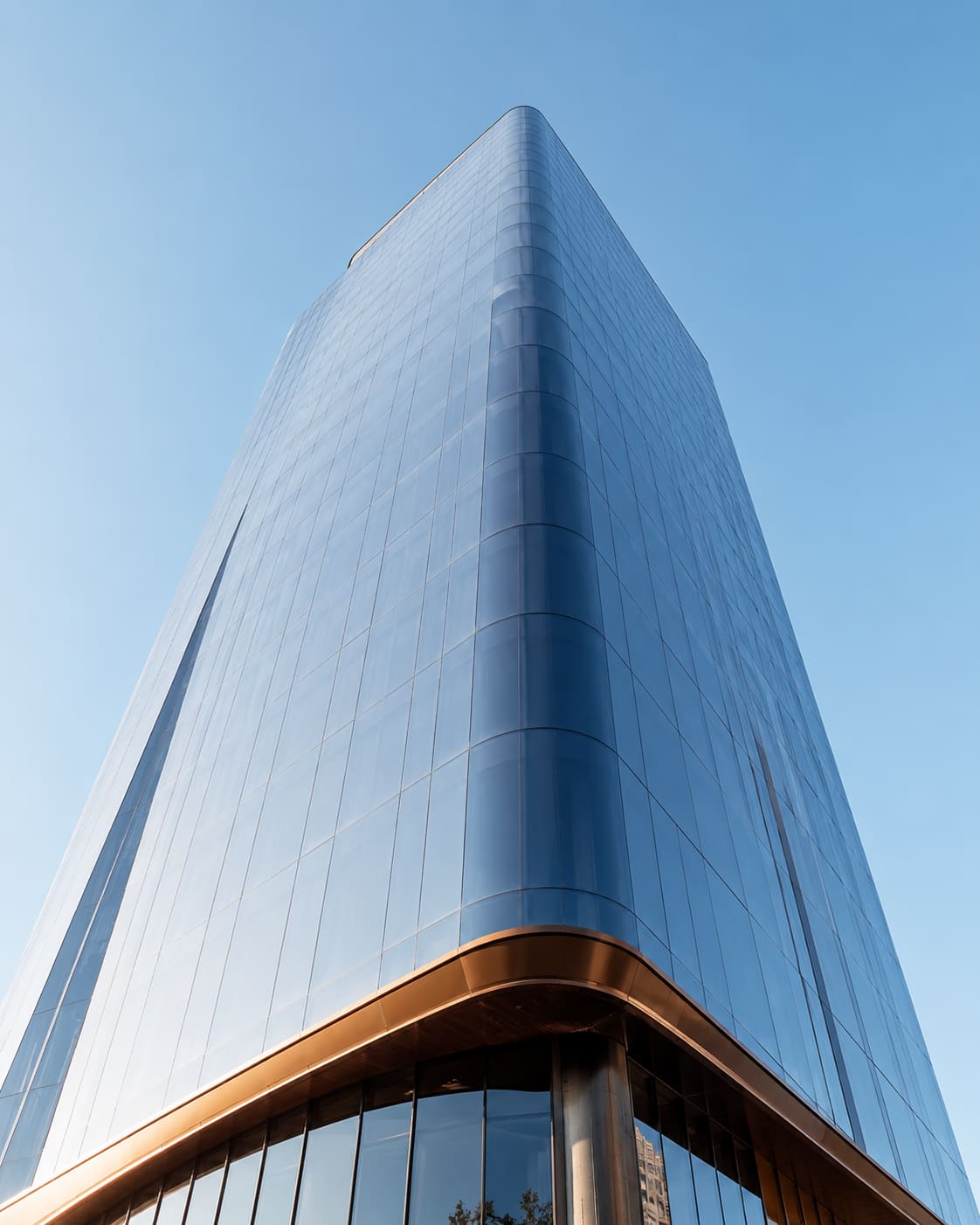
- Structural glazing: glass bonded to the frame with structural silicone so no external framing is visible, giving a flush glass skin. Structural silicone design references ASTM C1401, and our structural glazing teams execute this on commercial towers and showrooms.
- Semi-unitised and unitised curtain walls: factory-assembled panels for faster, higher-quality installation on tall buildings, reducing on-site labour and weather exposure.
- Spider / point-fixed glazing: toughened glass held by stainless-steel bolted fittings, used for transparent entrances, atriums and showroom fronts.
- Wind resistance: glass thickness and pane build-up must satisfy the design wind pressure calculated under IS 875 Part 3 for the building's height and terrain category, which is why facade glass on high-rises is thicker than on low buildings.
You can see how framed, structural and point-fixed systems come together in the field in our recent projects, which span homes, offices and retail frontages across Hyderabad and Secunderabad.
Glazing Costs in Hyderabad: Realistic INR Ranges
The right glazing specification depends on orientation, floor level, acoustic exposure, budget and code compliance, and cost scales with glass performance and fixing complexity. The figures below are indicative installed rates for the Telangana and Andhra Pradesh market and always move with glass prices, quantity and site access.
- Plain float / single glazing: from about INR 250-500 per sq ft installed, suitable for internal screens and low-spec openings.
- Toughened and standard DGU systems: roughly INR 600-1,500 per sq ft installed, depending on thickness, coating and framing.
- High-performance and structural glazing: about INR 1,200-2,500+ per sq ft, driven by low-E coatings, laminated leaves, unitised framing and site access.
- Spider and point-fixed facades: typically INR 1,800-3,500+ per sq ft because of the stainless-steel fittings and heavier toughened glass.
- Hardware allowance: budget 8-15 percent of the glazing package for rollers, floor springs, patches and locks, because under-specified fittings are the most common cause of premature failure.
- Lifespan and warranty: quality aluminium-framed glazing lasts 25-40 years, while the insulated-unit edge seal usually carries a 10-15 year warranty against fogging. Final pricing depends on quantity, height and specification, so get a free quote for an accurate figure for your building.
How to Choose: Matching Glazing to Application and Orientation
Choosing glazing well means mapping each opening to its exposure, use and code requirement rather than using one glass everywhere. A good design often uses three or four different build-ups on the same building.
- West and east facades: intense low-angle Hyderabad sun calls for reflective or low-E, low-SHGC glass to control heat and glare.
- North light: diffuse and gentle, so clearer, higher-VLT glass maximises daylight without a heavy cooling penalty.
- Bathrooms and shower areas: use toughened glass with the correct enclosure hardware; wet areas are mandatory safety-glazing zones under NBC 2016.
- Balustrades and railings: laminated toughened glass is required so the panel holds together if it breaks, protecting against falls.
- Overhead and skylight glazing: always laminated on the underside, so any breakage stays bonded to the interlayer instead of falling.
- High-noise sites: near arterial roads or the airport corridor, use an asymmetric DGU with a laminated acoustic leaf to push sound reduction toward 40-45 dB.
Explore our services to see how facade, window and glass-partition options come together, and use the orientation map above as a quick shortlist before you fix a specification.
Process, Timeline and Common Mistakes to Avoid
A glazing package typically moves through site survey, design and specification, glass fabrication, framing preparation and installation. Understanding the sequence helps you avoid delays, because toughened and coated glass cannot be modified once it leaves the factory.
- Typical timeline: 1-2 weeks for measurement and drawings, 2-4 weeks for glass fabrication and DGU sealing, and a few days to a few weeks for installation depending on scale and access.
- Mistake 1 - ordering annealed glass in safety zones: doors, low windows and wet areas must be toughened or laminated under NBC 2016; retrofitting is expensive and disruptive.
- Mistake 2 - ignoring SHGC: many Hyderabad buildings still specify clear or lightly tinted glass and then over-size the air conditioning to compensate, paying twice.
- Mistake 3 - under-designing for wind: skipping the IS 875 Part 3 check on tall or exposed elevations risks glass deflection, seal failure and, in extreme cases, breakage.
- Mistake 4 - cheap hardware on good glass: rollers, floor springs and patch fittings that are not rated for the sash weight fail early and drag the whole system down.
- Mistake 5 - no coating-surface check: placing a low-E coating on the wrong surface of a DGU quietly wastes much of the performance you paid for.
Indian Standards and a Specification Checklist
Compliance is not optional: glazing on Indian buildings must satisfy a stack of codes covering safety, energy and wind, and your specification should name each one explicitly so nothing is left to interpretation on site.
- IS 2553 (Part 1): safety glass, covering toughened and laminated products and their breakage requirements.
- IS 875 (Part 3): wind-load design, which sets the design pressure your glass thickness and framing must resist for the building's height and location.
- ECBC: solar heat gain, daylighting and envelope performance for commercial buildings, including SHGC and U-value ceilings.
- NBC 2016: overall envelope rules, mandatory safety-glazing locations, and fire and structural provisions.
- Specification checklist: confirm glass thickness and build-up, U-value and SHGC targets, safety-glass type per location, wind pressure per IS 875 Part 3, coating surface, and matched, weight-rated hardware for every operable leaf.
Hakimi Aluminium and Glass supplies, fabricates and installs the full range of these glazing options, and pairs each build-up with correctly engineered glass facade work and hardware across Hyderabad, Secunderabad and wider Telangana and Andhra Pradesh.