To choose aluminium windows correctly, match four things to your room and climate: the window style, the profile system and its wall thickness, the glass specification, and the quality of the hardware and installation. Get all four right and you get a quiet, dust-free, weather-tight home; get any one wrong and even an expensive aluminium window will rattle, leak or fog within a single Hyderabad monsoon.
Aluminium is the default framing choice across Hyderabad and Secunderabad because it shrugs off the heat, humidity and driving monsoon rain of Telangana far better than timber or ordinary uPVC. But not all aluminium windows are equal. The frame system, the glass, the hardware brand and the fitting quality each move independently, and each one changes both how the window performs and what it finally costs you.
This guide breaks down what actually matters so you can specify the right window for a home, apartment or commercial project across Hyderabad, Secunderabad and coastal Andhra Pradesh. We include realistic 2026 INR figures so you can sanity-check any quotation before you sign. If you want a specification tailored to your openings, explore the full range of our services to see what we fabricate and install across the city.
Match the Aluminium Window Style to the Room
Start with function, not looks. The right style depends on how the room is used, which wall it sits on, and how much you value air-tightness versus budget. Sliding windows suit balconies, kitchens and any wall where you cannot afford a sash swinging into the room, while casement windows seal far tighter and give better ventilation and acoustic control for bedrooms and street-facing rooms.
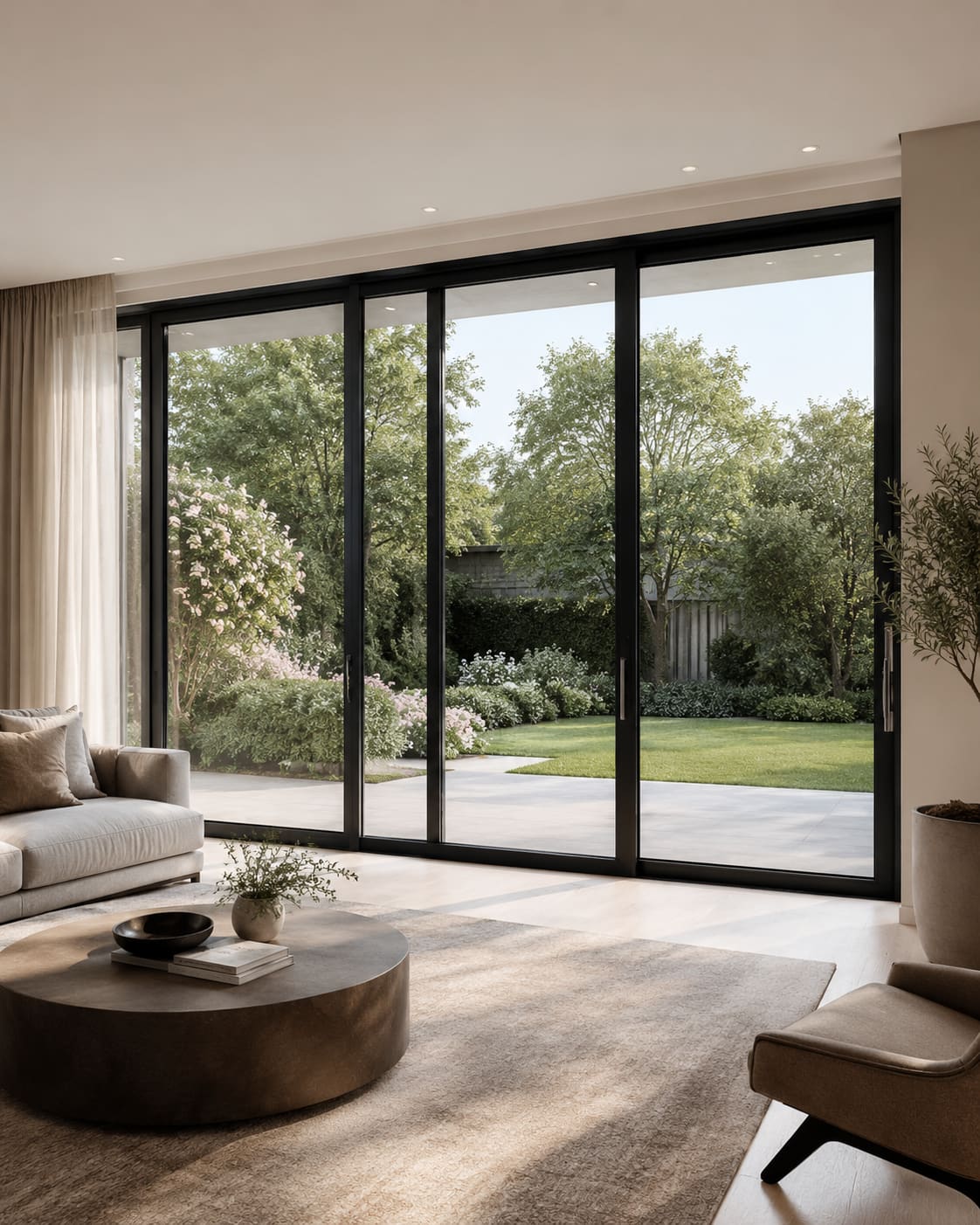
- Sliding (2 or 3 track): the most economical option, easy to operate and ideal for apartments and compact Hyderabad flats where floor space is tight.
- Casement / openable: superior air-tightness and noise sealing, the best choice for air-conditioned bedrooms and homes on pollution-heavy or busy roads.
- Fixed / picture: maximum glass area at the lowest cost per sq ft, for views and daylight where ventilation is not needed.
- Tilt-and-turn: premium ventilation and easy cleaning on higher floors, at a higher price point but with excellent security when locked.
- Top-hung / awning: opens outward from the top, letting you keep a window cracked for airflow even during light monsoon rain without water blowing in.
As a rule, use casement where performance matters most and sliding where budget and space are the priority. Many Hyderabad homes sensibly mix both: casement in the bedrooms, sliding on the balcony and utility. If you are glazing large openings or an entire elevation, plan the window styles alongside our wider aluminium windows offering so the sightlines and finishes stay consistent across the facade.
Understand Profile Systems and Wall Thickness
The aluminium profile is the skeleton of the window and the single biggest driver of quality. Standard domestic profiles use a wall thickness of 1.2 to 2.0 mm; anything thinner than 1.1 mm will flex, rattle and sag over time, and no amount of good glass or hardware will rescue a weak frame.
Section size matters too. Taller windows and larger sliding sashes need deeper, stronger profiles to stay rigid and to carry the weight of double glazing without bowing. A slimline profile that looks elegant in a showroom can visibly deflect once a 5 x 5 ft DGU sash is hung on it, and once a frame bows the gaskets no longer compress evenly and the window starts to leak air.
Finish is your corrosion defence. For homes near the coast in Andhra Pradesh, or in high-humidity pockets of Hyderabad and Secunderabad, insist on powder coating to a minimum 60-micron thickness, or anodising. Branded systems from Jindal, Hindalco or premium imported lines cost more but hold tighter tolerances and honour warranties that unbranded local extrusions rarely match.
- System (branded, engineered profiles): consistent wall thickness, tested joints, matching hardware, real warranty. Best for DGU and larger openings.
- Commercial / conventional sections: lower cost, adequate for small single-glazed openings and utility areas, but weaker on sealing and long-term rigidity.
If your priority is stopping heat and condensation, ask specifically about thermal break aluminium, where a polyamide strip separates the inner and outer frame to interrupt heat transfer. It is a genuine benefit given Hyderabad summers routinely cross 40 degrees Celsius while interiors are run cold with air conditioning, which is exactly the gradient that causes ordinary aluminium to sweat with condensation.
Specify the Right Glass for Heat and Noise
Glass typically accounts for 30 to 40 percent of a window's real-world performance. The frame is only as good as what it holds, so never let a supplier default you to the cheapest single pane just to hit a headline price.
- Single 5 mm float: cheapest, poor heat and sound control, acceptable only for utility areas, bathrooms and stores.
- Toned / reflective glass: cuts glare and solar heat gain, popular for west-facing Hyderabad facades that take the harsh afternoon sun.
- Double glazed unit (DGU): two panes with a sealed air or argon gap, the best value upgrade for noise and heat, and effectively essential for homes near main roads or the Outer Ring Road.
- Laminated glass: bonds two panes with a PVB interlayer for security and further deadens traffic noise, ideal for ground-floor rooms and street frontages.
- Low-E coated glass: reflects radiant heat while letting daylight through, worth pairing with a DGU for west and south elevations.
For a busy road in Secunderabad, a laminated DGU in a good casement frame can cut perceived traffic noise dramatically compared with a single-glazed slider. Specify glass and frame together, because a great pane in a leaky frame still whistles and lets in dust. If you also handle glass supply, toughening or partitions in the same project, our team can align those with the window glazing so thicknesses and tints match throughout.
Choose the Hardware That Actually Lasts
Cheap rollers, handles and locks fail first, long before the frame or glass. This is where a specialist dealer matters, because the fittings are what you touch every single day and what keeps the window sealing and secure for a decade.
As hardware dealers for Taiton, Enox and Ozone, we fit stainless steel and branded components rather than the soft pot-metal parts that seize in Hyderabad humidity. Insist on EPDM rubber gaskets rather than cheap felt, which flattens within a monsoon or two and then lets in dust, draughts and water.
- Rollers and sliding gear: stainless or branded rollers that glide under load and do not jump the track when a heavy DGU sash is moved.
- Handles and multi-point locks: branded locking hardware that pulls the sash tight against the gasket at several points for both security and a solid feel.
- Friction stays and hinges: correctly rated stays that hold a casement or top-hung sash steady in wind without sagging.
- Gaskets and weatherstripping: continuous EPDM seals at every meeting point, which is what separates a silent, dust-free window from a whistling one.
Matching hardware to the sash weight and window style is not optional. An under-rated roller on a heavy DGU slider is the most common single reason a window jams within a year, so always ask what load the rollers and stays are rated for.
Read the Performance Ratings Before You Sign
Do not buy on looks and price alone. Ask the supplier for the ratings that describe how the window will actually behave, and get them in writing on the quotation so there is no argument later.
- Air and water tightness: a good window should resist wind-driven monsoon rain without weeping at the corners or the sill.
- Wind load / structural rating: important for high floors in Hyderabad towers and for wide sliding sashes exposed to gusts.
- Acoustic reduction (dB): a laminated DGU can meaningfully lower road noise; ask for the expected reduction if you are near traffic.
- U-value and Solar Heat Gain Coefficient (SHGC): lower numbers mean less heat crossing the window, which is exactly what thermal break plus Low-E glass buys you.
A supplier who cannot describe these ratings is usually selling on price alone. A window is a 15-to-20-year purchase, so the small premium for a properly rated system is easily justified over its life. You can see how specified windows perform in real installations across our recent projects before committing to a system.
Aluminium Window Pricing in Hyderabad and Telangana (2026)
As a 2026 benchmark for the Hyderabad, Secunderabad and wider Telangana market, budget roughly the following per square foot, supplied and installed:
- Basic sliding, single glass: INR 350 to 550 per sq ft.
- Premium sliding or casement with DGU: INR 650 to 1,100 per sq ft.
- Thermal break system with DGU and branded hardware: INR 1,200 to 2,000 per sq ft.
A typical 5 x 4 ft (20 sq ft) bedroom window therefore lands between roughly INR 7,000 for a basic slider and INR 40,000 for a fully specified thermal break unit. A larger 6 x 5 ft (30 sq ft) living-room window can run from about INR 10,500 to INR 60,000 on the same logic, so the specification you choose matters far more to the final bill than the raw size of the opening.
What moves you up the range is mostly glass and hardware, not the aluminium itself: switching from single glass to a laminated DGU, and from unbranded to branded rollers and locks, is where most of the extra rupees go, and also where most of the real-world comfort comes from.
Always confirm whether a quote includes GST, transport and loading, hoisting to floor level, and finishing of the reveal or plaster patching. These add-ons commonly inflate a low headline rate, so a cheap-looking per-sq-ft figure can quietly end up costing more than an all-inclusive one. When you get a free quote from us, we itemise these so you can compare like with like.
Insist on Correct Measurement and Installation
Even a top-tier window fails if it is fitted badly. In our experience across Hyderabad and Secunderabad, poor installation causes more complaints than any product defect: gaps stuffed with foam, frames set out of plumb, and sills that slope the wrong way and pool water inside the room.
- Measure the opening accurately and account for level and plumb before ordering; site walls in Indian construction are rarely square.
- Fix the frame with proper anchor fasteners, not just PU foam, and pack the gaps correctly so the frame cannot twist under load.
- Seal the perimeter with quality silicone over a backer rod, and slope the external sill so water always drains away from the room.
- Test each sash for smooth operation and even gasket compression before the fitter leaves site, and check that locks engage fully.
Ask who actually does the fitting and whether there is a workmanship warranty separate from the product warranty. A written guarantee on both is the clearest sign you are dealing with a serious specialist rather than a one-off subcontractor who disappears after payment.
Common Mistakes Hyderabad Buyers Make
Most disappointing window jobs trace back to a handful of avoidable errors. Knowing them in advance saves you costly rework a year down the line.
- Buying on per-sq-ft price alone and ignoring wall thickness, glass grade and hardware, which is where quality actually lives.
- Choosing sliding windows for a noisy main road when a sealed casement would have cut the sound far better.
- Skipping the DGU to save money, then paying more in cooling bills and living with road noise for two decades.
- Accepting thin, unbranded profiles that look identical in a photo but flex and rattle once glazed.
- Letting the mason or a general contractor sub-fit the windows instead of a glazing specialist, which is where sealing and slope errors creep in.
- Not confirming GST, hoisting and finishing in the quote, then being surprised by the final invoice.
Avoiding these six is most of the battle. If you are unsure how any of them apply to your openings, it is worth a short conversation before you place an order rather than after.
A Quick Buyer's Checklist
Run through this before you commit to any aluminium window order in Hyderabad, Secunderabad or Andhra Pradesh:
- Have you matched the style (sliding, casement, fixed, tilt-and-turn, top-hung) to how each room is used?
- Is the profile wall thickness 1.2 mm or more, with 60-micron powder coating or anodising for humid or coastal sites?
- Have you specified the right glass, at minimum a DGU for bedrooms and road-facing rooms?
- Is the hardware branded and correctly rated, with EPDM gaskets rather than felt?
- Does the quote spell out GST, hoisting and finishing, and does it include a workmanship warranty?
Tick all five and you will avoid the costly rework that catches most first-time buyers. If you want us to translate this into a fixed specification and price for your openings, get a free quote and our team will handle survey, supply and installation end to end, with thermal break aluminium options where the climate justifies the upgrade.