To choose uPVC windows well, judge them in a fixed order: profile grade and steel reinforcement first, then the glass, then the hardware and gaskets, and finally the fabricator who measures and installs them. Get that sequence right and you buy a window that stays cool, quiet and dust-free for two decades; get it wrong and you get frames that warp, leak or rattle within a few Hyderabad monsoons. This guide gives you the exact checklist, real 2026 prices and the local knowledge to compare quotes with confidence.
With Hyderabad summers pushing past 42 degrees C and constant traffic noise across Secunderabad and the IT corridor, the right window is a long-term comfort investment, not just a fitting. The wrong one shows up as a hot afternoon room, a dusty sill after every gust, and a cooling bill that never drops. This guide walks through every decision that actually matters so you can sidestep the low-cost traps that are common across Telangana and Andhra Pradesh. If you would rather have it handled end to end, our uPVC windows service covers site measurement, fabrication and fitting.
We include realistic INR ranges so you know what fair pricing looks like before you sign. Where security or matching entrances matter, the same logic extends to uPVC doors, and you can always get a free quote once you know which specification suits each room. First, understand what uPVC actually is and why it has taken over from timber and bare aluminium across the region.
What are uPVC windows and why they suit Hyderabad
uPVC stands for unplasticised polyvinyl chloride, a rigid, weatherproof plastic used to extrude window frames that do not rust, rot, warp or need painting. Steel reinforcement is inserted inside the hollow chambers of the profile to give it structural strength, while the plastic body handles insulation and sealing. The result is a frame that shrugs off humidity, salt air and UV far better than timber or plain aluminium.
For Telangana and Andhra Pradesh conditions, uPVC has three standout advantages. It insulates against heat because the multi-chamber plastic body is a poor conductor, so rooms stay cooler and air conditioning works less. It seals tightly against the fine dust that coats every surface in summer. And its fusion-welded corners plus rubber gaskets block monsoon rain that would find its way through a bolted aluminium joint.
- Thermal comfort: multi-chamber profiles slow heat transfer, unlike aluminium which conducts it straight indoors.
- Dust and rain sealing: welded corners and continuous gaskets keep out fine dust and driving rain.
- Low maintenance: no painting, no rust, no rot; a wipe-down is all most frames ever need.
- Acoustic performance: the dense body plus double glazing dampens road, rail and flight noise well.
The trade-off is that quality varies enormously. A cheap uPVC window can be worse than a good aluminium one, which is exactly why the buying process below matters. If you are weighing systems for a large facade or shopfront, it is worth reviewing our services to see where uPVC, aluminium and glass each make sense.
Start with the profile: wall thickness, chambers and steel
The uPVC profile is the frame skeleton, and cheap frames are where most problems begin. Learning how to choose uPVC windows starts here: look for lead-free, UV-stabilised profiles rated for tropical conditions, because ordinary profiles yellow and turn brittle under harsh South Indian sun.
- Wall thickness: insist on Class A profiles with roughly 2.5-3 mm outer wall; thinner Class B or C walls flex and sag over time.
- Chambers: 3-chamber profiles suit most Hyderabad homes; 5-chamber profiles add better insulation and rigidity for large or high-rise openings.
- Steel reinforcement: galvanised steel inside the frame and sash is non-negotiable for anything above a small ventilator, and is what stops big sliding panels from bowing.
- Welded corners: genuine uPVC windows have heat-fused corners that form one continuous frame; screwed or glued corners are a red flag.
- Certification: ask whether the profile is lead-free and UV-stabilised for tropical climates, and get it in writing on the quote.
Established profile brands used by reputable Hyderabad fabricators add value through consistent extrusion quality and genuine hardware compatibility, which is worth the small premium over unbranded stock. A quick field test: press the frame firmly with your thumb near an unsupported span. A Class A reinforced profile barely gives; a thin one flexes visibly. If you are also refreshing an old timber or aluminium home, the same profile discipline applies to matching uPVC doors so frames, colours and hardware stay consistent.
Choose the right opening style for each room
Window style affects ventilation, cleaning, security and cost, so match it to how the room is used and which way the prevailing breeze comes. Do not pick one style for the whole house; the best homes mix styles room by room.
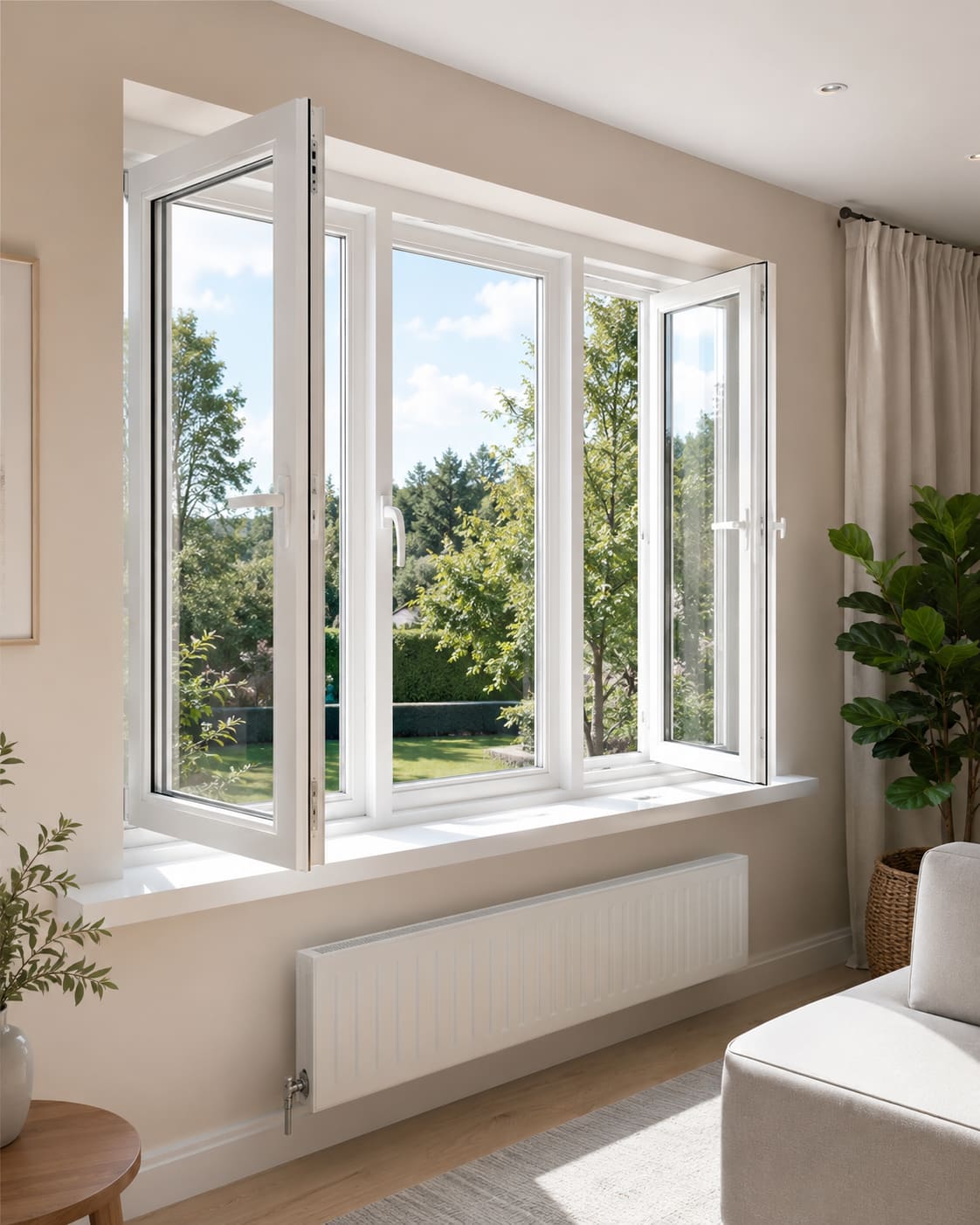
- Casement: outward or inward opening, best airflow and sealing, ideal for bedrooms and living rooms.
- Sliding: space-saving and economical, great for balconies, kitchens and passages where a swing would obstruct the space.
- Tilt-and-turn: premium dual-function option for secure ventilation, popular in apartments along the Financial District and Gachibowli.
- Fixed and ventilators: for daylight and passive airflow in staircases, utility areas and bathrooms.
- Bay and combination units: combine fixed and operable sashes for large living-room or dining spans.
Sliding windows are generally the most budget-friendly; casement and tilt-and-turn cost more due to hardware but seal far better against dust and rain. A common Hyderabad pattern is casement or tilt-and-turn on street-facing bedrooms for noise and sealing, and sliders on balconies and kitchens where space is tight. Browse our recent projects to see how different styles are combined across real homes and offices in the city.
Get the glass right for Hyderabad heat and noise
Glass drives comfort more than most buyers expect; the frame seals the opening, but the glass is most of the surface area facing the sun and the street. For Hyderabad's heat and noise, single 5 mm glass is the minimum, but double glazed units are the smarter long-term choice.
- DGU (two glass panes with a sealed air gap) cuts heat and reduces outside noise noticeably, valuable near the ORR, main roads and flight paths.
- Toned or low-E glass reduces solar heat gain and glare for west and south-facing rooms that bake through the afternoon.
- Laminated glass adds security and further sound reduction for ground-floor and street-facing windows.
- Frosted or obscured glass keeps privacy in bathrooms and rooms facing a neighbour's wall.
A quick rule for Telangana and Andhra Pradesh homes: choose DGU or toned glass on the hot west and south elevations, and you can save with single or plain glass on shaded north-facing openings. Do not spend equally on every window; spend where the sun and noise actually hit. This targeted approach keeps the overall bill sensible while delivering the biggest comfort gains where they matter.
Insist on quality hardware and gaskets
Hardware is what keeps a window smooth and airtight in year ten, not just year one, yet it is the first thing cut from a cheap quote. The profile and glass get the marketing attention, but rollers, stays, locks and gaskets decide whether the window still works after five monsoons. Specify it clearly.
- Multi-point locking on casement and tilt-and-turn sashes for security and even sealing pressure.
- Stainless or treated rollers on sliding sashes so they glide without grinding after a couple of monsoons.
- Friction stays that hold a casement open at any angle without slamming in the wind.
- EPDM gaskets rather than cheap rubber, because EPDM resists UV and stays flexible for years instead of hardening and cracking.
- Reputable hardware brands (such as Roto, Giesse or equivalent) for consistent fit and easy future replacement.
Good hardware costs a little more up front and saves years of sticking sashes and failed seals. When you compare two quotes that look similar on profile and glass, the hardware line is usually where the cheaper one has quietly saved money. If security is a priority on ground-floor rooms, discuss it alongside matching uPVC doors so locking standards stay consistent across the whole opening.
Understand realistic uPVC window prices in Hyderabad
uPVC windows are usually priced per square foot, fully installed, and the range reflects profile grade, glass and hardware. As an indicative 2026 guide for Hyderabad, Secunderabad and surrounding Telangana:
- Sliding windows, single glass: roughly INR 450-650 per sq ft.
- Casement windows, single glass: roughly INR 600-850 per sq ft.
- Double glazed (DGU) casement or tilt-and-turn: roughly INR 900-1,400 per sq ft.
- Premium 5-chamber profiles with laminated or low-E glass: INR 1,400 and above per sq ft.
A typical 4 ft x 4 ft (16 sq ft) sliding window therefore lands around INR 7,200-10,400 installed, while the same opening as a DGU casement can reach INR 14,000-22,000. For a full 2 BHK apartment with around 8-10 windows, budget roughly INR 90,000-1,80,000 depending on the mix of styles and glass. Beware quotes far below these ranges: they usually signal thin profiles, no steel reinforcement or low-grade glass that costs more in the long run. For a room-by-room estimate on your own plan, get a free quote with rough opening sizes and elevations.
Measure, size and plan the openings correctly
A great profile fitted to a badly measured opening still leaks, so treat sizing as part of the specification rather than an afterthought. Most of the failures we are called to fix are not bad products; they are bad measurement and fitting.
- Always get a professional on-site measurement; brick openings are rarely square and DIY numbers cause gaps.
- Plan sash sizes so heavy panels stay manageable; oversized single sliders bind and sag over time.
- Keep sill slope and drainage in mind so monsoon water runs outward, never pooling inside the track.
- Decide mesh and grille needs early, as fly mesh and safety grilles are easier to integrate before fabrication.
- Confirm the wall type (brick, block or RCC) so the correct fixing and packing method is used.
For very large living-room or balcony openings, consider whether the right split of fixed and operable panels keeps both cost and weight sensible rather than forcing one giant sash. A well-planned opening is quiet, tight and easy to operate; a poorly planned one whistles in the wind and drips in the rain no matter how good the profile is.
Common mistakes to avoid when buying uPVC windows
Most regret comes from a handful of predictable errors. Knowing them in advance is the cheapest upgrade you can make.
- Chasing the lowest price: rock-bottom quotes almost always hide thin profiles, missing steel or single low-grade glass.
- Ignoring hardware: buyers scrutinise the frame and forget the rollers and gaskets that actually wear out first.
- One glass spec everywhere: paying for DGU on a shaded wall while skimping on the west face wastes money and comfort.
- Skipping the site visit: ordering from phone measurements leads to gaps, packing shims and endless silicone.
- No written warranty: a verbal promise is worthless when a seal fails in year three.
- Forgetting drainage and mesh: windows without proper weep slots and fly mesh become monsoon and mosquito problems.
Avoiding these is mostly about slowing down and asking the right questions before you pay the advance. A trustworthy fabricator will welcome the scrutiny and put the answers in writing on the quote.
Vet the fabricator, installation and warranty
Even the best profile fails if fabrication and fitting are poor. In Telangana and Andhra Pradesh the quality gap between fabricators is wide, so vet carefully before you commit.
- Ask to see the workshop and previous installations, not just a glossy brochure.
- Confirm precise site measurement, proper packing and sealing with quality silicone.
- Check the written warranty, typically 5-10 years on the profile and 1-2 years on hardware and workmanship.
- Ensure fly mesh, drainage slots and correct sill slope are included so monsoon water drains outward.
- Ask who services the window later, because a local team beats a distant supplier when a roller or gasket needs replacing.
A reputable local company like Hakimi Aluminium and Glass will measure on site, recommend the right style per room and stand behind the installation, which matters far more than a marginally cheaper quote. You can review the scope of our uPVC windows service or get a free quote to start with an on-site assessment of your openings.
Maintenance: keep uPVC windows performing for 20 years
uPVC is low-maintenance, not no-maintenance, and a few habits keep windows looking and working like new well past the warranty.
- Wipe frames with mild soapy water every couple of months; avoid abrasive scrubbers that scratch the surface.
- Clean and lightly lubricate sliding tracks and rollers so grit does not grind the running gear.
- Check and clear drainage slots before the monsoon so water never backs up into the room.
- Inspect gaskets yearly and replace any that have hardened, which is a quick, low-cost fix.
- Tighten and lubricate hinges and friction stays annually so casement sashes keep sealing evenly.
Done consistently, these five-minute habits mean a good uPVC window comfortably outlasts its warranty and stays as quiet and tight as the day it was fitted. When a handle, lock or roller finally wears out, a local team can source the exact matching part rather than leaving you with a mismatched replacement.