To choose window glass for a Hyderabad home, match the glass to three local realities: intense summer heat (April and May routinely cross 40C on the Deccan plateau), heavy June-to-September monsoon rain, and near-constant dust. For most twin-city windows the best all-round choice is 5-6mm toughened glass with a solar-control tint or coating, costing roughly 130-250 INR per sq ft supplied and fitted. Upgrade to a double-glazed unit (DGU) for bedrooms and rooms near busy roads or the metro, and add laminated glass on ground-floor and balcony windows for safety and security.
The right glass, though, is never one-size-fits-all. It depends on which floor and direction the window faces, your budget, whether you want quieter rooms, and how the glass sits inside its frame. A superb pane in a leaky aluminium window or a poorly sealed uPVC window will still let in heat, dust and noise, so glass and frame must always be selected together as one system.
This guide breaks down every main glass type, what each realistically costs in Hyderabad and Secunderabad in INR, how to read the safety and heat ratings that actually matter, and how to decide room by room so you get real comfort without overspending. If you would rather skip the research, you can get a free quote and our team will measure your openings and recommend the right combination for your home.
Start with Hyderabad's climate: heat, monsoon and dust
Your window glass choice in Hyderabad should be driven by climate before looks, because summer heat gain and year-round dust are the two biggest complaints we hear from twin-city homeowners. West- and south-facing windows in Gachibowli, Kokapet and the Financial District take the harshest afternoon sun, so they benefit most from solar-control or tinted glass. North- and east-facing rooms in older Secunderabad, Banjara Hills and Himayatnagar homes are gentler and can often use simpler, cheaper glass without any comfort penalty.
Four local factors should shape every decision:
- Heat: reflective, tinted or low-E coated glass can cut solar heat gain by 30-50%, easing the load on air conditioners through Telangana's long, dry summers.
- Monsoon: pair the glass with well-sealed frames and use laminated or toughened glass so wind-driven rain and sudden squalls during the June-September monsoon are handled safely.
- Dust: smooth, flat glass with quality rubber gaskets is far easier to keep clean than textured glass; sliding windows in Kukatpally and Kondapur high-rises collect grit in their tracks, so plan for easy-clean designs.
- Noise: near the Outer Ring Road, PVNR Expressway or the metro corridors of Madhapur and HITEC City, double-glazed units noticeably reduce the traffic drone that single glazing simply cannot stop.
Getting these four factors right at the planning stage costs nothing extra but saves years of discomfort and repeated AC upgrades. You can also look through our recent projects to see how the same glass logic plays out across different orientations and neighbourhoods.
Know the main glass types and what they cost
The main window glass options for Hyderabad homes are clear float, toughened, laminated, tinted or reflective, and double-glazed (DGU) units, each suiting a different need and budget. The ranges below are typical twin-city supply-and-fit prices for 2026 and will vary with brand, thickness, coating and site conditions such as floor height and access.
- Clear float glass (4-5mm): the basic, cheapest option at roughly 60-120 INR per sq ft; fine for internal partitions or low-risk windows but weak on heat control and unsafe if it breaks.
- Toughened (tempered) glass (5-6mm): 130-250 INR per sq ft; four to five times stronger than float and breaks into blunt granules instead of shards, making it the sensible default for most homes.
- Laminated glass (6.38mm): 180-350 INR per sq ft; a PVB plastic interlayer holds the pane together when broken, ideal for ground-floor, balcony and security-conscious homes in Banjara Hills or Jubilee Hills.
- Tinted / reflective / solar-control glass: 150-400 INR per sq ft; cuts heat and glare on sun-facing facades and adds useful daytime privacy.
- Double-glazed units (DGU): 400-900 INR per sq ft; two panes with a sealed air or argon gap deliver the best combined heat and noise performance, and are increasingly standard in premium Gachibowli and HITEC City apartments.
As a rule of thumb, a mid-range twin-city home spends most of its glass budget on toughened and tinted glass, reserving DGU for the two or three rooms where it genuinely pays back. Browse our services to see how these glass types integrate with different window and facade systems before you finalise a specification.
Choose thickness, safety rating and coatings correctly
Pick glass thickness by window size and exposure: use 5mm for small windows, 6mm for standard windows, and 8-10mm or a DGU for large panes and sliding doors facing the sun or wind. Bigger openings and higher floors carry more wind load, so they need thicker or laminated glass to stay safe during monsoon gusts.
For safety, insist on toughened or laminated glass anywhere there is a fall or impact risk, such as full-height windows, balcony rails, staircases and ground-floor units. A genuine BIS / IS 2553 stamp etched into the corner is your proof of proper toughening; unbranded 'toughened' glass at suspiciously low prices is a common shortcut in the local market and should be refused.
For heat, a solar-control coating or low-E layer matters far more than tint colour alone. Ask the supplier for the Solar Heat Gain Coefficient (SHGC) and pick a lower number, closer to 0.3-0.4, for west- and south-facing rooms; a dark tint with a poor SHGC will look cool but still cook the room in April. If glare rather than heat is the issue, a moderate tint with a good Visible Light Transmission balance keeps rooms bright without harshness.
For privacy without blocking daylight, frosted, etched or reflective glass works well on bathrooms and street-facing windows in dense localities like Kukatpally, Dilsukhnagar and central Secunderabad.
Finally, remember that glass performance is only as good as the hardware and frame around it. Weak handles, worn rollers or a failing lock will undo an excellent glass specification, so plan the fittings and gaskets with the same care as the pane itself.
Match the glass to the right frame and hardware
Even the best glass underperforms in a poor frame, so treat glass, frame and hardware as a single system rather than three separate purchases. In Hyderabad, the two most popular residential frame choices are uPVC and aluminium, and each has clear strengths.
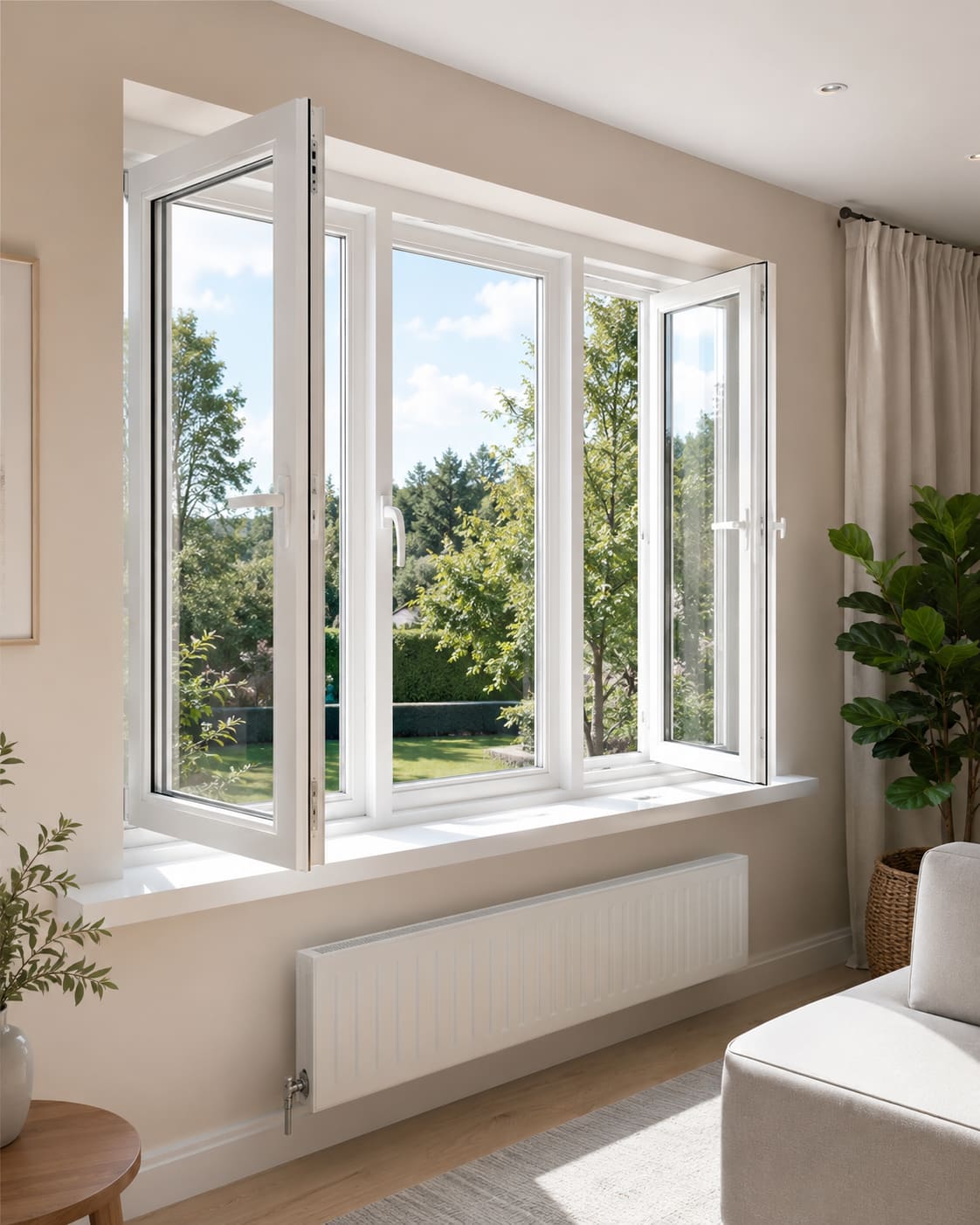
- uPVC windows: excellent thermal insulation and multi-point sealing, which suits DGU glass and keeps dust and monsoon rain out; a strong choice for bedrooms and sun-facing rooms. Our uPVC windows service covers profiles and glazing options in detail.
- Aluminium windows: slim sightlines, high strength for large spans, and a modern look favoured in HITEC City and Financial District apartments; ideal for big toughened or laminated panes and wide sliders. See our aluminium windows service for the range.
The moving parts matter just as much as the profile. Smooth, long-lasting operation depends on quality rollers, tracks, handles and, for heavy glass doors, robust floor springs and closers. Frameless or minimal-frame glass relies on precise patch and structural fittings to keep large panes safe and aligned over years of daily use.
Buying the glass and the fittings from one supplier avoids the classic Hyderabad problem of mismatched components, where a cheap roller or gasket fails within a year and lets in the very heat, dust and noise the glass was meant to stop. Sourcing branded hardware from names such as Taiton, Enox and Ozone alongside your glass keeps the whole window performing as one unit.
Decide room by room to balance comfort and budget
Choose glass room by room so you spend on heat and noise control only where it counts, rather than paying for DGU across the whole house. A typical Hyderabad 2-3 BHK gets the best value by mixing glass types by exposure and use.
- Living room, west or south facing: toughened plus solar-control or reflective glass to cut fierce afternoon heat and glare.
- Master bedroom near a main road or metro: double-glazed (DGU) for quieter, cooler sleep and lower night-time AC use.
- Kitchen and utility: toughened clear or lightly tinted glass that is easy to wipe down and resists heat from cooking.
- Bathrooms: frosted or laminated obscure glass for privacy while still admitting daylight.
- Balcony and ground-floor windows: laminated toughened glass for safety and security against forced entry.
For a standard 2 BHK in Kondapur or Miyapur, this mix often lands around 90,000-1,60,000 INR for glass and framing combined, versus a much higher figure if every window were specified as DGU. Spending smartly on the two or three rooms that face the worst sun and noise delivers most of the comfort at a fraction of the cost, and leaves budget for better frames and hardware.
The buying process and typical timeline
A well-run window glass project in Hyderabad follows a predictable sequence, and knowing it helps you plan around interior work, painting and move-in dates. Rushing measurement or installation is where most avoidable problems begin.
- Site survey and measurement: an experienced fitter measures each opening, notes orientation, floor height and noise exposure, and recommends glass, frame and hardware per room. Allow one visit of an hour or two.
- Quotation and specification: you receive a written quote listing glass type, thickness, coating or SHGC, frame system and hardware brands. Insist that these details are named, not left vague as 'toughened glass'.
- Fabrication: toughened and DGU glass is cut, processed and (for DGU) sealed in the factory, typically taking one to two weeks depending on size and coating. Toughened glass cannot be cut or drilled after tempering, so measurements must be final.
- Installation: frames are fixed, glass is glazed with proper gaskets and sealant, and hardware is fitted and adjusted. A typical 2-3 BHK is completed in one to three days.
- Handover and checks: test every sash for smooth operation, confirm the BIS stamp on toughened panes, and check seals against light and draught before signing off.
Plan the whole process around three to four weeks from first survey to finished windows for an average home, and longer for large facades or imported DGU. Booking early in the year, before the peak pre-monsoon rush, usually means faster fabrication slots across the twin cities.
Common mistakes Hyderabad homeowners make
Avoiding a handful of well-known mistakes will save you money and comfort over the life of your windows. These are the errors we most often correct on twin-city projects.
- Choosing tint colour over performance: a dark grey tint looks premium but may still carry a high SHGC; always ask for the heat number, not just the shade.
- Under-specifying thickness on big panes: large west-facing sliders in 5mm float glass flex, whistle and can shatter under monsoon wind load, so step up to 8-10mm toughened or DGU.
- Skipping safety glass at ground level: float glass on balconies and ground-floor windows is a real injury and security risk, especially in busy localities across Hyderabad and Secunderabad.
- Mismatched or cheap hardware: pairing good glass with weak rollers, handles or locks causes early failures that let in heat, dust and noise; invest in quality branded fittings.
- Ignoring the frame seal: even DGU glass leaks heat and dust through a badly sealed frame, so insist on proper gaskets and professional installation.
- Measuring in a hurry: because toughened glass cannot be recut, a rushed measurement means costly refabrication; always allow a proper site survey.
If you are unsure on any of these, a quick site visit removes the guesswork. You can get a free quote for a measured recommendation across every window in your home, or explore our services to see how window glass connects to the wider facade, partition and shower glazing you may also need.