The best skylight design idea for a Hyderabad home or office is a kerb-mounted, laminated Low-E double-glazed unit sized at roughly 4 to 8 percent of the floor area below it. That single specification answers the three questions everyone asks first: it delivers bright, even daylight, it blocks most of the infrared heat that makes our summers punishing, and it stays watertight through the monsoon. Everything else, from pyramid shapes to tubular tunnels, is a variation on getting those fundamentals right.
A well-placed skylight turns a dim, boxed-in room into a bright, open space without adding a single watt of electricity during the day. For homes and offices across Hyderabad, Secunderabad and the wider Telangana region, the right approach can cut daytime lighting bills, make interiors feel larger, and pull cooling daylight deep into rooms that side windows simply cannot reach, such as a central stairwell in a Kokapet villa or a windowless meeting room in a Financial District office.
But daylighting in our climate is not just about cutting a hole in the roof. With Hyderabad summers regularly crossing 42 degrees Celsius and monsoon downpours that test every joint, a skylight has to balance light with heat, glare and waterproofing. This guide walks through proven skylight design ideas, the glass and framing choices that matter here, and honest indicative pricing so you can plan a project that actually performs year after year.
What Are the Best Skylight Design Ideas for Daylighting?
The best daylighting comes from matching the skylight type to the roof and the room below. A few configurations consistently deliver the most usable light for Telangana buildings:
- Fixed flat-glass skylights: ideal for the flat RCC roofs common across Hyderabad. A single large pane over a stairwell or living room spreads even, diffused daylight through the middle of the floor plate.
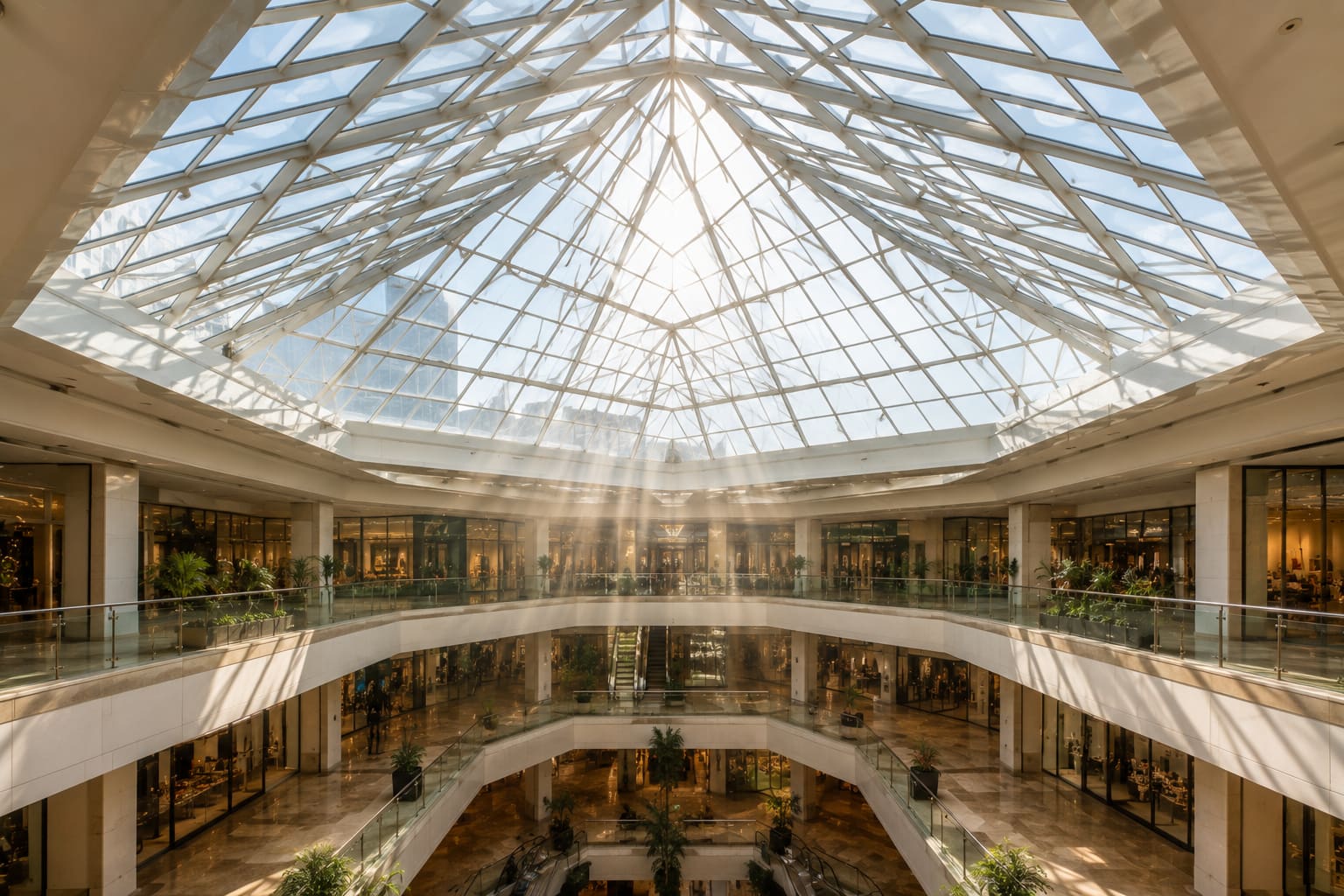
- Pyramid and hipped skylights: raised above the roofline, they capture light from multiple directions through the day and shed monsoon rainwater fast. A pyramid skylight is a favourite crown for double-height foyers in Jubilee Hills and Kokapet homes.
- Ridge or barrel-vaulted skylights: long runs of glass over corridors, atriums and showrooms give dramatic, continuous daylight. A curved skylight softens the look and drains water without ponding.
- Tubular daylight devices: compact reflective tubes that channel light into bathrooms, kitchens and windowless rooms without a major structural opening, perfect for retrofits in built-up flats.
As a rule of thumb, skylight glazing sized at roughly 4 to 8 percent of the floor area delivers strong daylight without overheating the room. Go higher only if you are pairing it with serious shading and heat-control glass.
Which Skylight Orientation Gives the Best Light?
Orientation quietly decides how comfortable a skylight feels. In Hyderabad's latitude the sun tracks high and hot, so the direction your glazing faces changes everything about glare and heat.
- North-facing slopes: the gold standard for steady, glare-free daylight. Studios, home offices and reading nooks in Gachibowli and Madhapur benefit most because the light stays soft all day.
- South-facing slopes: brightest and warmest; excellent in winter but demanding on heat-control glass and shading during summer.
- East and west slopes: deliver strong low-angle morning or evening sun that can dazzle. Reserve these for spaces used at the opposite time of day, or fit external louvres.
- Flat horizontal glazing: the default over flat RCC roofs; it collects the most heat at midday, so laminated Low-E DGU and a fritted or diffusing layer are essential here.
If you cannot choose orientation freely, lean on the glass and shading specification to compensate. Diffused or fritted glass evens out even a harsh western exposure.
How Do You Choose Glass for Hyderabad's Heat and Glare?
The glass specification is where a skylight succeeds or fails in our climate. Ordinary clear glass overhead acts like a greenhouse and throws harsh glare on floors and screens.
- Double-glazed insulated units (DGU): two panes with an air or argon gap dramatically reduce heat transfer, a must for overhead and west exposure in Telangana.
- Low-E coated glass: an invisible metallic layer reflects infrared heat while letting visible daylight through, keeping rooms bright but noticeably cooler.
- Laminated safety glass: mandatory overhead, it holds together if broken and blocks nearly all UV, protecting furniture, wooden flooring and artwork from fading.
- Frosted, fritted or ceramic-printed glass: diffuses direct sun into soft, even light and cuts glare in offices, studios and clinics.
For most Hyderabad projects we recommend a laminated Low-E DGU: it satisfies safety norms, controls heat, and still gives excellent daylighting. Where privacy or dimming matters, smart switchable glass can turn a skylight from clear to opaque at the touch of a button, and specialty glass options cover acoustic and extra solar-control needs.
How Do You Stop Skylights From Leaking in the Monsoon?
Daylighting only stays enjoyable if the skylight is watertight and comfortable through the monsoon and summer alike. Waterproofing is a detailing problem, not a glass problem.
- Kerb-mounted (raised) installation: setting the skylight on a 150 to 300 mm upstand keeps rainwater and roof runoff well clear of the seals. This single detail prevents most failures.
- Aluminium framing with thermal breaks: resists corrosion, carries large panes, and reduces heat conducted indoors. Our aluminium fabrication shop builds these frames to the exact roof opening.
- Continuous flashing and EPDM gaskets: metal flashing weaves the skylight into the roof membrane, while EPDM gaskets and structural silicone lock the glass in.
- Openable or vented skylights: even a small motorised opening releases trapped hot air near the ceiling and aids natural stack ventilation.
Insist on proper flashing, EPDM gaskets and structural silicone glazing. Cheap sealant-only jobs are the single biggest cause of skylight leaks we are called to fix across Secunderabad, Kondapur and Andhra Pradesh. When a leak has already started, it is almost always the flush mounting, not the pane, that is at fault.
Skylight Ideas for Homes vs Commercial Spaces
The same physics apply, but the design intent differs between a family home and a workplace.
- Homes: a skylight over the staircase is the highest-impact move, lighting the vertical core that side windows never reach. Kitchens, bathrooms and pooja rooms suit compact tubular units, while a pyramid over a double-height living room becomes an architectural centrepiece.
- Villas and duplexes: pair a roof skylight with a glass atrium or internal void so light cascades down two levels, a look that works beautifully in Kokapet and Financial District homes.
- Offices: continuous ridge glazing over open-plan floors in Hitec City reduces artificial lighting load and lifts employee wellbeing. Pair with glass partitions so daylight travels into cabins instead of being blocked by solid walls.
- Retail and showrooms: skylights over display zones render products in true colour; combine them with your showroom glazing for a bright, premium storefront.
- Restaurants and atriums: barrel-vaulted or flat-roof skylights create a garden-terrace feel that diners love, especially over central courtyards.
What Does a Skylight Cost in Hyderabad?
Costs vary with glass spec, size, roof type and access, but these ranges help you budget realistically for a supplied-and-installed skylight in the Hyderabad and Telangana market:
- Fixed single-glazed skylight: roughly INR 900 to 1,400 per sq ft.
- Laminated DGU with Low-E glass: around INR 1,600 to 2,800 per sq ft.
- Pyramid, vaulted or structural glass skylights: INR 2,500 to 4,500 per sq ft depending on span and framing.
- Motorised openable and tubular daylight units: priced per unit, typically INR 25,000 to 90,000 each.
A typical 8 ft by 6 ft laminated Low-E DGU skylight over a living room or stairwell lands in the INR 80,000 to 1,35,000 range installed. Investing in better glass upfront usually pays back through lower cooling and lighting bills over the life of the building. If your project also involves canopies or outdoor glazing, our canopies and skylights team can bundle the work and you can browse completed installs in our project gallery.
How Do You Maintain a Skylight for Long-Term Performance?
A skylight is a long-term asset when it is looked after, and the maintenance list in Hyderabad is short but non-negotiable given our dust and monsoon cycle.
- Clean the glass twice a year: pre-monsoon and post-monsoon. Hyderabad's construction dust and pollen cut daylight transmission noticeably if left to build up.
- Clear the surrounding roof drains and gutters before the rains so water never backs up against the kerb.
- Inspect gaskets and silicone joints annually for any hardening or hairline gaps and re-seal early rather than after a leak.
- Check external louvres, blinds and motorised actuators once a year so the shading still moves freely.
- Watch for condensation on the inner pane; persistent fogging inside a DGU signals a failed seal and the unit should be replaced before it stains.
Handled this way, a quality laminated DGU skylight comfortably lasts 20 years or more. When it is time to plan or upgrade one, get a free quote and our team will survey the roof, recommend the right glass, and detail the waterproofing before any glass is cut.
Common Skylight Mistakes to Avoid
Most disappointing skylights fail for a handful of avoidable reasons. Knowing them upfront saves rework:
- Oversizing the glass and cooking the room, then blaming the concept rather than the missing heat-control glass.
- Using single clear glass overhead, which is unsafe, glary and a UV problem for interiors.
- Mounting flush to the roof slab instead of on a raised kerb, the number-one cause of leaks.
- Skipping shading on east and west exposures, leaving occupants dazzled at sunrise or sunset.
- Choosing the cheapest installer, then paying twice when the sealant-only joint fails in the first monsoon.
Get the type, orientation, glass and detailing right together and a skylight becomes the most loved feature in the building. For heat-heavy elevations you can also pair overhead glazing with a full glass facade strategy so the whole envelope manages light and heat as one system.