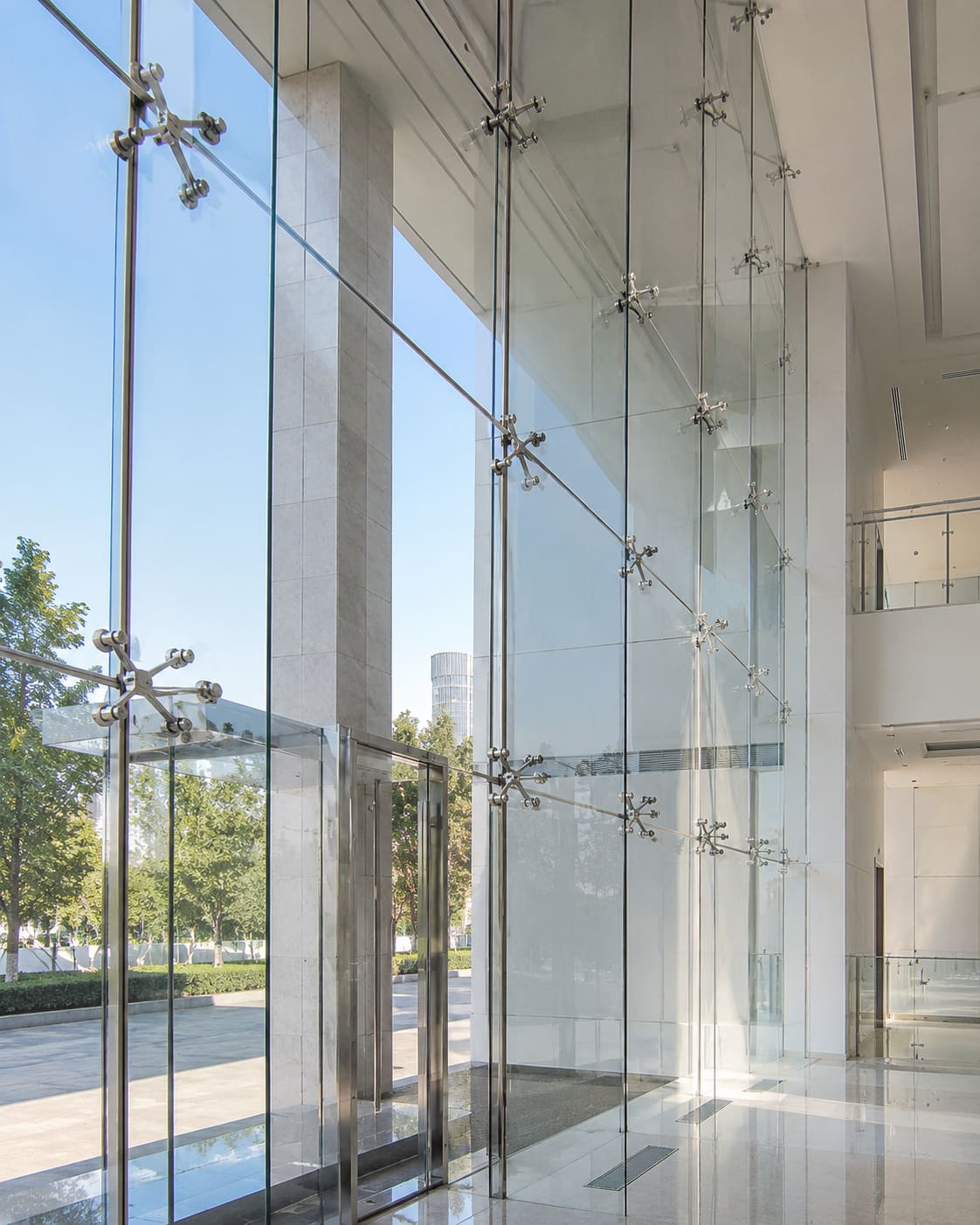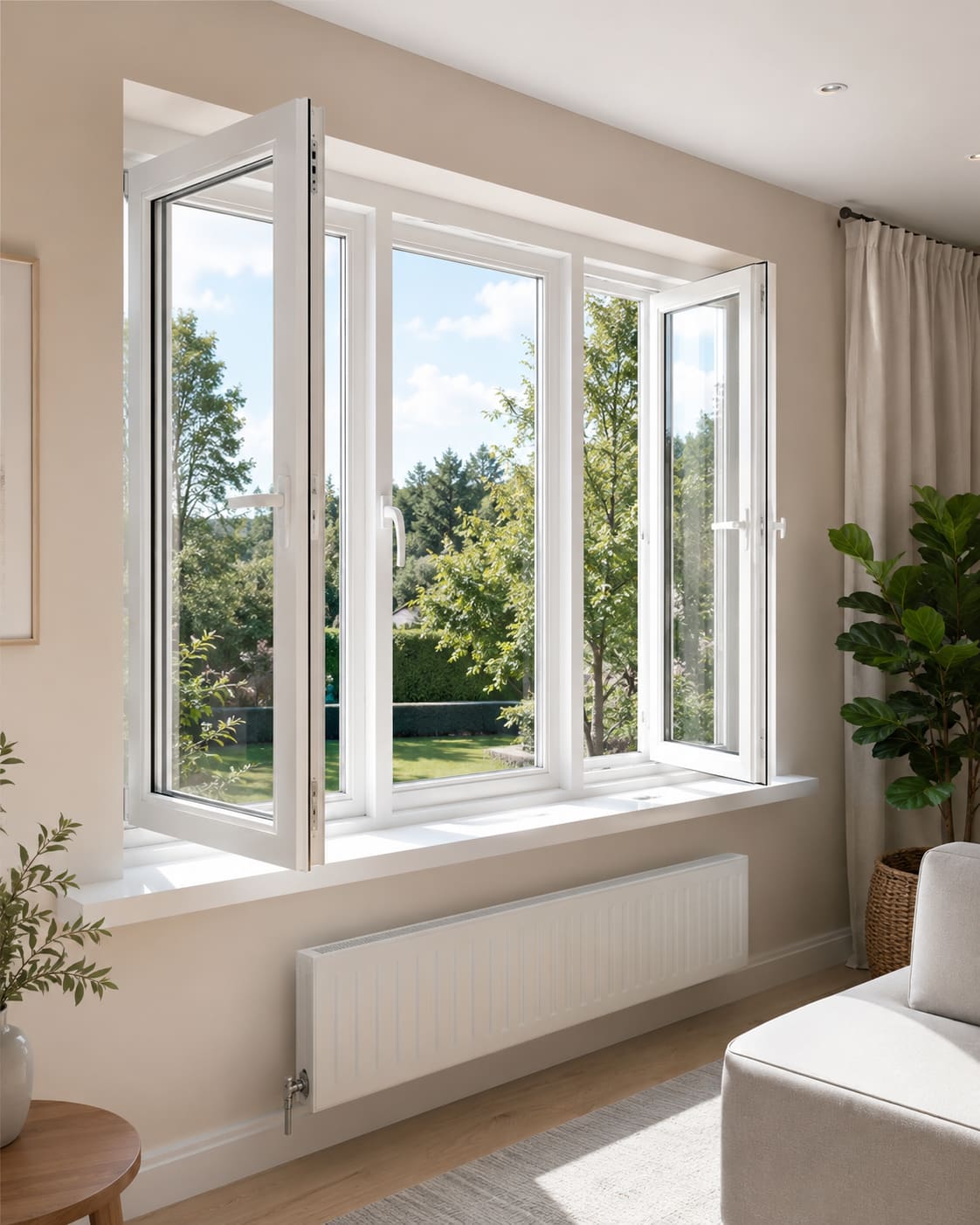
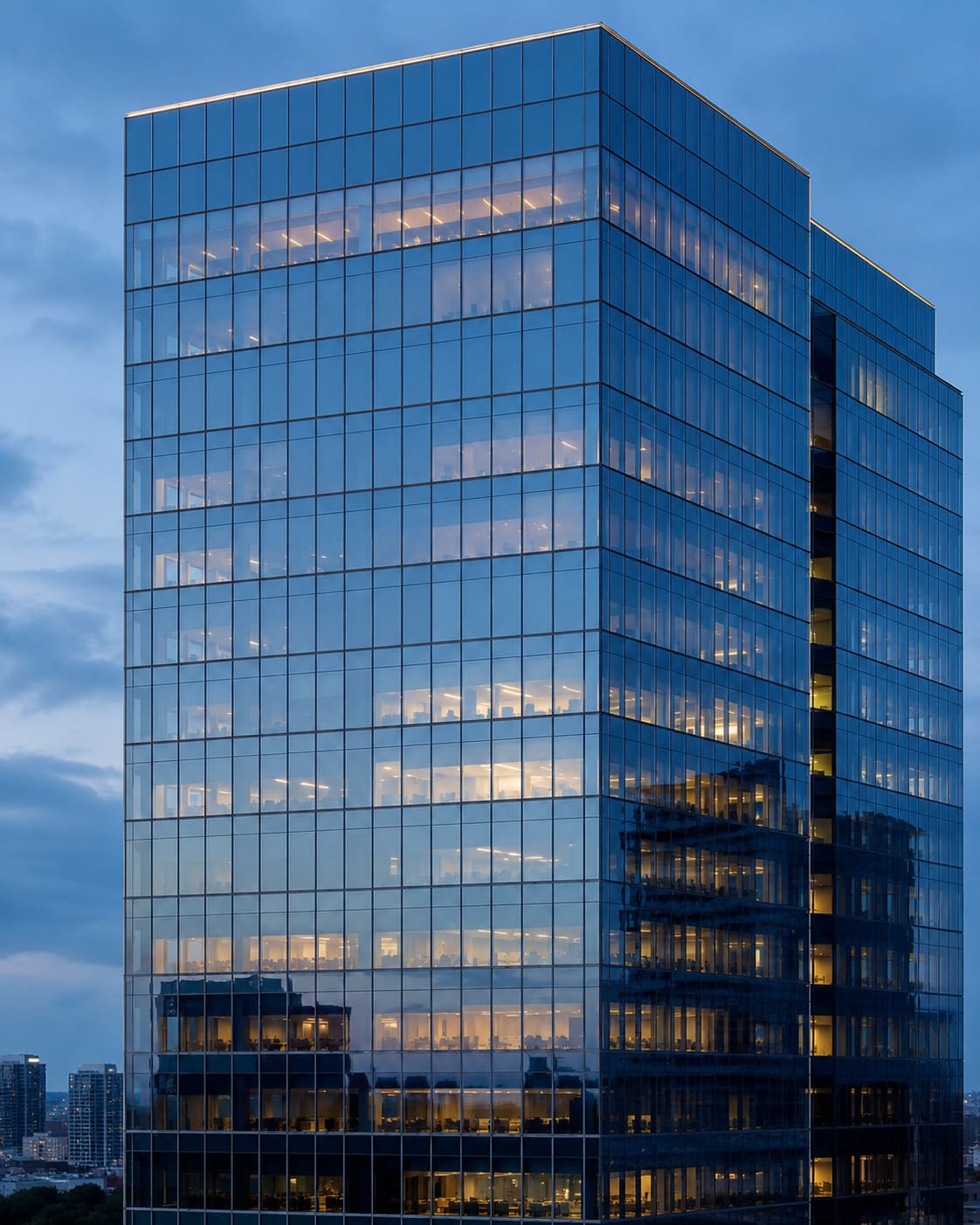
A stick curtain wall is assembled component-by-component on the building facade using individual mullions, transoms and glass infills, while a unitized curtain wall is built as complete factory-fabricated framed panels that are transported to site and hung directly onto the structure. The core difference is where assembly happens: stick systems are built almost entirely at the job site, whereas unitized systems shift roughly 90 percent of fabrication into a controlled factory, leaving only panel hoisting and interlocking at site.
This single distinction drives every practical trade-off in cost, schedule, labour, weather-tightness and quality. Stick systems favour low-rise buildings and tight budgets with maximum on-site adjustability, while unitized systems dominate high-rise towers where speed, repeatability and precise weather performance justify the higher upfront investment. If you are still comparing broader facade types, our guide to curtain wall glazing systems sets the context before you narrow down to a framing method.
In Hyderabad and Secunderabad, both approaches are widely specified depending on building height, glazing area, wind exposure and project timeline. A four-storey showroom on Road No. 36 has very different needs from a 22-floor IT tower in Hitec City, and the right envelope decision made early can save months of programme and lakhs in rework.
How Is Each System Built?
Stick curtain walls are erected on site by fixing vertical mullions to the slab edge, then adding horizontal transoms and finally installing glass or infill panels one at a time. Unitized curtain walls are pre-glazed into storey-high panels (typically 1.2 to 1.5 m wide and one floor tall, around 3.0 to 3.6 m) in a factory, then lifted and interlocked on site with almost no loose parts.
- Stick: mullions, transoms, gaskets and glass shipped loose and assembled at height, often floor by floor from a scaffold or cradle.
- Unitized: fully framed, glazed and sealed panels arrive site-ready with male and female interlocking edges that mate as each panel is set.
- Stick systems commonly use aluminium framing 50 to 65 mm in sight-line width with 2.0 to 3.0 mm wall thickness.
- Unitized split mullions form a two-part joint that accommodates thermal movement and building sway without loading the glass.
Both approaches sit within the wider family of structural glazing techniques, and the choice of stick or unitized framing is separate from whether the glass is captured, silicone-bonded or spider-fixed. That is why a proper design brief starts with the building, not the product.
Stick vs Unitized: The Quick Comparison
If you only remember one thing: stick is cheaper and more flexible but slower, while unitized is faster and higher-performing but costs more upfront and demands early commitment. The table below in plain terms sums up the decision.
- Assembly location: stick is built on site; unitized is built in a factory and hung on site.
- Cost per sqm: stick roughly INR 4,500 to 8,000; unitized roughly INR 7,000 to 14,000 supplied and installed.
- Install speed: stick is slow and sequential; unitized is 3 to 5 times faster at 20 to 40 panels a day.
- Best building height: stick up to 4 to 6 storeys; unitized 8 storeys and above.
- Weather-tightness: stick depends on site workmanship; unitized is factory-sealed and more consistent.
- Lead time: stick has a shorter lead time; unitized needs tooling, mock-ups and a longer factory schedule.
For a fuller walk-through of one side of this comparison, see our dedicated pages on unitized curtain wall systems and stick curtain wall systems.
How Do the Costs Compare in India?
Stick curtain walls have a lower material and system cost, typically 15 to 30 percent cheaper than unitized, but they incur higher on-site labour and longer crane and scaffold hire that can erode that saving on tall buildings. Unitized systems cost more per square metre in material and factory tooling yet cut site labour, programme duration and rework.
- Indicative supply-and-install rates in Telangana and Andhra Pradesh: stick systems roughly INR 4,500 to 8,000 per sqm; unitized systems roughly INR 7,000 to 14,000 per sqm depending on glass, finish and performance.
- Unitized economics improve with repetition; high panel counts amortise factory setup, tooling and mock-up costs across the facade.
- Stick systems avoid the minimum-order and mock-up costs that make small unitized jobs uneconomical below about 1,500 to 2,000 sqm.
- Total cost of ownership can favour unitized on tall buildings due to shorter scaffolding, lower site risk and fewer weather-related delays during the monsoon.
Glass specification moves these numbers as much as the framing does. A high-performance DGU facade or a reflective glass facade with a low-e coating will add to the per-sqm rate but pay back through lower cooling loads in Hyderabad's heat. For a firm figure, it is always best to get a free site-specific quote rather than rely on a range.
Which Installs Faster on a Hyderabad Site?
Unitized curtain walls install 3 to 5 times faster than stick systems because panels are craned into place and interlocked in minutes rather than assembled piece-by-piece at height. A skilled crew can hang 20 to 40 unitized panels per day, materially compressing the building envelope programme on a tight developer schedule.
- Stick systems need external access (scaffold or cradle) for nearly all work, which extends the schedule badly during the June to September monsoon.
- Unitized panels are installed from inside the floor plate, cutting scaffolding, weather exposure and working-at-height risk.
- Faster envelope closure on unitized jobs lets interior fit-out and MEP start earlier, saving overall project time and finance cost.
- Stick remains practical where site access is easy, the building is low, and floor-to-floor coordination is simple.
On a fast-moving commercial tower in Kokapet or the Financial District, the ability to close the envelope one floor per week and start office front glazing and fit-out behind it is often worth more than the material premium. You can see completed envelope work of both types in our project gallery.
Quality, Weather-Tightness and Thermal Performance
Unitized systems deliver more consistent quality and superior weather-tightness because glazing and sealing occur in a controlled factory, reducing on-site defects, gasket errors and silicone contamination. Stick systems depend heavily on site workmanship and are more prone to water-leakage and air-infiltration variability, which matters in a city that swings from 43 C dry heat to sideways monsoon rain and fine construction dust.
- Weather performance is verified against air, water and structural test standards such as ASTM E283, E331 and E330.
- Both systems accommodate double-glazed units (DGUs) of 24 to 32 mm achieving U-values of about 1.6 to 2.8 W/m2K for ECBC compliance.
- Structural silicone joints must follow ASTM C1401; toughened glass must conform to IS 2553 and is often paired with laminated glass for safety and acoustics.
- Unitized split-mullion joints better absorb thermal expansion and inter-storey drift, aiding seismic and high-wind performance.
For heat-heavy elevations, specifiers in Madhapur and Kondapur increasingly combine performance glass with spandrel glazing at floor bands to hide slab edges and services while keeping a clean, continuous glass line.
Wind Load, Standards and Compliance
Both stick and unitized curtain walls in India must be engineered to IS 875 Part 3 for wind load and comply with the National Building Code of India (NBC) 2016, regardless of height or budget. Skipping proper wind-pressure design is the single most common cause of facade failure, and it is not optional for either system.
- Hyderabad sits in a moderate wind zone, but tall towers in open areas like the Financial District see higher corner and parapet pressures that drive mullion depth and glass thickness.
- Energy performance is governed by ECBC and BEE guidelines, pushing low-e DGUs and controlled window-to-wall ratios.
- Fire and life-safety detailing, including perimeter fire-stopping at slab edges, applies to both systems and is often overlooked on fast stick jobs.
- Independent facade consultancy and mock-up testing de-risk larger projects before full production begins.
Because the engineering underpins everything else, an early facade consultancy review pays for itself by catching mullion sizing, thermal breaks and drainage paths before fabrication is locked in.
Can You Mix the Two? Semi-Unitized and Hybrid Options
Yes. Semi-unitized systems are a practical middle path where factory-assembled ladder frames or mullion trees are fixed to the slab and glass units are then clipped in, blending some factory quality with the flexibility and lower tooling cost of stick building. This suits mid-rise buildings of 6 to 10 storeys that fall between the two classic use-cases.
- Semi-unitized reduces on-site glazing labour versus pure stick while avoiding the full mock-up burden of unitized.
- It is useful for irregular elevations, mixed podium-and-tower buildings, and phased construction.
- Hybrid facades often pair a unitized tower with a stick-built podium or front elevation glazing at street level.
- Material palettes can also mix, combining glass with ACP cladding or louvres to manage cost and solar gain.
Explore the middle option in more detail on our semi-unitized glazing page, and if your building has a distinctive lobby or showroom base, that zone is frequently detailed differently from the repeating floors above.
Which Curtain Wall Should You Choose?
Choose stick systems for low-rise buildings up to about 4 to 6 storeys, budget-sensitive projects, or facades with irregular geometry needing on-site adjustment; choose unitized for high-rise towers above 8 to 10 storeys, tight schedules and repetitive floor plates. Building height, glazing area, wind exposure and programme are the deciding factors, in that order.
- Pick stick if: the building is low, the budget is tight, access is easy, or the geometry is one-off and irregular.
- Pick unitized if: the building is tall, the schedule is aggressive, floor plates repeat, or weather-tightness is critical.
- Pick semi-unitized if: the building is mid-rise or mixes typologies and you want a balance of cost and quality.
- In every case, confirm IS 875 Part 3 wind design, ECBC-compliant DGUs and correct fire-stopping before you sign off.
Hakimi Aluminium and Glass designs, fabricates and installs stick, unitized and semi-unitized curtain wall systems across Hyderabad, Secunderabad, Telangana and Andhra Pradesh. If you are weighing options for a specific plot, talk to our facade team with your floor count, glazing area and target date, and we will recommend the system that fits your building and budget rather than the one that suits us.