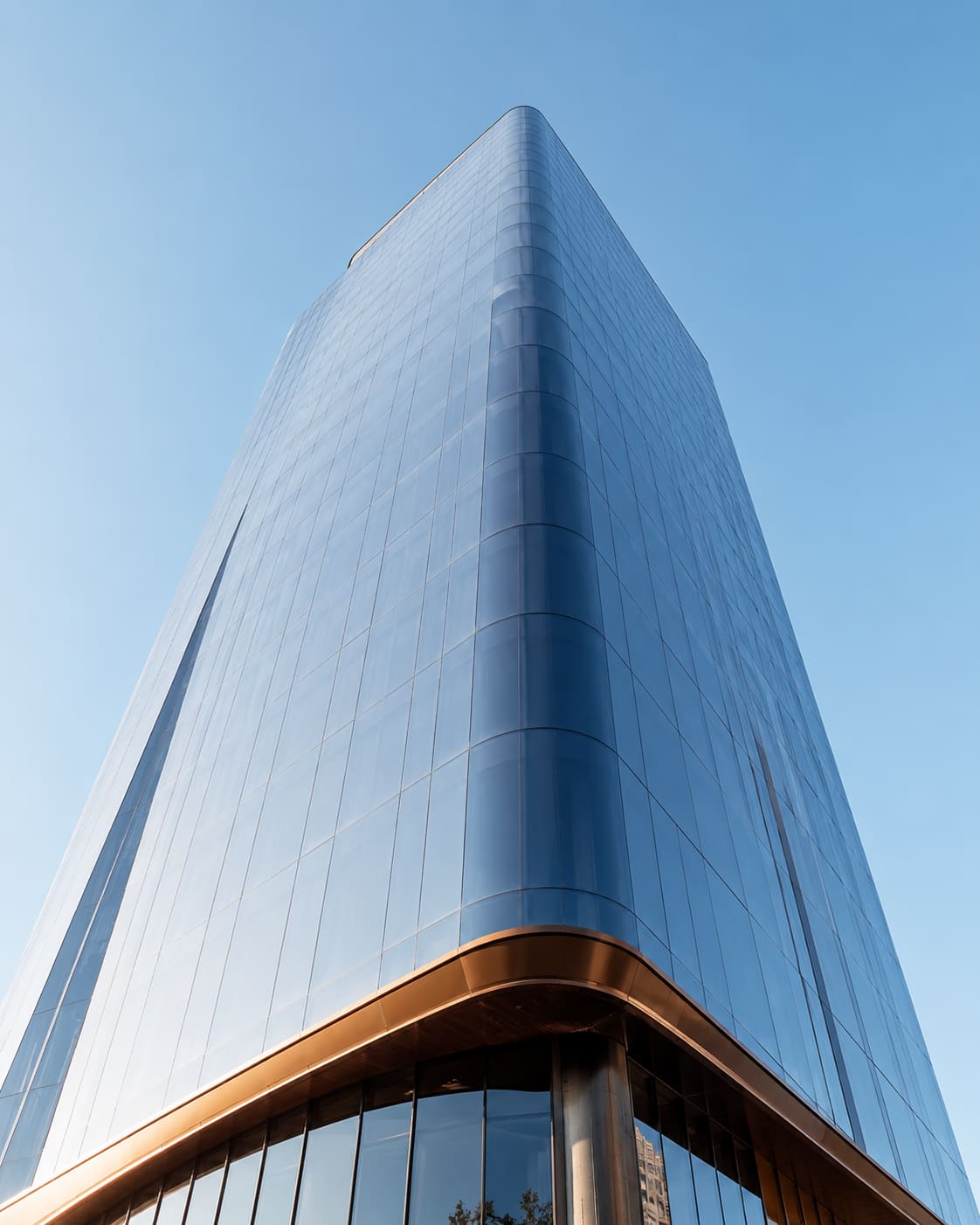
Structural silicone glazing (SSG) is a facade system in which glass is bonded to a supporting aluminium frame using a high-strength structural silicone sealant that transfers wind and dead loads, and its design is governed principally by ASTM C1401, the Standard Guide for Structural Sealant Glazing. Instead of mechanical pressure plates or gaskets clamping the glass on all four sides, the cured silicone adhesive becomes the structural connection, producing a smooth, flush all-glass exterior with no visible framing on the bonded edges.
Because the sealant is the sole load path between glass and metal, structural silicone glazing demands rigorous engineering: the bond width (bite), sealant thickness (glue line), substrate compatibility, and adhesion must all be verified against calculated wind pressures. In India these calculations combine the ASTM C1401 methodology with wind loads from IS 875 (Part 3), the safety-glass requirements of IS 2553, and the overall provisions of the National Building Code of India (NBC) 2016.
Hakimi Aluminium and Glass designs and installs code-compliant structural glazing and glass facade systems across Hyderabad, Secunderabad, and the wider Telangana and Andhra Pradesh region. This guide explains the standards, the math, the materials, and the local factors that decide whether an SSG facade lasts three years or thirty.
What Does ASTM C1401 Cover?
ASTM C1401, titled the Standard Guide for Structural Sealant Glazing, is the authoritative technical guide for designing and building structural silicone glazing systems. It consolidates decades of industry experience into design procedures, material requirements, and quality-control practices for adhesively bonded glass facades.
The guide addresses the core engineering and construction topics of an SSG system:
- Structural sealant selection, published properties, and compatibility with glass, metal, coatings, gaskets, and setting blocks.
- Calculation of structural bite (bond width) and glue-line thickness from the design wind load.
- Two-sided and four-sided SSG configurations and their support and dead-load conditions.
- Laboratory testing, adhesion and deglazing checks, and long-term durability considerations.
ASTM C1401 is a guide rather than a rigid specification, so it is always applied alongside the sealant manufacturer's engineering approval and project-specific structural calculations. On a real Hyderabad tower this means the facade consultant, the fabricator, and the silicone supplier (typically Dow, Sika, or Wacker) all sign off on the same numbers before a single unit is bonded. For teams that want an independent design check, our facade consultancy service reviews shop drawings and sealant calculations against the guide.
How Is the Structural Silicone Bite Calculated?
The structural bite is the width of silicone contact that bonds the glass to the frame, and it is sized so the sealant stress stays within its allowable limit under peak wind load. The governing relationship links bite to the design wind pressure and the largest span of glass supported by that joint.
- Structural bite (mm) = (0.5 x glass short-span dimension x design wind pressure) / allowable sealant stress.
- Allowable short-term tensile/shear stress for structural silicone is commonly taken as about 138 kPa (20 psi) per ASTM C1401 practice.
- Minimum structural bite is generally 6 mm, increasing with glass size and wind exposure; large or tall facades often require 10 to 20 mm or more.
- Glue-line thickness (joint depth) is typically a minimum of 6 mm to accommodate differential thermal movement between glass and aluminium.
Worked example: a 1.5 m x 2.4 m insulated glass unit in Gachibowli, with a design wind pressure of roughly 1.5 kPa, gives a bite of (0.5 x 1500 x 1.5) / 138, or about 8.2 mm. Round up and detail 10 mm, and the joint has a comfortable margin. For Hyderabad, IS 875 (Part 3) gives a basic wind speed of about 44 m/s, which is then adjusted for terrain, height, and topography before it feeds the pressure used in this formula. Taller buildings in Kokapet and the Financial District see higher pressures at the upper floors, so the bite is frequently zoned, wider at corners and the top, narrower in the sheltered middle.
Which Materials and Substrates Are Compatible?
Only a purpose-made, two-part or one-part structural silicone with published structural strength data may be used to bond glass in an SSG system. General-purpose weatherproofing silicone is never acceptable for the structural joint, no matter how strong the tube claims to be.
- Structural silicone: a high-modulus silicone that carries the load; its cured strength and movement capability are certified by the manufacturer.
- Weatherseal silicone: a separate, lower-modulus silicone that seals the exterior joint against water and air and absorbs movement.
- Glass: heat-strengthened or fully toughened (tempered) glass to IS 2553, usually as insulated (double) glazing units for thermal performance. Our toughened glass work and DGU facade units are sourced and processed to match the calculated wind loads.
- Substrates: aluminium framing is normally anodised or powder-coated, and every contacting material must pass adhesion and compatibility testing before use.
Compatibility testing prevents staining, adhesion loss, and premature failure, because incompatible spacers, gaskets, structural glazing tapes, or coatings can chemically degrade the bond. A common field failure in Indian projects is a cheap setting block or a silicone-incompatible gasket that leaches plasticiser into the joint; the bond looks fine for a year, then lets go. This is exactly why substituting materials on site without re-testing is so dangerous on an SSG job.
Testing and Quality Control You Cannot Skip
Structural silicone glazing quality is verified through laboratory adhesion testing and factory quality control, because the bond cannot be inspected once the facade is built. Adhesion and compatibility are confirmed on the actual project substrates, not generic samples, before production begins.
- Adhesion testing: peel and tensile-adhesion tests confirm cohesive failure of the silicone (it tears within itself) rather than adhesion loss at the interface.
- Deglazing test: destructive checks on production samples verify the sealant has cured and bonded correctly.
- Cure and workmanship: joint cleaning with a two-cloth wipe method, priming where required, temperature and humidity control, and full wet-out of the bite are all monitored.
- For two-part silicone, snap-time and butterfly tests confirm the correct mixing ratio on every production run.
Both field-applied and factory-glazed (unitised) SSG follow these controls, but factory glazing under controlled temperature and humidity generally yields the most consistent bond quality. That is one reason unitized glazing is preferred for high-rise work in Hitec City and Madhapur, where hanging scaffolds and monsoon humidity make reliable site bonding difficult. During Hyderabad's June to September monsoon, on-site structural bonding should pause when humidity or dew point falls outside the silicone maker's window, or cure quality suffers.
Two-Sided vs Four-Sided SSG: Which to Specify
The two main SSG configurations are two-sided and four-sided structural glazing, and the choice affects appearance, cost, and how much of the glass edge is mechanically retained. Both are covered by ASTM C1401 but carry different support requirements.
- Two-sided SSG: two opposite edges are structurally bonded while the other two sit in mechanically captured pressure-plate rails. It offers a strong horizontal or vertical shadow line with lower engineering risk.
- Four-sided SSG: all four edges are silicone-bonded for a fully flush, frameless glass skin, giving the classic seamless curtain wall look but demanding the tightest quality control.
- Dead-load support: even in four-sided systems, the glass self-weight is usually carried by setting blocks or a small support fin, not by the silicone alone, since silicone creeps under sustained load.
- Safety retention: many specifiers and codes require secondary retention (safety pins or a toe) for glass above a certain height, so a bond failure cannot drop a panel onto a footpath.
For a showroom or office frontage at street level in Kondapur, a two-sided structural glazing or curtain wall system is often the pragmatic choice; for a signature tower elevation, four-sided unitized curtain wall delivers the flush aesthetic clients ask for. You can see both approaches in our completed projects.
Indian Codes and Standards for SSG Facades
In India, structural silicone glazing is designed by combining ASTM C1401 with national codes for loading, safety glass, and building construction. Compliance across all of these standards is what makes an SSG facade legally and structurally sound, and it is the first thing a serious facade consultant checks.
- IS 875 (Part 3): design wind loads and pressures on the facade.
- IS 2553: toughened and laminated safety glass requirements.
- National Building Code of India (NBC) 2016: overall structural, fire, and construction provisions, including cladding and facade guidance.
- Energy Conservation Building Code (ECBC) and BEE star ratings: glass U-value and Solar Heat Gain Coefficient (SHGC) limits for energy performance.
- ASTM C1184 (structural silicone sealant specification): the material-performance companion to the C1401 design guide.
High-performance insulated glazing for Hyderabad commonly targets U-values around 1.6 to 2.8 W/sqm.K and a low SHGC to cut solar heat gain in the city's long, hot summers. Specifying reflective glass facade or high-performance coated DGUs is how Grade-A offices in the Financial District keep cooling loads and electricity bills down while still passing ECBC. Local municipal and fire NOC approvals will also ask to see the wind and glass calculations, so keep the full design package on file.
How Much Does Structural Silicone Glazing Cost in Hyderabad?
Structural silicone glazing in Hyderabad typically ranges from about INR 650 to INR 1,600 per square foot of facade, depending on the glass specification, system type, and building height. Pricing is driven far more by the glass and the framing system than by the silicone itself.
- Entry-level SSG with single toughened glass and standard aluminium: roughly INR 650 to INR 900 per sqft.
- High-performance SSG with insulated (DGU) reflective glass: roughly INR 1,000 to INR 1,600 per sqft.
- Unitised four-sided systems for high-rise towers: at the upper end, plus engineering, mock-up testing, and access costs.
- Add-ons: spider glazing feature entrances, spandrel glazing for floor bands, and secondary safety retention all add to the base rate.
These are indicative 2026 rates for the Hyderabad market and should be confirmed against a measured site survey. Skipping the engineering, mock-up, or compatibility testing to shave the rate is a false economy, because a resealing or re-glazing job on an occupied tower costs many times the original saving. For an accurate, itemised estimate on your project, get a free quote and our team will size the glass, bite, and system for your elevation.
Durability, Maintenance and Lifespan
A correctly designed structural silicone glazing system lasts 20 to 30 years or more, with the silicone bond itself being highly resistant to UV, ozone, heat, and weathering. Structural silicone's stability under intense sunlight is a key reason it is preferred over organic adhesives for exposed facades.
- The exterior weatherseal typically needs inspection and possible resealing at roughly 10 to 15 year intervals, sooner than the structural joint.
- Periodic facade inspection should check for adhesion loss, sealant cracking, glass movement, and water ingress at the joints.
- Hyderabad's high UV exposure, dust-laden pre-monsoon winds, and large day-night temperature swings make UV-stable structural silicone and correctly sized glue lines especially important.
- Keep a facade maintenance log so the weatherseal cycle and any spot repairs are tracked over the building's life.
Because the structural bond is concealed, ongoing inspection and prompt repair of the weatherseal are essential to protect the long-term integrity of the system. If you are weighing SSG against other systems, our comparison of curtain wall and structural glazing explains where each performs best for Telangana buildings.