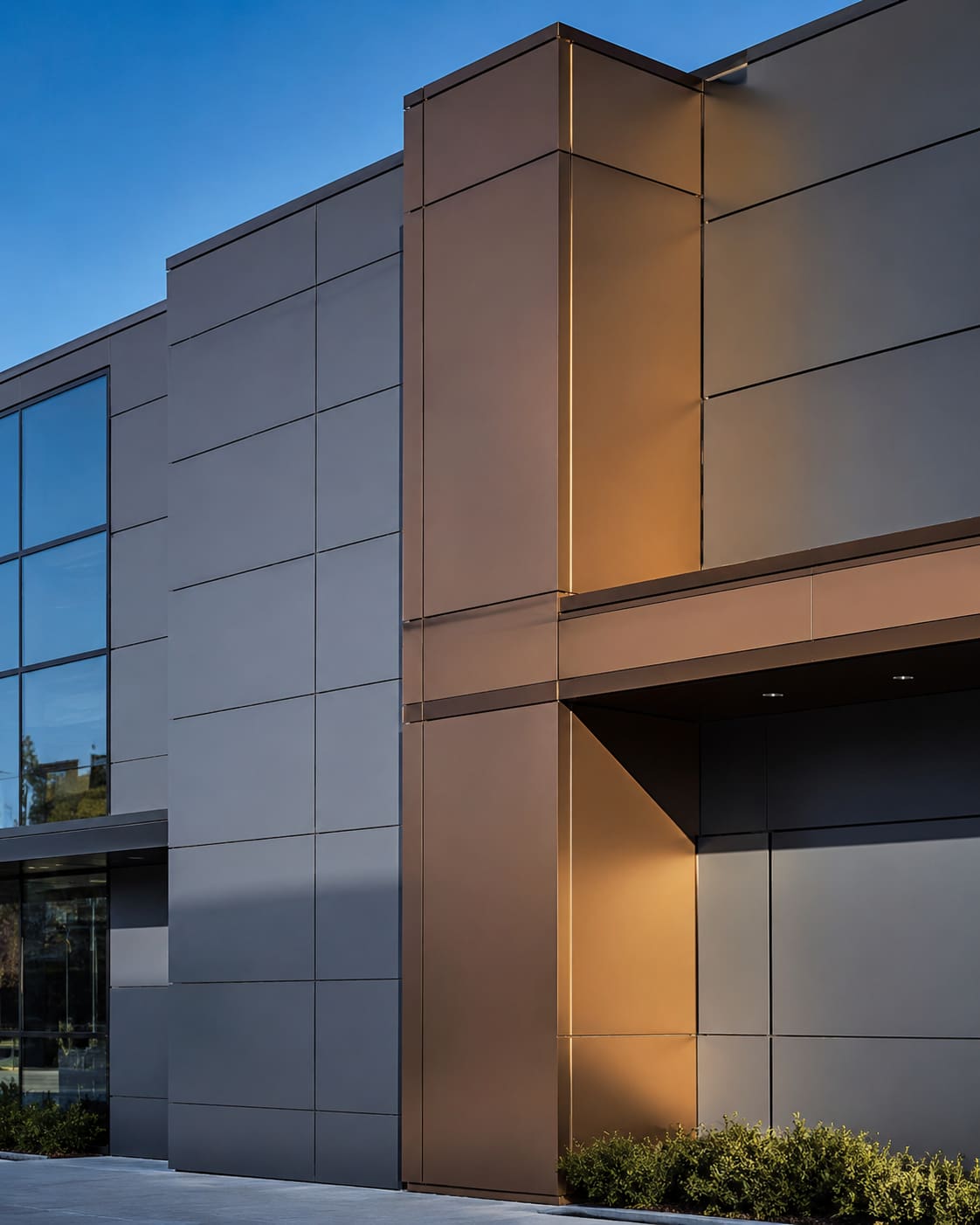
The main types of cladding materials for buildings are aluminium composite panel (ACP), high-pressure laminate (HPL), glass, natural stone, terracotta, metal sheet (aluminium, zinc or steel) and fibre cement. They differ mainly in thickness, weight, fire rating, lifespan and cost - ACP runs about 4 mm and Rs 150-450 per sq ft, HPL is a 6-10 mm solid laminate lasting 20-30 years, glass forms transparent curtain walls, and stone or terracotta deliver the longest life at the highest weight and price. Cladding itself is a non-load-bearing outer skin fixed to a building's structure or a sub-frame to protect it from weather, improve thermal and acoustic performance, and define the facade's look.
Choosing the right material means balancing durability, fire safety, thermal performance, maintenance and budget against your local climate. In the hot, dusty summers and heavy monsoon of Hyderabad, Secunderabad and the wider Telangana and Andhra Pradesh belt, UV stability, water drainage and colour retention matter as much as the first cost printed on a quotation. A panel that looks smart in Gachibowli on installation day but chalks and fades within three summers is a false economy.
This guide compares every major cladding material by the numbers that actually decide a project - thickness, weight, cost per square foot, fire class and expected lifespan - and maps each to the building types common across Hitec City, Kokapet and the Financial District. Hakimi Aluminium and Glass supplies, fabricates and installs ACP cladding, HPL facades and structural glazing across Hyderabad and Secunderabad, so the ranges below reflect real local jobs, not catalogue theory.
Aluminium Composite Panel (ACP) Cladding
ACP is a sandwich panel of two thin aluminium sheets bonded to a polyethylene or mineral-filled core. It is the most widely used facade cladding in India because it is light, comes in a huge colour and finish range, and can be routed and folded into crisp panels on site.
- Standard facade thickness: 4 mm with 0.5 mm aluminium skins; 3 mm and 6 mm variants also exist for signage and heavier facades.
- Weight: roughly 5.5-8 kg per sq m, a fraction of stone, which keeps structural loads and bracket costs low.
- Cost: approximately Rs 150-450 per sq ft installed, depending on brand, coating, core and fixing system.
- Coating: PVDF (Kynar 500) resists UV fading far better than cheaper polyester and is the right choice for exteriors in Telangana's harsh sun.
- Fire safety: fire-rated (FR) grades with a mineral core achieve Class A2 / limited combustibility; NBC 2016 restricts combustible PE-core panels on high-rise facades.
- Lifespan: 15-25 years for genuine PVDF-coated panels.
ACP suits office fronts, showrooms, mall elevations and residential towers where a large area needs a clean, uniform, budget-controlled skin. If you are weighing brands and grades, our standard vs fire-rated ACP guide explains where the extra cost of a mineral core is legally and practically justified, and our ACP elevation design work shows how panel jointing and shadow lines change the final look.
High-Pressure Laminate (HPL) Cladding
HPL cladding is a dense, solid panel made of kraft-paper layers impregnated with thermosetting resin and compressed under heat and high pressure. Unlike ACP it has no soft core - the whole panel is one homogeneous compact board, which makes it tougher against impact, scratches and vandalism.
- Exterior panel thickness: typically 6-10 mm compact grade.
- Standard reference: EN 438 for decorative HPL, including exterior-grade EGF panels with a UV-protective surface.
- Weight: about 8-14 kg per sq m at 6-10 mm.
- Maintenance: the non-porous surface resists staining, graffiti and moisture and simply wipes clean - useful on dusty roadside elevations.
- Lifespan: 20-30 years with strong colour stability under direct sunlight.
- Cost: broadly Rs 250-650 per sq ft installed, above ACP but below premium stone.
HPL is the go-to when a designer wants a convincing wood or stone grain without the weight and cost of the real thing - common on balconies, boundary walls, cafe frontages and signage-heavy commercial elevations. Premium Fundermax facades and wood-finish HPL are popular for boutique offices and villas around Jubilee Hills and Kokapet where a warmer, more natural facade is wanted.
Glass Cladding and Curtain Walls
Glass cladding uses toughened or laminated safety glass to create transparent, tinted or reflective facades, usually assembled as a unitised curtain wall or as structural glazing where the glass appears to float without visible frames.
- Glass type: toughened glass to IS 2553 Part 1, generally 6-12 mm; laminated glass adds safety and acoustic control.
- Thermal control: double-glazed units (DGUs) with low-E coatings cut solar heat gain sharply, which supports ECBC and BEE energy compliance on the glass towers of Hitec City and the Financial District.
- Systems: curtain wall glazing, spider glazing and unitized glazing each suit different heights, budgets and speeds of install.
- Cost: a serious variable - basic single-glazed structural glazing can start near Rs 550-800 per sq ft, while high-performance DGU curtain walls run Rs 1,200-2,500+ per sq ft.
Glass is unmatched for daylight, views and a premium corporate image, but it demands correct spandrel treatment, thermal breaks and shading to avoid overheating interiors. For a deeper look at the trade-offs, see our facade structural glazing service and browse completed towers in our projects gallery.
Stone, Terracotta, Metal and Fibre Cement Cladding
Beyond the big three, several materials serve specific durability, texture and fire briefs:
- Natural stone (granite, marble, sandstone): 20-40 mm slabs on mechanical anchors; the heaviest option at 50-110 kg per sq m and the longest lasting, at 50+ years, with a premium first cost.
- Terracotta: fired-clay extruded tiles, usually 18-40 mm thick, used in ventilated systems for a natural, breathable, colour-stable and non-combustible facade.
- Metal sheet (aluminium, zinc, standing-seam steel): 0.7-3 mm profiled or flat panels, corrosion-resistant and recyclable, popular for contemporary and industrial buildings.
- Fibre cement: cement, sand and cellulose boards 6-12 mm thick, non-combustible and cost-effective across large areas.
Metal facades also extend into perforated and expanded systems - our metal mesh facade and aluminium louvers work adds solar shading and privacy while keeping a modern industrial character, which reads well on car parks, service cores and mixed-use blocks.
Ventilated vs Direct-Fix Cladding Systems
Cladding is installed either as a ventilated rainscreen with an air cavity behind the panel, or direct-fixed flat to the substrate. The system choice affects thermal and moisture performance as much as the material itself.
- Ventilated (rainscreen): a 25-50 mm air gap drains rainwater, dries the wall and reduces heat transfer, lowering cooling loads through a Hyderabad summer.
- Direct-fix: panels bonded or screwed straight to the wall; simpler and cheaper, but with far less moisture management.
- Fixing: aluminium sub-frames, brackets and structural silicone sealants to ASTM C1401 for bonded glazing.
- Wind load: facade fixings must be designed for site wind pressure per IS 875 Part 3, which matters on exposed high-rise corners in Gachibowli and Kokapet.
For most quality commercial elevations in Telangana we recommend a ventilated system - the upfront framing cost is repaid through lower air-conditioning bills and a facade that sheds monsoon water instead of trapping it. Our cladding and elevation team designs the sub-frame and cavity to suit each material and building height.
How Much Does Cladding Cost in Hyderabad?
Installed cladding cost in Hyderabad ranges from roughly Rs 150 per sq ft for basic ACP to Rs 2,500+ per sq ft for high-performance DGU glass curtain walls. The material is only part of the figure - sub-frame, brackets, sealant, height, access and finish all move the number.
- ACP: Rs 150-450 per sq ft installed.
- HPL / Fundermax: Rs 250-650 per sq ft installed.
- Fibre cement: Rs 120-300 per sq ft installed.
- Natural stone: Rs 350-900+ per sq ft installed depending on stone and slab size.
- Structural glazing / curtain wall: Rs 550-2,500+ per sq ft installed depending on single vs double glazing and coatings.
These are indicative Telangana and Andhra Pradesh ranges for 2026; a firm price needs the drawings, elevation area and access details. The cheapest quote is rarely the cheapest facade over 20 years once fading, water ingress and re-cladding are counted, so compare grade and warranty, not just rate. Get a free quote with your elevation drawings and we will return a measured, itemised estimate.
Which Cladding Material Is Best for Fire Safety?
For fire safety, non-combustible materials - fibre cement, natural stone, terracotta, glass and fire-rated (A2) mineral-core ACP - are the safest choices, and NBC 2016 makes them effectively mandatory on high-rise facades.
- The National Building Code 2016 restricts combustible polyethylene-core ACP above defined building heights, requiring limited-combustibility (A2) panels instead.
- Mineral-filled FR ACP looks identical to standard ACP but the core will not sustain a flame front across the elevation.
- Terracotta, fibre cement and stone are inherently non-combustible and carry no core-combustibility risk.
- Glass is non-combustible, though the framing, gaskets and spandrel insulation must also be specified correctly.
After several widely reported facade fires, buyers and consultants across Hyderabad now insist on FR grades for anything tall or public-facing. Specifying fireproof ACP cladding from the outset costs a little more per sheet but removes a serious code and insurance risk - never let a contractor swap an approved FR panel for a cheaper PE-core sheet to hit a rate.
How to Choose the Right Cladding for Your Building
Select cladding by matching fire rating, thermal performance, lifespan and budget to the building type and its exposure, then confirm the fixing system suits local wind and rain loads.
- High-rise or fire-critical: choose FR ACP, fibre cement, terracotta, glass or metal with A2 / non-combustible ratings per NBC 2016.
- Budget-driven large areas: ACP or fibre cement offer the lowest installed cost per sq ft.
- Premium and long life: natural stone and terracotta last longest, with the highest first cost.
- Energy performance: low-E DGU glass plus a ventilated cavity supports ECBC and BEE star-rated envelopes.
- Climate in Hyderabad, Secunderabad and coastal AP: prioritise PVDF or EGF UV-stable coatings, effective drainage and proven colour retention against strong sun, dust and monsoon rain.
Many of the best elevations mix materials - ACP fields with an HPL or stone feature wall and a glass entrance - to balance cost against impact. Our mixed-material elevation and front elevation glazing teams can combine systems on one facade and detail the joints so they weather cleanly for decades.