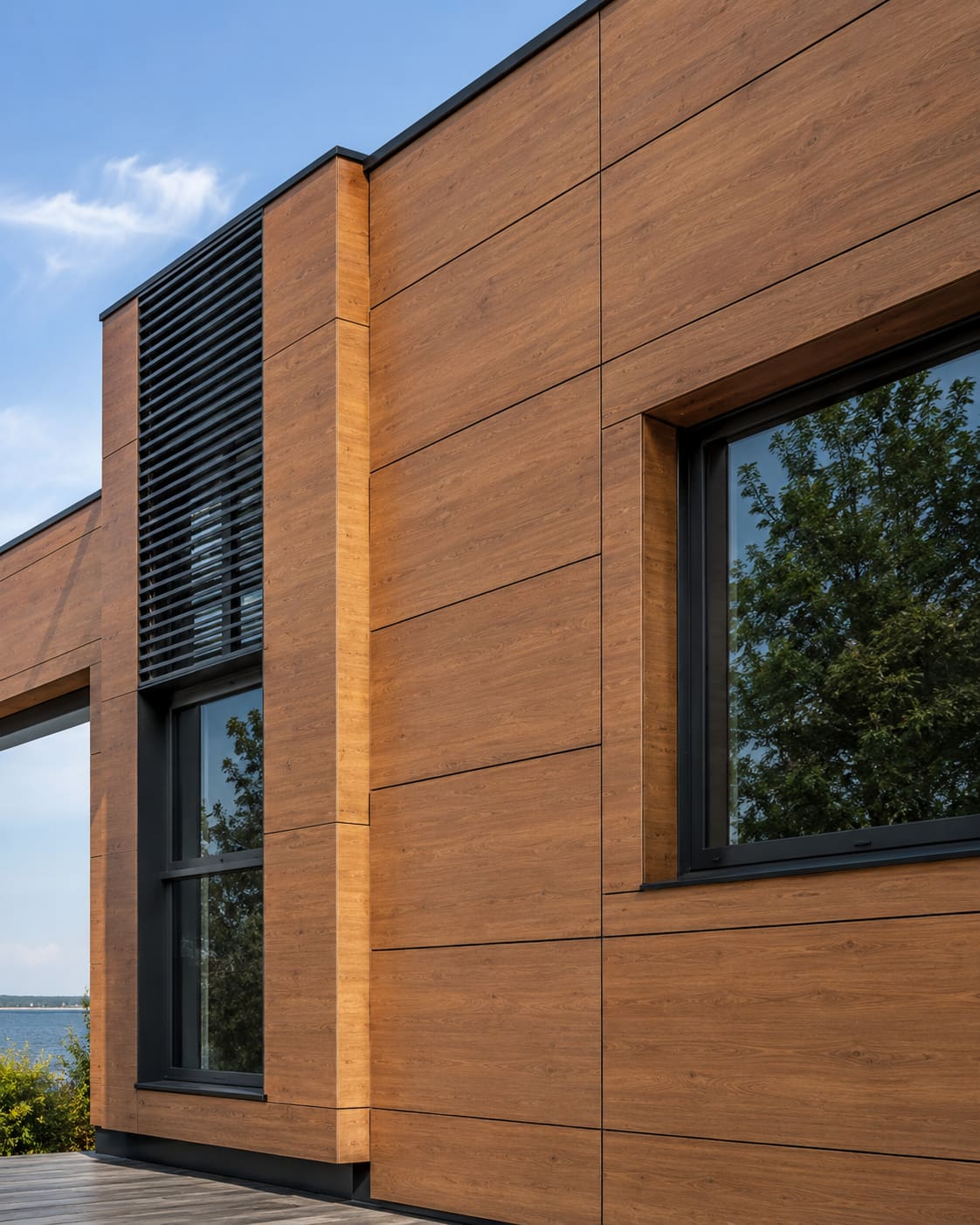
The best villa facade ideas for Hyderabad combine two or three durable materials, HPL or Fundermax cladding, slim aluminium framing and high-performance glass, over a grounded base of local Tandur or Shahabad stone. That layered, climate-smart approach gives you clean modern kerb appeal that survives 40-plus degree summers, dust and heavy monsoon rain, while keeping maintenance low for a decade or more. Budget roughly INR 6 lakh to INR 20 lakh for a full front elevation, depending on materials and area.
A villa's facade is the first thing anyone sees, and in a competitive market like Hyderabad it quietly sets the tone for the entire home. The right elevation balances kerb appeal with the practical realities of Telangana's climate, from harsh summer heat to monsoon-driven rain, while keeping maintenance manageable for years to come.
Whether you are building new in Gachibowli, Kokapet, Kondapur or a gated community off the ORR, or upgrading an older elevation in Secunderabad, the choices you make now decide how the house ages. This guide walks through current facade styles, the materials that genuinely suit our region, honest indicative pricing, and the detailing that separates a premium elevation from one that stains and fades within two monsoons. When you are ready, you can get a free quote based on your own drawings and site.
What Are the Most Popular Villa Facade Styles in Hyderabad?
Modern villa elevations in Hyderabad have moved decisively away from heavy plaster mouldings and Roman columns toward clean lines, layered materials and large glazed openings. A few directions consistently look good and hold their value across Telangana and Andhra Pradesh:
- Contemporary minimalist: flat parapets, horizontal HPL or Fundermax bands, and floor-to-ceiling glass framed in slim aluminium. This is the default look in newer Kokapet and Financial District villas.
- Modern-traditional fusion: local Shahabad or Tandur stone at the base with crisp aluminium and glass above, popular in premium gated communities around Gachibowli.
- Warm material mix: wood-finish aluminium louvres or WPC battens layered over neutral render for texture, shade and a softer, residential feel.
- Bold vertical accents: a double-height glass feature over the entrance or staircase that reads as a confident statement from the street, often built as a structural glazing element.
The most successful elevations rarely rely on a single material. Two or three finishes in restrained proportions read as premium and considered, while five competing textures quickly look busy and dated. If you are unsure which direction fits your plot and budget, browsing built work in our completed projects is a faster way to decide than scrolling generic Pinterest boards.
Which Facade Materials Perform Best in Telangana's Climate?
Material choice matters far more here than in cooler regions, because our facades face intense, near-vertical sun for much of the year, followed by weeks of driving monsoon rain and fine construction dust in between. A finish that looks fine in a showroom can chalk, warp or streak within two seasons if it is wrong for the orientation. These are the options we specify most often for villa projects across Hyderabad and AP:
- HPL and Fundermax cladding: fade-resistant, dimensionally stable and available in stone, wood and solid finishes. Ideal for large flat elevation panels and the workhorse of most modern villas. Our HPL cladding and Fundermax facade work is built for exactly this exposure.
- ACP (aluminium composite panel): cost-effective for accent bands, parapet boxing and soffits. Best used as a supporting player rather than the hero material on a villa; see our ACP cladding options.
- High-performance and toughened glass: brings light into double-height spaces and stairwells. Specify DGU or reflective glass to cut heat gain, not plain float, using our reflective glass facade systems.
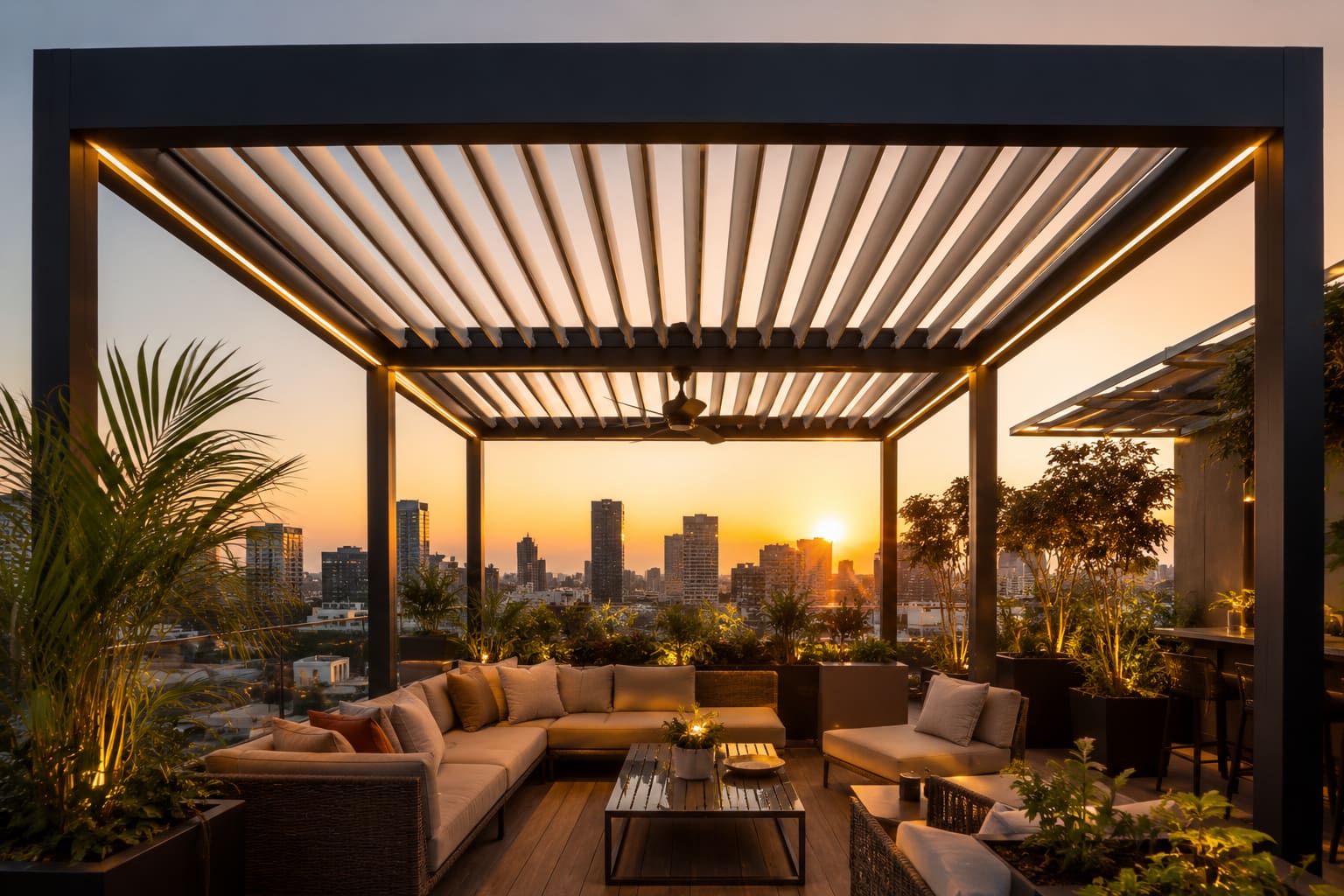
- Aluminium louvres and fins: control glare and privacy on west-facing walls while adding a rhythmic, architectural texture. Explore aluminium louvers for this.
- Natural stone: Tandur and Shahabad stone are locally quarried, extremely durable and give a grounded, timeless base that ties a contemporary villa to its region.
How Much Does a Villa Facade Cost in Hyderabad?
Facade budgets vary with the material, panel complexity, and the structural framing behind them. As a planning guide, these are typical supplied-and-installed ranges we see in the Hyderabad market in 2026:
- HPL / Fundermax cladding: around INR 350 to 750 per sq ft depending on grade, thickness and finish.
- ACP cladding: roughly INR 180 to 350 per sq ft.
- Aluminium louvres and fins: about INR 450 to 900 per sq ft.
- Structural glass facade / glazing: approximately INR 600 to 1,400 per sq ft based on glass spec and framing.
- Natural stone cladding: around INR 200 to 500 per sq ft.
For a typical independent villa, a full front elevation using a considered mix of these materials often lands between INR 6 lakh and INR 20 lakh. The spread is wide because two villas of the same footprint can differ hugely: a single flat two-storey elevation in ACP and stone sits at the lower end, while a double-height glass entrance, wraparound louvres and Fundermax across three exposed faces pushes toward the top. Framing type, working height and site access can each shift the figure by lakhs, which is why a drawing-based measurement is the only way to firm it up. You can get a detailed quote once your elevation drawing is ready.
How Do You Design an Elevation That Handles Heat and Monsoon?
A striking villa facade is as much about restraint and correct detailing as it is about the material itself. A few principles keep an elevation looking sharp through Hyderabad's seasons for the long term:
- Orient glass thoughtfully: reserve large glazing for north and shaded faces, and shade west-facing glass with louvres, fins or deep reveals so afternoon sun never hits the glass directly.
- Plan for drainage from day one: crisp flat parapets and horizontal reveals must have proper flashing and drip details, or monsoon water will track down and stain the facade within one season.
- Detail the joints: open-joint HPL and Fundermax systems need a correctly designed sub-frame and cavity so wind-driven rain drains away behind the panels rather than sitting against the wall.
- Match materials to maintenance: HPL, Fundermax and aluminium wash clean with rain and an occasional hose-down, while untreated timber needs regular oiling in our sun and is best mimicked with wood-finish aluminium or HPL instead.
- Allow for dust: matte and lightly textured finishes hide Hyderabad's dry-season dust far better than high-gloss panels, which show every water spot.
How to Combine Glass, Cladding and Stone Without Overdoing It
The single most common mistake we see on villa elevations is material overload, where the owner adds one more finish at every meeting until the facade loses all clarity. A cleaner approach is to assign each material a clear job:
- A base: stone or a darker cladding band anchors the villa to the ground and hides splash-back staining near the plinth.
- A field: one dominant cladding (HPL or Fundermax) covers the largest wall areas and sets the overall colour tone.
- An accent: glass, a wood-finish band, or a run of louvres marks the entrance, stair or a double-height volume.
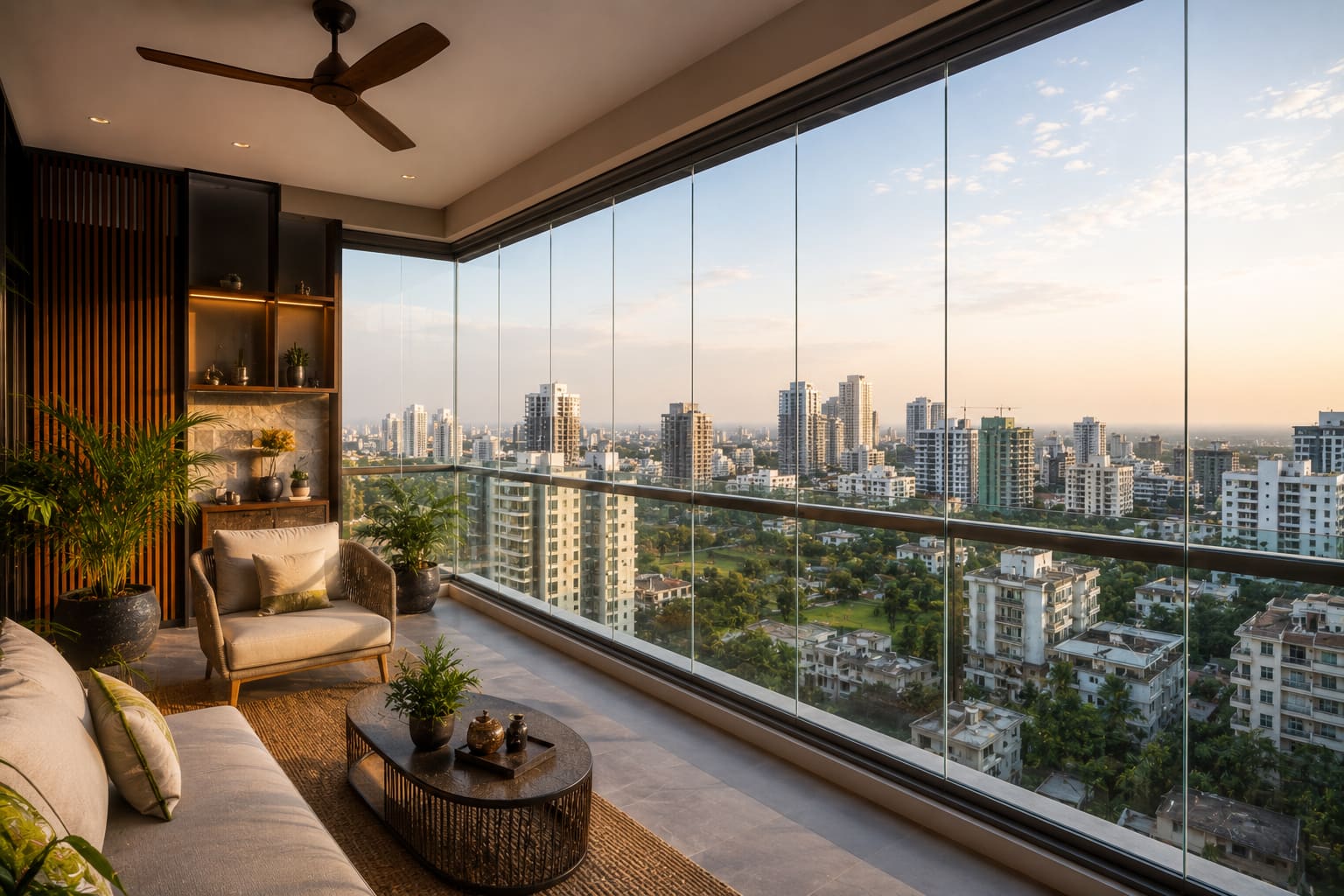
Keep the palette to roughly 60-30-10 across these three roles and the elevation will feel intentional. Vertical circulation, such as a staircase, is the natural place for a glazed feature, and pairing it with a frameless glass railing on the internal stair or balcony keeps the light and lines flowing through. For balconies that face the street, framed or frameless balcony glazing gives a clean edge without the visual weight of a solid parapet.
Do Villa Facades Need Louvres, Fins or Screens?
On most Hyderabad villas the answer is yes, at least on the west and south-west. Beyond the obvious sun-shading, louvres and screens solve three real problems at once: they cut afternoon heat gain into bedrooms and living areas, they provide privacy from neighbouring plots in tightly packed gated layouts, and they add the horizontal or vertical rhythm that makes a flat elevation look designed rather than plain.
Aluminium is the practical choice here because it does not rust, warp or need repainting, unlike timber or MS. Fixed aluminium louvers suit shading and screening, while operable or motorised systems let you adjust light and ventilation through the day.
- Use deeper, widely spaced fins as a feature screen over a double-height window or entrance.
- Use tighter horizontal louvres where privacy from an overlooking neighbour matters most.
- Consider a perforated metal or mesh panel where you want screening plus a lighter, more decorative texture; our perforated metal facade work covers this.
The added cost is real, but so is the payback in comfort and reduced air-conditioning load through the long Telangana summer.
What Facade Details Add the Most Kerb Appeal at Night?
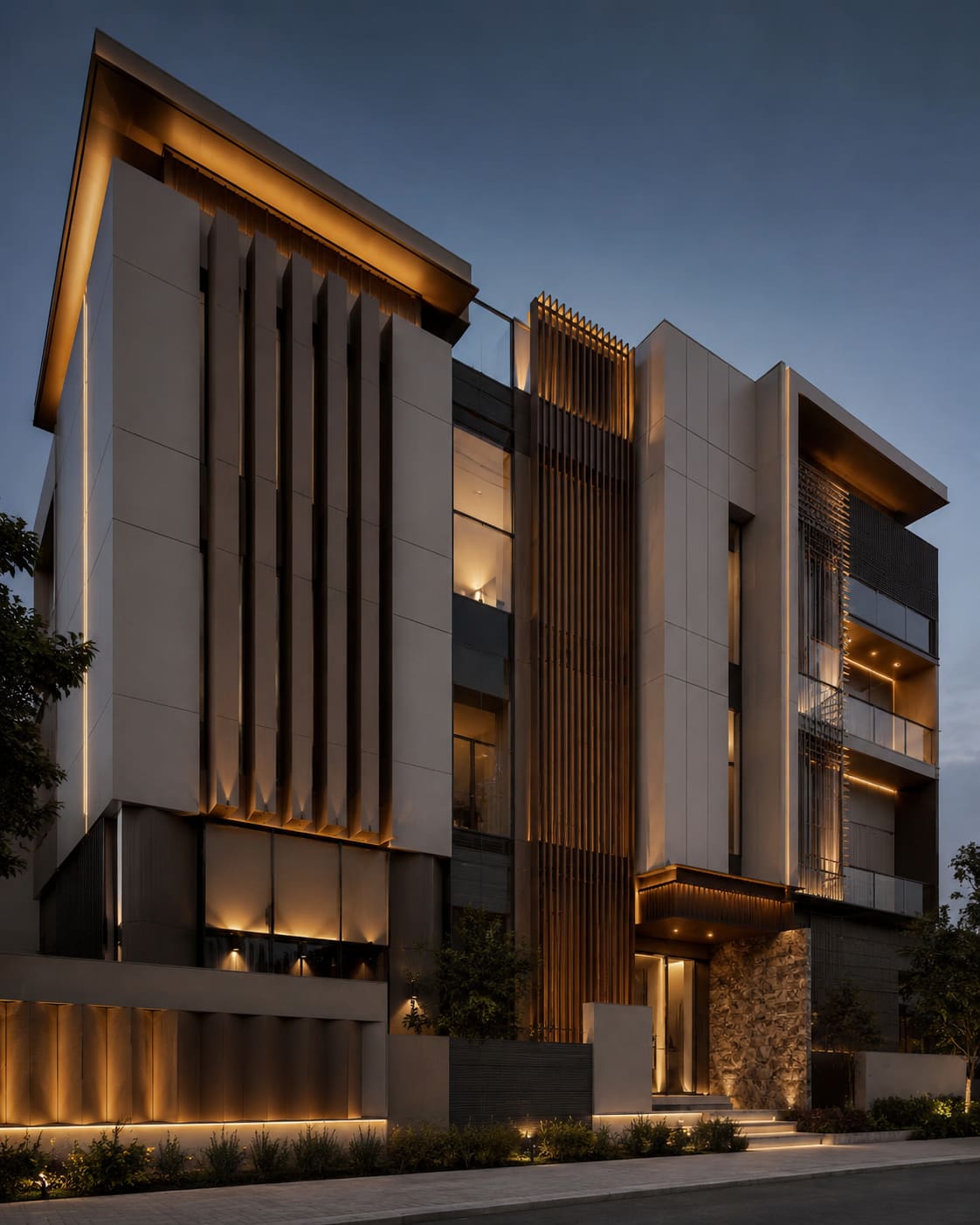
A villa facade earns its keep after dark as much as in daylight, and lighting is where a modest budget delivers the biggest visible upgrade. Integrated facade lighting turns the same elevation into a completely different composition once the sun goes down and is what makes a villa stand out on the street at night:
- Grazing light washed up a stone or textured cladding wall reveals its texture and adds drama.
- Linear LED tucked into horizontal reveals or under a floating band emphasises the clean lines of a modern elevation.
- Warm up-lights at the entrance and along the boundary draw the eye to the front door and landscaping.
Planning the wiring and channels during construction, not afterwards, keeps the fittings hidden and the effect clean. Coordinating this with the cladding sub-frame is straightforward when it is designed together, which is why we handle facade lighting integration as part of the elevation rather than an afterthought. A glass canopy over the entrance, lit from below, is another detail that reads as premium both day and night.
Should You Renovate an Existing Villa Facade or Rebuild It?
You rarely need to rebuild. Most older Hyderabad and Secunderabad villas with tired plaster, faded paint or dated arches can be transformed by cladding over the existing structure, provided the wall and any projecting balconies are structurally sound. A cladding sub-frame is fixed to the existing wall, and HPL, Fundermax or ACP panels then wrap the facade in a clean modern skin, often with new slim aluminium windows replacing old sections.
This retrofit route is faster, less disruptive and usually cheaper than demolition, and it lets you upgrade the thermal and weather performance at the same time. Swapping old steel or wooden frames for modern aluminium doors and windows or uPVC windows cuts dust ingress and outside noise noticeably, which matters on busy roads in Madhapur, Hitec City and Kondapur.
- Check the plinth and parapet for damp before cladding; fix the source of any water first.
- Confirm the wall can take the sub-frame anchors, especially on older brick or hollow-block construction.
- Coordinate new window openings with the cladding grid so joints line up cleanly.
If the old elevation is genuinely beyond saving, a fresh design still reuses the existing slab and columns in most cases, keeping cost sensible.