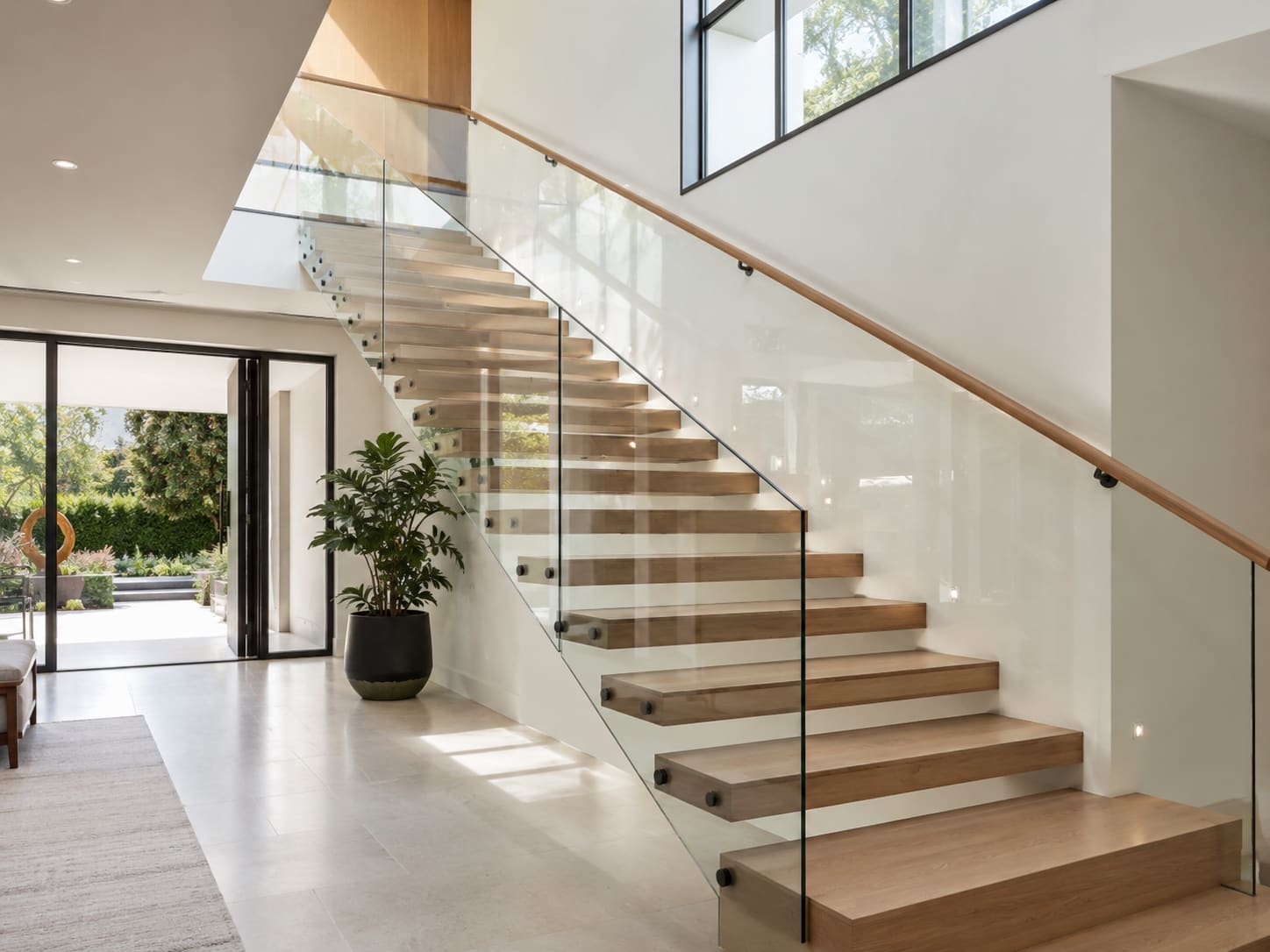
For most Hyderabad projects, a stainless steel handrail is the better choice on a glass railing when durability, low maintenance and outdoor exposure matter, while a wooden top rail wins when you want warmth underhand and a premium residential feel on a covered indoor staircase. Neither material is universally correct. The right answer depends on where the railing sits, your budget and how much upkeep you are willing to do each year. That single detail on top of the glass is the one part of the whole assembly people physically touch every day, so it deserves a deliberate decision rather than a default.
At Hakimi Aluminium and Glass we fabricate and fit both timber and stainless top rails across Hyderabad, Secunderabad and wider Telangana and Andhra Pradesh, from apartment staircases in Kondapur to office lobbies in the Financial District. The honest verdict after hundreds of installations is that the choice is a genuine trade-off, not a clear winner. This guide breaks down feel, durability, cost, safety and climate fit, with indicative 2026 INR pricing so you can plan a realistic quotation for your staircase glass railing or balcony balustrade.
We will also cover the hybrid steel-plus-wood cap that resolves the debate for many undecided homeowners, and the fixing details that actually keep a top rail safe over 15 to 20 years of daily use.
Wood vs Steel Handrail: The Core Trade-Off
A steel handrail, almost always SS 304 or SS 316 grade tube, gives you a slim, cool, low-maintenance profile that suits modern apartments, corporate offices and commercial lobbies. Timber, usually teak, sal or another good hardwood, gives a warm grip and a softer visual weight that flatters classic villas, farmhouses and traditional residential staircases in areas like Jubilee Hills and Banjara Hills.
The decision usually comes down to four practical factors that matter more than aesthetics alone:
- Feel: wood is warmer to hold and forgiving on cool winter mornings; bare steel can feel cold and clinical unless given a brushed or matt finish.
- Maintenance: steel wipes clean with a damp cloth, while wood needs re-polishing or oiling every 12 to 24 months to stay sealed.
- Location: covered indoor staircases suit either material, but open balconies and terraces exposed to sun and rain clearly favour stainless steel.
- Budget: entry-level steel and premium polished teak sit at very different price points, which we detail below.
If you are still weighing up the glass itself rather than just the top rail, our guide on frameless vs framed glass railings pairs well with this comparison.
How Does Each Handrail Feel and Look?
Grip is the most underrated part of this decision because it is the one thing you experience every single day. Wood has a slightly textured, warm surface that many people find more reassuring to hold, particularly elderly residents and children on a staircase. It also dampens sound and does not conduct heat, so it never feels shockingly cold or uncomfortably hot to the touch.
Steel reads as crisp and contemporary. A brushed SS 304 tube in a 50mm round or D-section profile looks almost invisible against clear glass, which is exactly why architects specify it for minimalist frameless spigot railings and standoff glass railings in modern homes and showrooms.
- Wood suits: heritage villas, wooden-floor interiors, warm neutral palettes, and staircases where grip comfort is a priority.
- Steel suits: glass-and-tile modern homes, offices, retail, and any scheme aiming for a light, floating look.
- Hybrid suits: buyers who want the modern silhouette of steel but the tactile warmth of a timber cap where the hand actually lands.
Durability in Hyderabad's Climate
Hyderabad's real test for any handrail is the swing from intense pre-monsoon heat in April and May to weeks of high monsoon humidity from June onward, followed by fine, gritty dust the rest of the year. That cycle is hard on organic materials. Untreated or poorly sealed wood can warp, develop hairline cracks or lose its finish, especially on open balconies in high-exposure areas like Gachibowli, Kokapet, Narsingi and the ORR corridor where afternoon sun is relentless.
Stainless steel is the safer bet outdoors by a wide margin. SS 304 is perfectly adequate for covered indoor staircases and shaded balconies. For fully open terraces, parapets and coastal-influenced Andhra Pradesh sites near Visakhapatnam, we recommend SS 316, which resists pitting and rust far better in salty, humid air. Using SS 304 in a coastal or constantly wet setting is the single most common cause of tea-staining and rust spots we are called to fix.
- Indoor staircase, covered: both wood and steel perform well for 15 to 20 years with basic care.
- Open balcony or terrace: SS 316 steel is the clear low-risk choice.
- Wood outdoors: viable only with marine-grade sealing and disciplined yearly re-coating.
Dust is the quiet factor people forget. Hyderabad's fine dust settles into any textured surface, so an oiled wooden rail needs wiping more often than a smooth steel tube to keep looking clean. If your balcony faces a construction-heavy pocket like parts of Kokapet or Tellapur, factor that into your maintenance appetite.
What Does a Handrail Cost in INR?
Handrail pricing is usually quoted per running foot on top of the glass railing cost. The ranges below are indicative Hyderabad market figures for 2026 and will vary with grade, section size, finish and site access.
- Stainless steel handrail (SS 304, round or D-section): approximately INR 350 to 700 per running foot.
- Stainless steel handrail (SS 316, marine grade): approximately INR 600 to 1,100 per running foot.
- Wooden top rail (seasoned hardwood or sal): approximately INR 500 to 900 per running foot.
- Premium teak handrail, polished: approximately INR 900 to 1,800 per running foot.
- Hybrid steel base rail with timber cap: approximately INR 800 to 1,500 per running foot combined.
For context, a complete toughened glass railing in Hyderabad typically runs INR 750 to 1,600 per running foot including the 12mm glass and hardware, so the handrail choice alone can shift the total by 20 to 40 percent. On a typical 20-foot staircase run, that is a swing of several thousand rupees, which is worth thinking through rather than deciding on site. To pressure-test these numbers against your own layout, you can get a free quote with exact dimensions and finishes.
One cost caution: the cheapest steel quotes often use thin-wall or 202-grade tube passed off as 304. It looks identical on day one and rusts within a season. Insist on grade certification, especially for balcony glazing and outdoor runs.
Which Handrail Is Safer?
On safety the two materials are closer than most buyers assume, because the real strength comes from the glass and the fixing system, not the cap on top. Both wood and steel can meet the grip and load requirements for a residential or commercial railing when detailed correctly. The differences are in the edge cases.
Steel carries load better as a structural top rail, so it is preferred where the handrail itself must span between posts or act as a continuous restraint. Wood is strong but needs a larger section and good joinery to match that structural role, which is why timber is often used as a cap over a steel or aluminium core rather than as the sole load member.
- Continuous handrail loading: steel or a steel-cored hybrid is structurally simplest.
- Fire and code compliance in commercial lobbies: non-combustible steel is often easier to sign off.
- Slip and grip comfort for the elderly: wood's warmer, textured surface has a mild edge.
Whatever you choose, the non-negotiables are 12mm toughened glass minimum, correctly torqued fixings, and a top rail that is structurally bonded rather than merely cosmetic. See how we detail this across finished work on our projects page.
Maintenance Over 15 Years
This is where the two materials genuinely diverge, and where many buyers change their mind once they see the long-term picture. Steel is close to fit-and-forget: a wipe with a damp microfibre cloth, an occasional pass with a stainless cleaner to remove fingerprints, and that is the routine for a decade or more indoors. SS 316 outdoors may need an occasional wash to clear dust and any early tea-staining, but nothing intensive.
Wood asks for a relationship. A quality hardwood or teak rail should be cleaned gently, kept out of standing water, and re-oiled or re-polished every 12 to 24 months indoors, more often outdoors. Skip that and the finish dulls, then the grain opens, then moisture gets in. Done on schedule, a good timber rail ages beautifully and can be sanded back and refinished to look new, something steel cannot offer.
- Steel indoors: wipe as needed, effectively zero scheduled maintenance.
- Steel outdoors: periodic wash, watch for tea-staining if the grade is wrong.
- Wood indoors: re-oil or polish every 12 to 24 months.
- Wood outdoors: marine seal plus yearly re-coating, and accept a shorter service life.
If low upkeep is your priority across the whole home, it is worth reviewing your aluminium doors and windows and railing finishes together so the maintenance rhythm is consistent.
The Hybrid Option: Steel Base with Wooden Cap
The most popular middle path we install is a slim SS 304 base rail fixed to the glass with a teak or hardwood cap clipped or bonded on top. Structurally the steel does the work; visually and tactilely the timber gives you the warm grip where your hand lands. It costs a little more than either material alone but resolves the wood vs steel debate for many Hyderabad homeowners who genuinely cannot decide.
It also lets you match materials elsewhere in the home. A teak cap can echo wooden flooring or a staircase tread, while the steel core keeps the profile slim enough for a frameless staircase glass railing look. Outdoors we would still lean toward all SS 316, because even a capped timber rail exposed to full sun and monsoon will need re-coating.
- Best for: covered indoor staircases where owners want warmth without heavy maintenance.
- Watch for: ensure the cap is mechanically retained, not just glued, so it can be lifted for refinishing.
- Skip it when: the railing is fully exposed outdoors, where solid steel is more sensible.
How to Brief Your Installer
A good quotation depends on giving your fabricator the right information, because the handrail decision touches glass thickness, post spacing and fixing method. Confirm whether the railing is indoor or outdoor, covered or exposed, and whether it is a staircase, balcony or terrace parapet, since that drives the grade and material choice more than taste does.
Ask for these specifics in writing so you can compare quotes fairly and avoid the low-ball traps:
- Glass: 12mm toughened minimum, or 13.52mm laminated where a fall risk demands it.
- Steel grade: SS 304 for covered indoor, SS 316 for outdoor and coastal, with grade certification.
- Wood: species, seasoning and the sealing or polishing system, plus the recommended re-coat interval.
- Fixing: spigot, standoff or channel base, and how the handrail is bonded to the glass or posts.
- Warranty: on both the glass hardware and any timber finish.
Once your requirements are clear, our team can walk the site and recommend the right combination. Reach out through our contact page and we will prepare a line-item quotation with the material and grade spelled out, so there are no surprises after installation.