The main types of aluminium windows are sliding, casement, awning (top-hung), fixed, tilt-and-turn and combination windows, each defined by how its sash opens and seals. Sliding windows move horizontally on tracks, casement windows swing outward on side hinges, awning windows hinge at the top, fixed windows do not open at all, tilt-and-turn windows offer dual-action opening, and combination units blend two or more of these in one frame. The right type depends on ventilation needs, available swing space, wind exposure, glazing weight and budget.
Aluminium is the preferred window frame material across Hyderabad, Secunderabad and the wider Telangana and Andhra Pradesh region because it is corrosion-resistant, non-combustible, dimensionally stable and strong enough to carry large glass panes with slim sightlines. Frames are extruded from aluminium alloy 6063 (per IS 733) and finished with powder coating or anodising so they shrug off the heat, monsoon humidity and construction dust that define the local climate. Our aluminium doors and windows division fabricates every profile below to order.
This guide explains every window type, its typical specifications, applicable Indian standards, realistic INR pricing and where each performs best in areas such as Gachibowli, Kokapet, Madhapur, Hitec City, Kondapur and the Financial District. Use it to specify with confidence, then get a free quote once you know which type fits your opening.
What Are the Main Types of Aluminium Windows?
There are six primary aluminium window types, and every product on the market is a variation of one of them. Knowing the family a window belongs to tells you instantly how it ventilates, how tightly it seals and how much wall or swing space it needs.
- Sliding: sashes glide horizontally on tracks; no swing space needed
- Casement: sashes hinge at the side and swing outward; tightest seal
- Awning / top-hung: hinges at the top, opens outward at the bottom; rain-friendly
- Tilt-and-turn: dual-action European design; tilts in for ventilation or swings in for cleaning
- Fixed (picture): does not open; slimmest sightlines and largest glass
- Combination: fixed panes married to operable sashes in a single frame
The sections that follow break down each type, and you can see finished installations of all of them in our project gallery. Choosing correctly at the design stage is far cheaper than retrofitting later.
Sliding Aluminium Windows
Sliding aluminium windows have sashes that glide horizontally along tracks and are the most widely used type in Indian homes because they occupy zero swing space. They suit balconies, kitchens and rooms where an outward-opening sash would foul a walkway, a safety grille or an air-conditioner unit, which is why most Hyderabad apartment towers specify them by default.
- Configurations: 2-track (2 or 4 panels), 3-track (3 or 6 panels) and 4-track for wide openings
- Frame depth: typically 40 mm to 100 mm depending on track count and glazing
- Glazing: single 4-6 mm glass, or double-glazed units (DGU) up to 24 mm in premium series
- Cost in Hyderabad: roughly INR 450 to INR 900 per sq ft for standard series, higher for thermal-break systems
- Best for: general-purpose ventilation, compact spaces and high-rise apartments
The main limitation is that only half the opening ventilates at once, and sliding tracks give moderate rather than maximum air-tightness. For a deeper comparison of track counts and mesh options, see our dedicated aluminium sliding windows page. A three-track design that adds an insect mesh panel is popular in Kondapur and Kompally homes where monsoon mosquitoes are a concern.
Casement Aluminium Windows
Casement aluminium windows are hinged at the side and swing outward like a door, delivering the best air-tightness and near-100% ventilation of any window type. When you turn the handle, multi-point locking compresses the sash against a continuous frame gasket, which is why casements dominate air-conditioned rooms, home offices and noise-sensitive bedrooms in Financial District villas.
- Opening: outward on friction stays or hinges, operated by a handle with multi-point locking
- Air-tightness: superior sealing suits ECBC-compliant and energy-efficient buildings
- Thermal performance: thermal-break casement profiles with DGU can achieve U-values below 2.0 W/m2K
- Cost in Hyderabad: roughly INR 700 to INR 1,400 per sq ft depending on hardware and glazing
- Best for: bedrooms, studies and facades needing acoustic and thermal insulation
The trade-off is that casements need clear external swing space and are less suited to exposed high-rise floors unless friction restrictors are fitted. Our aluminium casement windows use European-style hardware rated for repeated daily use, and pairing them with a thermal break profile is the single biggest upgrade you can make for a west-facing Gachibowli elevation baking in afternoon sun.
Which Window Handles Monsoon Rain Best? Awning and Tilt-and-Turn
Awning windows are the best answer to Hyderabad's monsoon because they hinge at the top and open outward from the bottom, so the sash forms a small shade over the opening and lets you keep windows cracked open even in light rain. This makes them ideal for bathrooms, kitchens and stairwell ventilation between June and September.
- Awning (top-hung): opens outward from the bottom; keeps rain out while ventilating
- Hopper: hinged at the bottom and opening inward; common for basements and high wall openings
- Tilt-and-turn: tilts inward at the top for secure trickle ventilation, or swings fully inward for easy cleaning
- Best for: rainy climates, secure ventilation and large panes cleaned from inside
Tilt-and-turn units use the most robust multi-point hardware and are typically the most expensive operable type, but they are unmatched where security and cleaning access matter together, such as high-floor apartments in Madhapur and Hitec City towers where external cleaning is impractical. Explore the full dual-action range on our aluminium tilt-and-turn windows page. For very wide openings that also need to open right up, a slide-and-fold system is the natural companion to these.
Fixed and Combination Windows
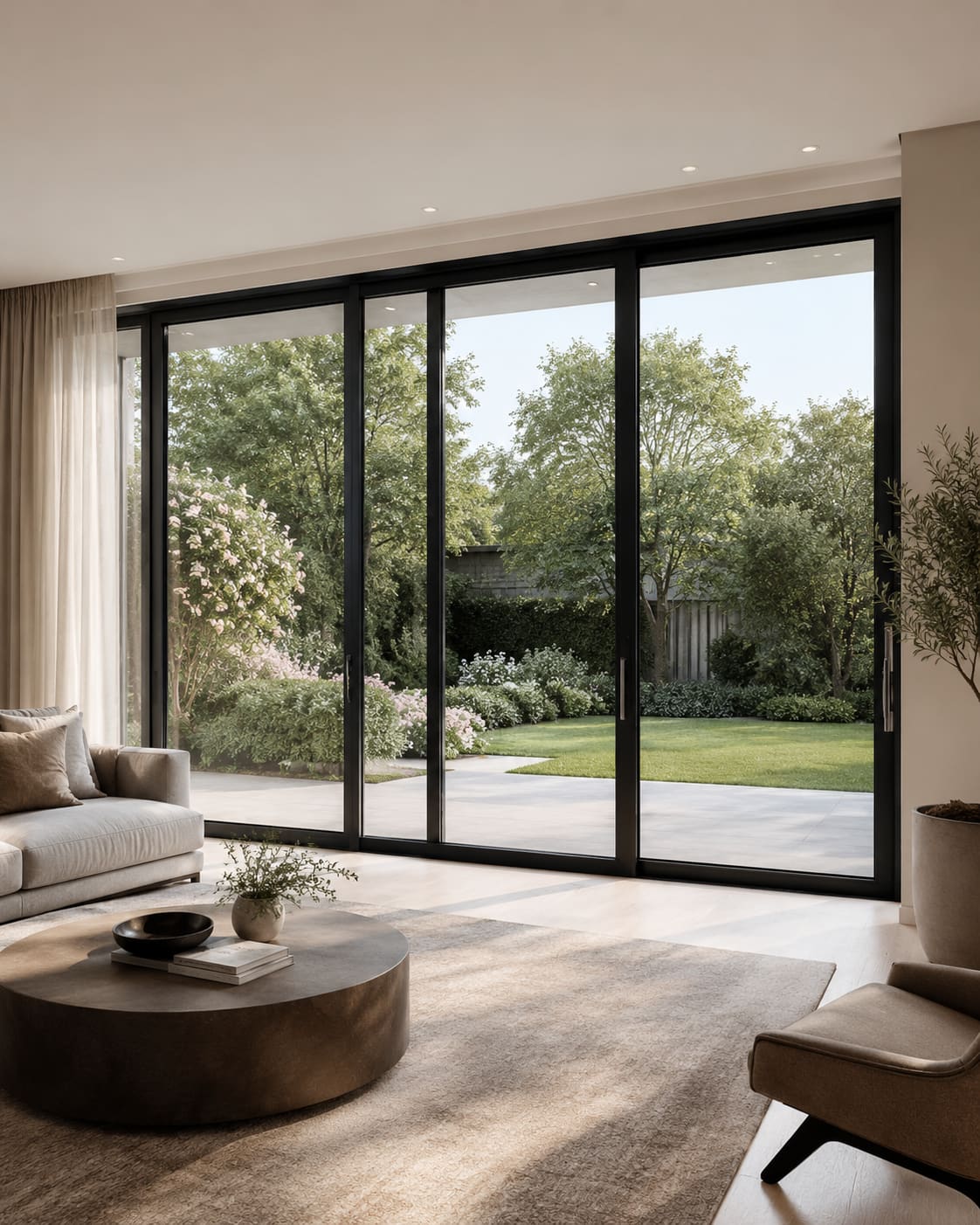
Fixed aluminium windows do not open and exist purely to admit light and frame views, offering the slimmest sightlines and the tightest weather seal of any type. With no moving sash, they carry the largest glass panes and deliver the highest air- and water-tightness, which is why they are the workhorse of feature walls and double-height living rooms.
- Fixed (picture) windows: maximise daylight and views; ideal for facades, stairwells and above-door transoms
- Combination windows: pair fixed panes with sliding, casement or awning sashes in one frame for both view and ventilation
- Glazing: support laminated, toughened or double-glazed units for safety and solar control
- Best for: high floors, feature walls and openings where ventilation is handled by adjacent operable sashes
Large fixed panes should use toughened glass to IS 2553 Part 1 and be sized against wind load per IS 875 Part 3. When a fixed window grows into a full glass wall, the work crosses into facade territory: our structural glazing and front elevation glazing teams handle those spans with engineered support. Combination units are a smart way to keep a clean picture-window look while still meeting the NBC ventilation minimum for a room.
Aluminium vs uPVC Windows: Which Should You Choose?
Aluminium and uPVC are the two mainstream framing materials in India, and the choice comes down to strength, span and aesthetics versus raw thermal insulation. Aluminium is stronger, so it carries larger glass with slimmer frames and suits modern minimalist elevations; uPVC insulates slightly better out of the box and can be marginally cheaper in small sizes.
- Choose aluminium for: large spans, slim sightlines, high-rise wind loads, contemporary looks and long service life
- Choose uPVC for: maximum thermal and acoustic insulation on standard-size openings at moderate cost
- Strength: aluminium 6063-T5/T6 far exceeds uPVC in structural stiffness for the same profile depth
- Thermal: uPVC insulates naturally; aluminium matches it only with a thermal-break polyamide barrier
- Longevity: both resist rot and corrosion, but aluminium holds its shape better in Hyderabad's summer heat, where dark uPVC can soften if under-reinforced
For most premium villas and apartments we recommend thermal-break aluminium, but for budget-conscious bedroom retrofits our uPVC windows line is a strong value pick. If you are still weighing the two, read our comparison of aluminium versus uPVC windows before deciding.
Specifications, Standards and Finishes
Aluminium window quality is governed by frame alloy, wall thickness, glazing and finish, and every Hyderabad project should specify these against recognised standards. Correct specification is what separates a 10-year window from a 40-year one, and it is where cheap fabricators quietly cut corners.
- Alloy and temper: 6063-T5 or T6 extrusions per IS 733; wall thickness 1.2 mm to 2.0 mm for structural sashes
- Finish: powder coating (60-80 micron) or anodising (15-25 micron) for corrosion resistance in humid, coastal-influenced air
- Glazing safety: toughened glass to IS 2553 Part 1; laminated glass for security and sound
- Structural sealant: structural silicone qualified to ASTM C1401 where glass is bonded to frame
- Framework compliance: window design and installation follow the National Building Code of India (NBC) 2016
- Energy: thermal-break frames and low-E DGU support the Energy Conservation Building Code (ECBC) and BEE-rated performance
Insist on a documented micron reading for the coating and a mill certificate for the alloy; both are easy to verify and hard to fake. For glass upgrades, our toughened glass work and specialty glass divisions supply safety, acoustic and solar-control units cut to size.
How Much Do Aluminium Windows Cost in Hyderabad?
Installed aluminium windows in Hyderabad range from about INR 450 to INR 1,600 per sq ft, and the type you pick is the biggest single driver of that spread. Standard sliding windows sit at the bottom, casements and awnings in the middle, and thermal-break tilt-and-turn units with double glazing at the top.
- Standard sliding (single glass): INR 450 to INR 900 per sq ft
- Casement / awning (single glass): INR 700 to INR 1,200 per sq ft
- Thermal-break with DGU: INR 1,100 to INR 1,600 per sq ft
- Fixed / picture units: often the lowest per sq ft as they have no hardware
Other cost factors include glazing thickness, hardware brand, powder-coat colour, mesh panels and site height. A whole-home package in Kokapet or Narsingi is usually quoted per opening after a site measurement rather than a flat rate, because reveal depths and lintel conditions vary. To get an accurate figure for your rooms, request a free measured quote and we will size, specify and price each window against the standards above.