The three dominant window frame materials are aluminium, uPVC (unplasticised polyvinyl chloride) and wood: aluminium is the strongest and gives the slimmest sightlines, uPVC delivers the best thermal insulation and lowest maintenance, and wood offers the finest natural aesthetics with moderate insulation. If you want one short answer for a Hyderabad home, uPVC or thermally broken aluminium are the practical winners, with the final pick decided by span size, orientation, budget and how much upkeep you are willing to commit to. Everything below quantifies that choice so you can specify a frame with confidence rather than on a salesperson's word.
Frame material matters more here than most buyers assume. In a hot composite climate like Hyderabad and Secunderabad, where summer temperatures regularly cross 40 degrees Celsius before a dusty monsoon arrives, the frame is a direct thermal bridge between your air-conditioned interior and the outdoor heat. A poorly chosen frame conducts heat inward, forces the AC to work harder, and drives up your electricity bill month after month, while a well-sealed frame keeps dust and monsoon water out for decades.
This guide compares aluminium, uPVC and wood against measurable criteria, thermal conductivity and U-value, structural strength, lifespan, maintenance and real Hyderabad cost, and references the Indian standards that regulate glazed window systems so specifiers and homeowners can select and verify a compliant assembly. Whether you are glazing an apartment in Gachibowli, a villa in Kokapet or an office front in Hitec City, the same physics and standards apply.
What Are the Main Window Frame Materials?
Window frame materials are the structural surrounds that hold glazing in place and transfer wind and dead loads into the wall. Four options dominate the Indian market, though three account for the vast majority of residential and commercial work.
- Aluminium: extruded metal profiles, the strongest option, used for everything from compact aluminium windows to large curtain-wall glazing.
- uPVC: multi-chambered rigid plastic profiles reinforced with steel, the best insulator, common in modern uPVC windows for homes.
- Wood: solid timber surrounds, naturally warm and premium, but the highest maintenance.
- Composite and wood-aluminium hybrids: a niche premium category that pairs a timber interior with an aluminium exterior; rare and expensive in Hyderabad, so this guide focuses on the three mainstream choices.
The right material is never chosen in isolation. It is matched to the glazing (single, double or laminated), the opening type (sliding, casement, tilt-and-turn), the orientation to the sun, and the wind exposure of the building, all of which we unpack below.
Aluminium Window Frames
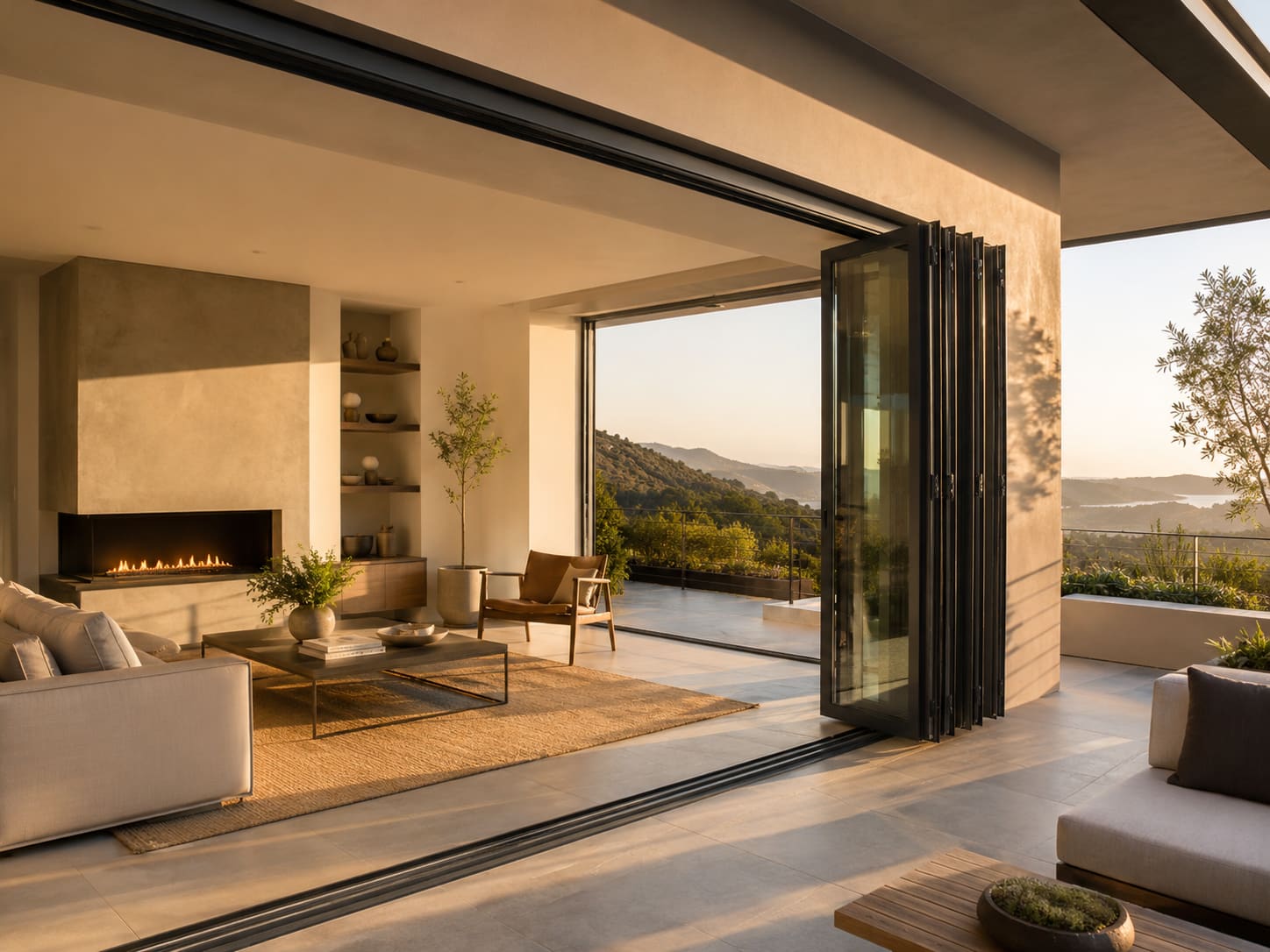
Aluminium window frames are extruded metal profiles prized for a high strength-to-weight ratio, corrosion resistance and slim sightlines that maximise glass area. Aluminium's density of about 2.7 g/cm3 and high yield strength let a narrow frame carry large glazed panels and resist wind load, which is why it dominates tall openings and facades.
- Thermal conductivity: aluminium conducts heat readily (about 160 to 200 W/mK for the alloy), so plain frames insulate poorly (frame U-value around 5.5 W/m2K). A polyamide thermal break inserted between the inner and outer profile halves lowers this to roughly 2.0 to 3.0 W/m2K, which is essential in an air-conditioned Hyderabad interior.
- Strength and spans: highest of the three materials, ideal for large aluminium sliding windows and casement systems and for the wind loads that IS 875 Part 3 demands on high-rise and exposed sites.
- Finish: powder coating (typically 60 micron) or anodising resists Hyderabad's UV, dust and pre-monsoon grit; expected lifespan about 30 to 45 years.
- Maintenance: minimal; aluminium does not warp, rot or need repainting, and it is fully recyclable at end of life.
- Best for: large openings, slim modern aesthetics, office fronts and high-wind or higher-floor apartments in towers around the Financial District and Kokapet.
The main caveat is cost and thermal performance in tension: to get aluminium's slim look without the heat penalty you must pay for the thermal-break version, so budget for it rather than accepting a plain profile.
uPVC Window Frames
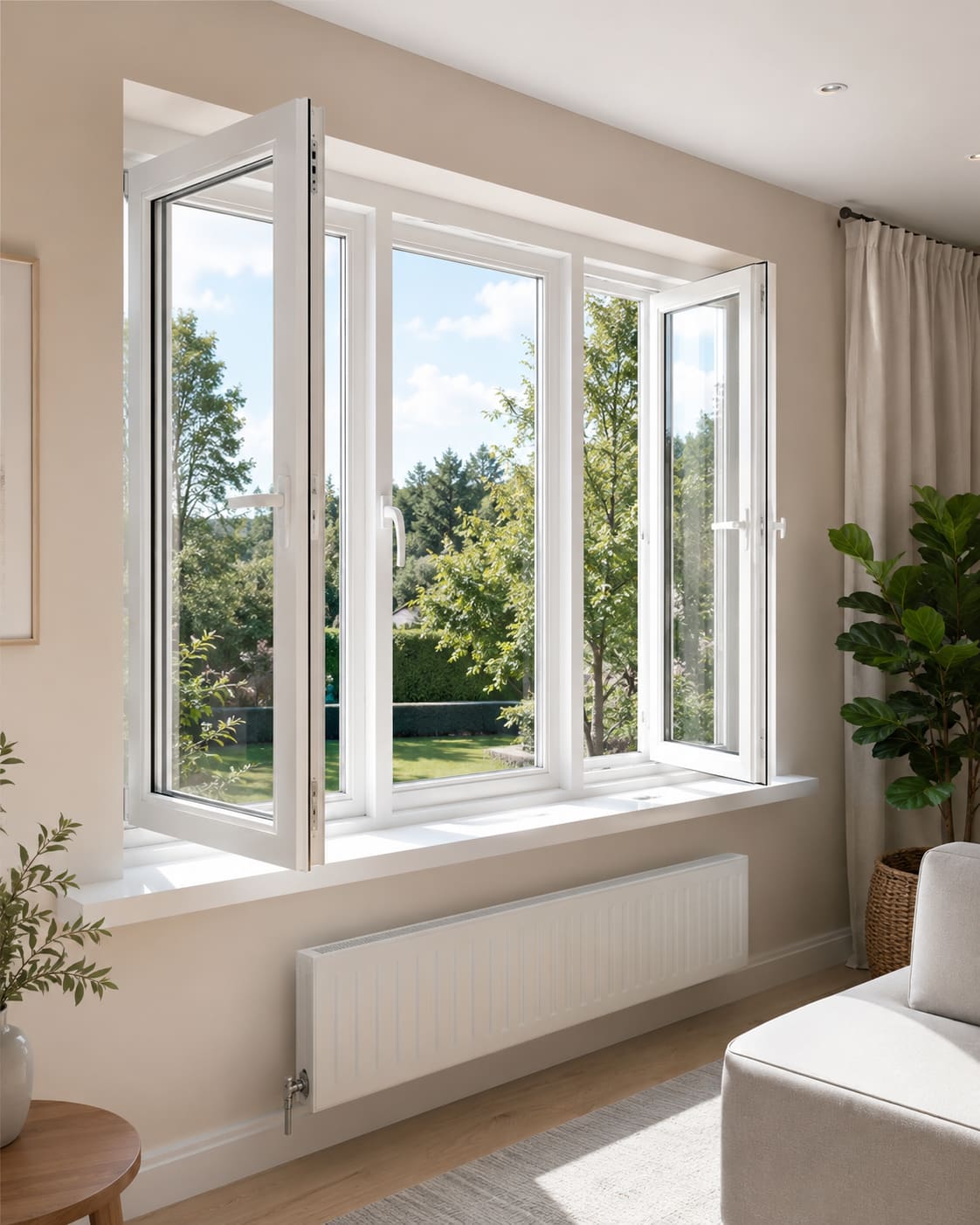
uPVC window frames are multi-chambered rigid PVC profiles that deliver the best thermal insulation and lowest maintenance among common frame materials. The hollow internal chambers trap still air, and galvanised steel or aluminium reinforcement inserts provide rigidity without the metal conducting heat straight through the frame.
- Thermal conductivity: very low (PVC about 0.16 W/mK), giving frame U-values of roughly 1.0 to 1.4 W/m2K, the most energy-efficient option for air-conditioned rooms and the reason uPVC casement windows are popular in new Kondapur and Madhapur apartments.
- Profile depth: common systems use 60 mm to 88 mm frame depths with 2 to 6 chambers; deeper multi-chamber profiles insulate and sound-proof better.
- Weather sealing: EPDM gaskets and multi-point locking give excellent air and water tightness, cutting dust ingress and monsoon leakage, a genuine benefit given Hyderabad's dusty summers and heavy June-to-September rain.
- Durability: UV-stabilised profiles resist yellowing; lifespan about 40 to 50 years with negligible maintenance and no painting.
- Best for: energy efficiency, acoustic reduction near busy roads, low upkeep and residential comfort. Large uPVC sliding windows are practical for medium spans, though very wide openings favour aluminium.
The trade-off is bulkier sightlines than aluminium and a dependence on quality steel reinforcement; a cheap uPVC frame without proper inserts can sag on large sashes, so insist on reinforced profiles.
Wooden Window Frames
Wooden window frames are solid timber surrounds valued for natural insulation and traditional aesthetics, offering moderate thermal performance but demanding the most maintenance. Timber's low conductivity (about 0.12 to 0.15 W/mK) makes wood a naturally warm frame material that never feels cold or transfers heat aggressively.
- Thermal conductivity: low, giving frame U-values around 1.2 to 2.0 W/m2K depending on species and section thickness.
- Species: dense hardwoods such as Burma or Indian teak and sal perform best; well-seasoned, treated hardwood lasts 30 to 60 years.
- Maintenance: highest of the three; timber needs periodic sealing, polishing or painting every few years and active protection against termites, rot and Hyderabad's swing from bone-dry summers to monsoon humidity, which stresses joinery.
- Cost: generally the most expensive, especially in premium teak, and quality varies sharply with seasoning and workmanship.
- Best for: heritage bungalows, luxury villas and interior feature windows where appearance and natural warmth outweigh the upkeep burden.
For many buyers who love the timber look but not the maintenance, a wood-finish laminate on uPVC or a woodgrain powder-coat on aluminium delivers most of the aesthetic at a fraction of the upkeep, worth discussing before committing to solid teak.
Aluminium vs uPVC vs Wood: Side-by-Side Comparison
Ranking the three materials across the criteria that matter most makes the trade-offs explicit. No single material wins on every axis, so weight these against your climate, budget and design intent rather than chasing a single headline number.
- Thermal insulation (best to worst): uPVC, wood, thermally broken aluminium, plain aluminium.
- Structural strength (best to worst): aluminium, wood, uPVC (uPVC relies on steel reinforcement for large sizes).
- Maintenance (least to most): uPVC, aluminium, wood.
- Lifespan: uPVC 40 to 50 years, wood 30 to 60 years, aluminium 30 to 45 years.
- Indicative Hyderabad supply-and-fit cost per sq ft: aluminium INR 350 to 700, uPVC INR 450 to 900, wood INR 700 to 2,000+.
- Sustainability: aluminium is highly recyclable, uPVC is recyclable but petroleum-derived, and wood is renewable if responsibly sourced.
A practical reading for Hyderabad: choose uPVC for bedrooms and living rooms where cooling efficiency and quiet matter most, aluminium for large living-room or balcony spans and any higher-floor apartment exposed to wind, and reserve wood for a signature entrance or heritage project. You can browse completed installations in our project gallery to see how each material reads in real Hyderabad homes and offices.
Which Frame Is Best for Hyderabad's Climate?
For Hyderabad's hot composite climate, uPVC and thermally broken aluminium are the two strongest performers, because both control the heat conduction that plain aluminium suffers from and both seal tightly against dust and monsoon water. Wood performs thermally but loses ground on humidity-driven maintenance.
The climate imposes three specific stresses that should drive your decision.
- Heat and solar gain: with peak summer temperatures above 40 degrees Celsius, frame conduction and glass selection together decide your cooling load. Pair any frame with low-SHGC or double glazing to cut heat gain, especially on west and south faces.
- Dust: pre-monsoon dust storms push fine grit into poorly sealed joints; multi-point-locking uPVC and gasketed aluminium keep interiors cleaner than old wooden or unsealed frames.
- Monsoon water: June-to-September rain tests drainage and sealing, so specify frames with proper weep holes and quality gaskets regardless of material.
For most residential clients across Gachibowli, Kondapur and Kokapet, we recommend uPVC for bedroom and living-room comfort, or thermally broken aluminium where the design calls for large glass and slim frames. If you are weighing the two head-to-head, our guide on aluminium versus uPVC windows breaks the decision down further, and you can get a free quote tailored to your elevation and orientation.
How Glazing Changes the Whole-Window U-value
Frame material is only half the equation; the glass typically occupies 60 to 80 percent of a window's area, so glazing choice often moves the whole-window U-value more than the frame does. A great frame with single glazing still performs poorly, and a modest frame with double glazing can perform well.
- Single glazing: a single 5 or 6 mm pane has a centre-of-glass U-value near 5.7 W/m2K and minimal sound reduction; adequate only for internal or low-priority openings.
- Double glazing (DGU): two panes with a sealed air or argon gap drop centre-of-glass U-value to roughly 1.8 to 2.8 W/m2K and cut noise sharply, ideal for AC bedrooms and roadside facades.
- Low-E and solar-control coatings: reflective and low-emissivity specialty glass reduces the Solar Heat Gain Coefficient, blocking heat while keeping daylight, which matters on Hyderabad's harsh west elevations.
- Safety and acoustics: toughened and laminated glass adds impact safety and, in laminated form, meaningful sound damping for busy corridors like the Outer Ring Road approaches.
The takeaway: specify the frame material and the glazing together. A thermally broken aluminium or multi-chamber uPVC frame paired with a double-glazed low-SHGC unit gives the best real-world comfort and lowest running cost for the Telangana climate.
Indian Standards and a Selection Checklist
Glazed window systems in India should comply with the National Building Code (NBC) 2016 and the relevant Bureau of Indian Standards codes for glass, glazing and wind load. Asking for these on the quotation protects you against underspecified frames and unsafe glazing.
- Wind load: frames and fixings must be designed to IS 875 Part 3, critical for high-rise apartments and exposed facades in and around the Financial District.
- Safety glass: toughened and heat-treated safety glass is covered by IS 2553; laminated safety glass and glazing selection follow IS 2553 and NBC 2016 provisions.
- Structural glazing: silicone-bonded facade systems reference ASTM C1401 for structural sealant glazing.
- Energy: the Energy Conservation Building Code (ECBC) sets window U-value and SHGC limits for commercial buildings; lower-SHGC glass suits Hyderabad's high solar gain.
- Selection order: match the material to climate and span first, then specify glazing (double glazing lowers the overall window U-value), then confirm standards compliance and installation quality on site.
A quick buyer's checklist before you sign: confirm the frame series and profile depth, the reinforcement (for uPVC) or thermal break (for aluminium), the glazing make-up and coating, the hardware and locking, and the applicable IS references. Hakimi Aluminium and Glass supplies and installs aluminium and uPVC window systems across Hyderabad, Secunderabad and the wider Telangana and Andhra Pradesh region, specified to the relevant Indian standards and finished to survive the local heat, dust and monsoon.